Updated:
A cruise through the Greek islands is an amazing opportunity to visit places with their own unique features and enjoy an authentic Greek atmosphere.
In this article, I’ll describe our experience of an 11-day trip through three Greek islands, which we started from the Athenian port of Piraeus and finished there as well.
I’ll tell you about how we planned our ferry route, where we stayed, what to see on the islands, and how much such a trip costs (prices are from 2025).
Also, at the end of the article, I’ll share information about other Greek islands you can visit using tour programs, as an addition or alternative to the islands we visited.
I also recommend reading the article about how to plan a 1-2 day trip from Crete to Santorini and what to choose for such a journey – an independent ferry trip or an organized tour.
Our route included Athens and three islands: Milos, Folegandros, and Santorini.
The route can be changed. There are many beautiful islands in the Cyclades archipelago in the Aegean Sea, between which ferry connections are established.
For example, if you don’t like mountains, replace the deserted Folegandros with the lively Ios. The main thing is to read reviews in advance and understand what suits you.
By the way, ferries to the Greek islands also run from other countries. For example:
There are few available dates, so planning such trips is more difficult than traveling around Greece.
If you’re organizing the trip independently, it’s most convenient to start from Athens:
The trip to Milos and Santorini from Piraeus port takes from 4 to 7 hours, depending on the vessel.
We regretted not replacing the return ferry from Santorini to Athens with a low-cost airline: we’d had enough impressions, plus it would have been faster and 60 euros cheaper. Ryanair tickets from Santorini to Athens cost from 20 euros, while a ferry costs from 40 euros. Besides Santorini, Ryanair flies from Athens to Rhodes and Mykonos.
If you still return to Athens by ferry, I advise returning to the mainland at least 24 hours before your flight departure. Sometimes routes are postponed due to storms.
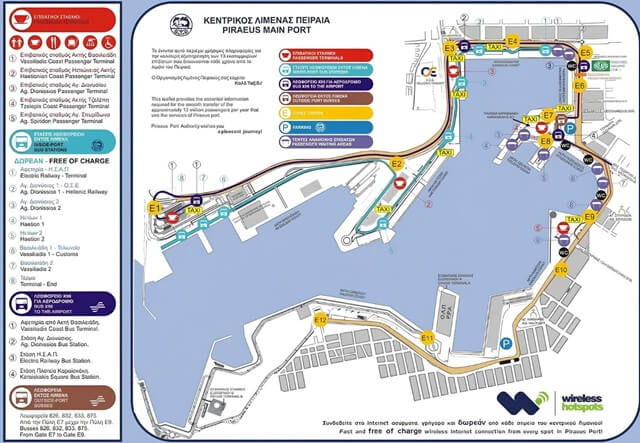
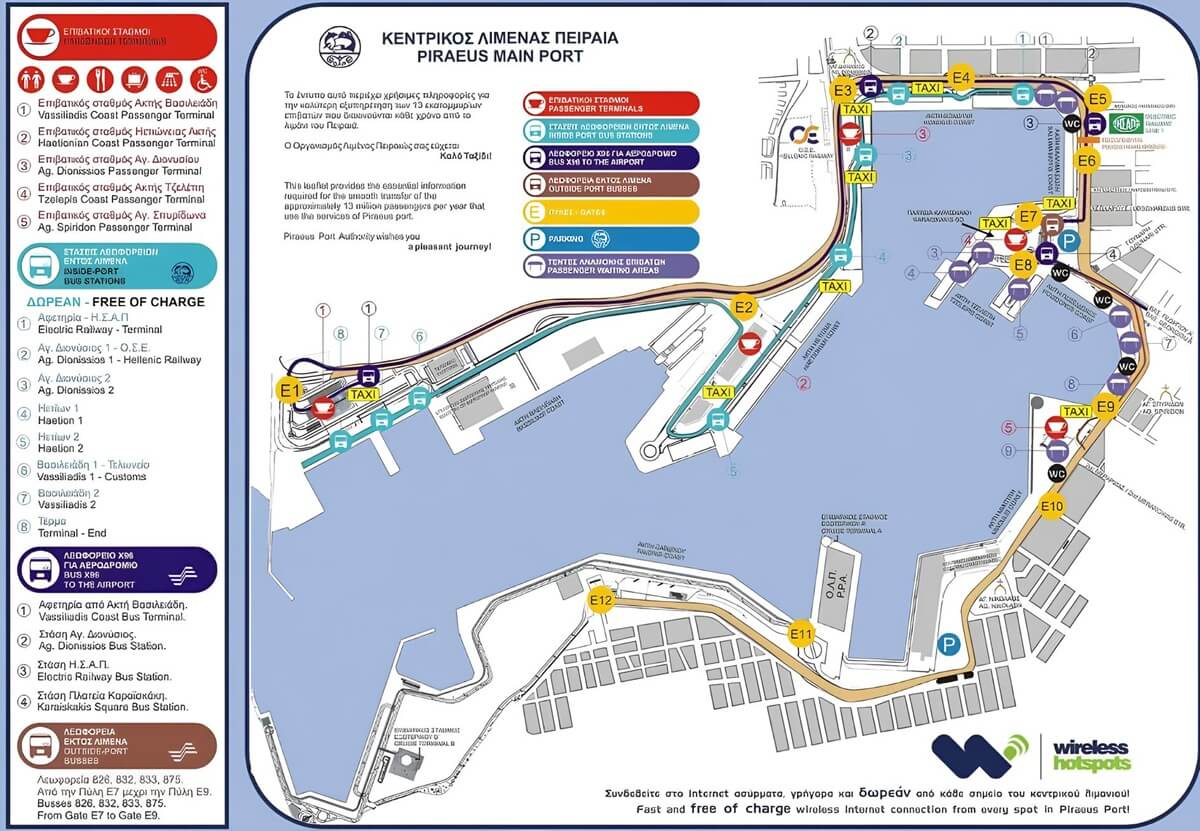
In Athens, ferries dock at Piraeus port. If you’re not going there by taxi, I advise carefully studying the port map and checking in advance where your ferry exit (gate) is.
Piraeus port map
Piraeus port is huge. The journey from the “Piraeus” metro station to the ferry can take longer than you planned. We traveled by metro.
I glanced at the map briefly and was too lazy to plot the route from the metro exit to the gate.
It turned out that the ferry was 1.5 km from the station. While we were running, we got really nervous. We arrived just 10 minutes before departure.
If there’s time between the plane and ferry, I advise visiting the Acropolis in Athens. To do this, you need to take the X96 bus at the airport or go down to the metro and get to the “Acropolis” station.
Might be useful: All tours to the Athens Acropolis
The bus from the airport costs 6 euros, metro – 10 euros. Prices are valid at the time of article publication (July 2019), so I recommend checking them before your trip.
Might be useful: Transfers from Athens airport
To leave our suitcases in storage, we got off at an earlier station – at Syntagma Square. Storing a large suitcase there costs 6 euros.
From Syntagma to the Acropolis is 1.5 kilometers, that’s 20 minutes on foot
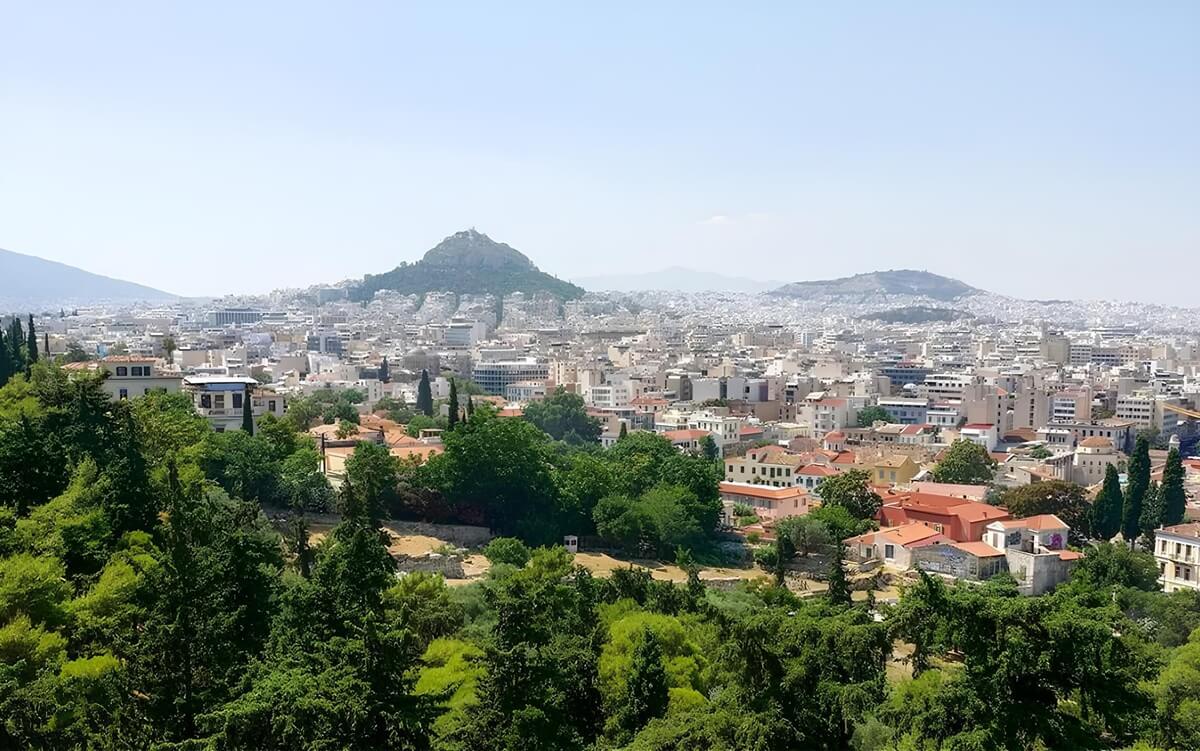
It would be a shame not to see the Acropolis. The views of the city from there are great, and the Parthenon is like a living cover of a history textbook. But it’s better to allow extra time: the road goes uphill, there are crowds of tourists and queues all around.
Acropolis tickets in July 2019 cost 12 euros per person (view from the Acropolis of Athens)
Might be useful: Tickets to the Athens Acropolis
Greeks call all vessels ferries, but actually they are divided into several types:
The slowest are ferries, catamarans are faster. Hydrofoils are less common on these routes.
Even the cheapest ferries are comfortable: there are bars with sandwiches for 2 euros, wifi for 3 euros, and TVs. On the deck there are benches or chairs – you can admire the sea.
Tickets can be booked on official websites or aggregators. Company websites: Sea Jets, Hellenic Seaways, Blue Star Ferries, Hellenic Lines (enter these names in Google and get links to these companies’ official websites). Aggregator: Greek Ferries (this is where we bought tickets).
It’s easier and faster to search on aggregators: they show flights from different companies. But sometimes aggregators charge a booking commission. For example, two tickets from Santorini to Folegandros on Greek Ferries cost us 21.5 euros, while on the carrier’s website – 16 euros.
Ferry prices depend on the type of vessel and ticket category. The cheapest are economy class deck seats – seats like on a plane. Cabins for two or four people with shower and toilet cost more.
Children get discounts. For example, Hellenic Seaways tickets for a child under 5 years old with cabin accommodation will cost 50% less, and economy class travel will be free.
I recommend checking information about discounts with the ferry company you choose.
| Destination | Ferry | Catamaran |
|---|---|---|
| Athens - Milos |
39.5 euro 7 hrs 5 min |
56 euro 4 hrs 20 min |
| Milos - Folegandros |
8 euro 2 hrs 10 min |
55.72 euro 1 hr 5 min |
| Folegandros - Santorini |
8 euro 3 hrs 50 min |
60.48 euro 1 hour |
| Santorini - Athens |
40 euro 8 hrs 45 min |
90.61 euro 6 hrs 15 min |
| Ios - Mykonos |
35.5 euro 3 hrs 25 min |
76.68 euro 1 hr 35 min |
Some companies start selling tickets two months in advance. After purchase, you need to print the certificate sent to your email, and before the trip, exchange the printed certificates for tickets with barcodes.
This can be done at the ferry company office or at the port. I recommend getting tickets in advance: you may not be allowed on the ferry with printouts.
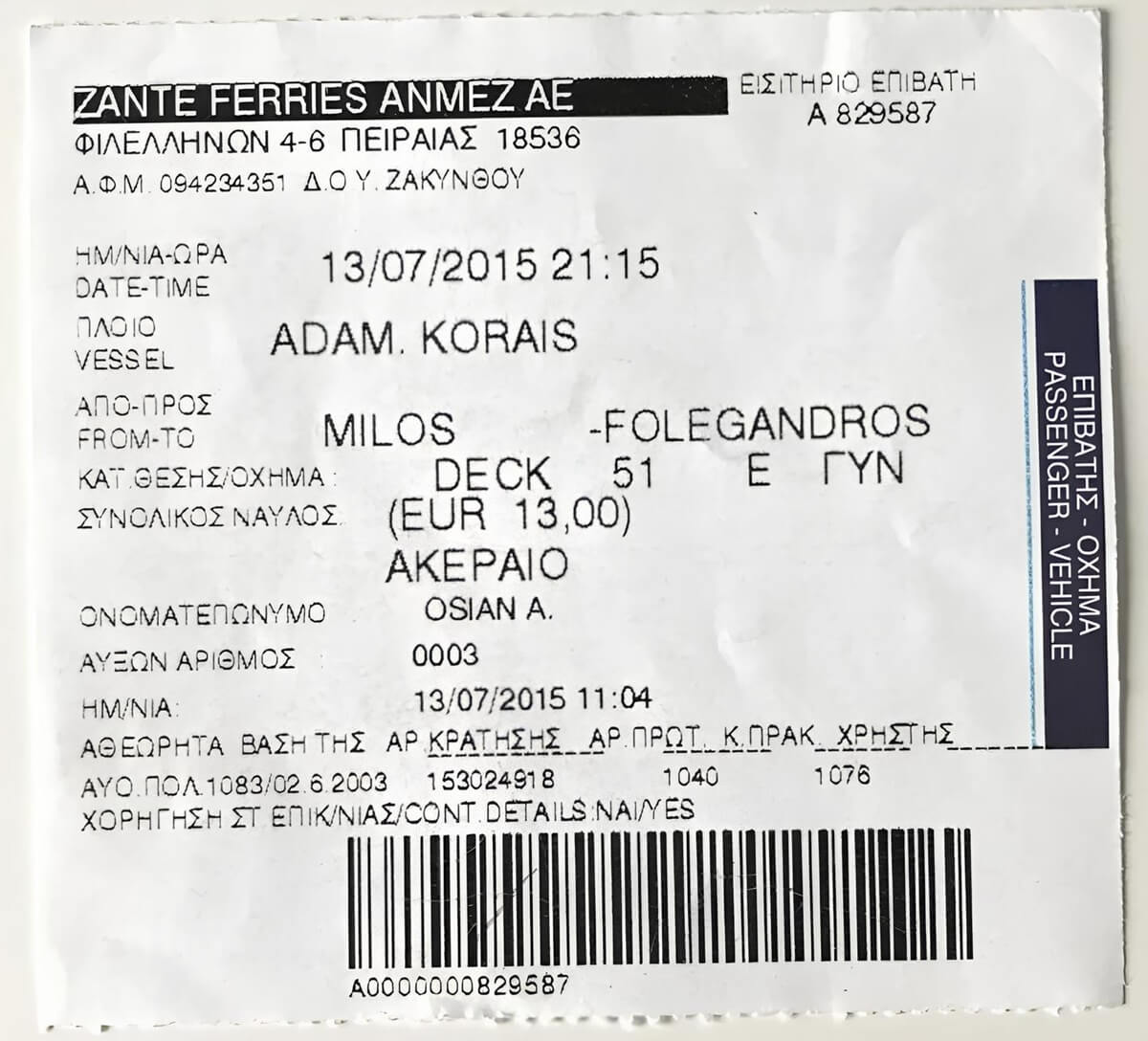
This is the ticket issued in exchange for a printed certificate
Some ferry companies ask to leave suitcases in a special compartment, others allow you to take them with you on deck. We left our suitcases in the luggage compartment, and no one stole or confused them. We didn’t pay separately for baggage transportation.
In addition to suitcases, you can transport cars on ferries, but for a separate fee. For example, transporting a Hyundai Getz by ferry from Athens to Santorini will cost 88 euros.
I have a detailed article on my website about our car rental experience in Greece, I recommend reading it if you’re planning to travel around the country by rental car.
Accommodation on the Greek islands is uniform – neat rooms in white and blue houses.
We planned to travel a lot around the islands: relax on different beaches and see attractions. Therefore, we chose accommodation on Milos and Folegandros without being tied to a beach – and we were right.
The best places for swimming on these islands are wild beaches where there are no hotels. A room for two in a hotel will cost from 35 euros per night.
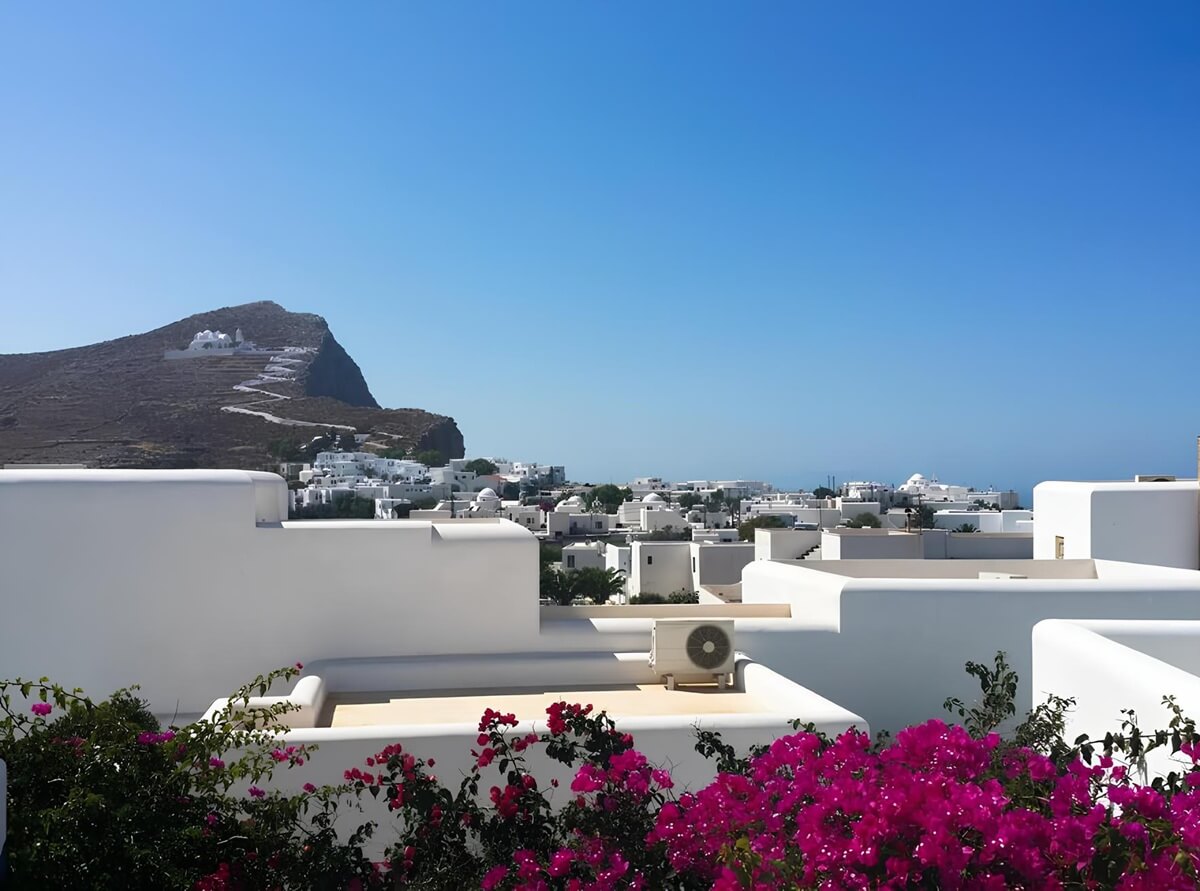
View from our room on Folegandros. On the hill is a church and the best observation deck on the island
On Santorini, rooms with sea and volcano views in the towns of Oia, Imerovigli, and Fira cost an average of 200 euros per night. Accommodation near beaches is much cheaper: for about 200 euros, for two people, you can stay in a hotel with a pool for 3-4 nights.
Milos. The island is only 21 km long, but there are many uncrowded and unusual beaches here.
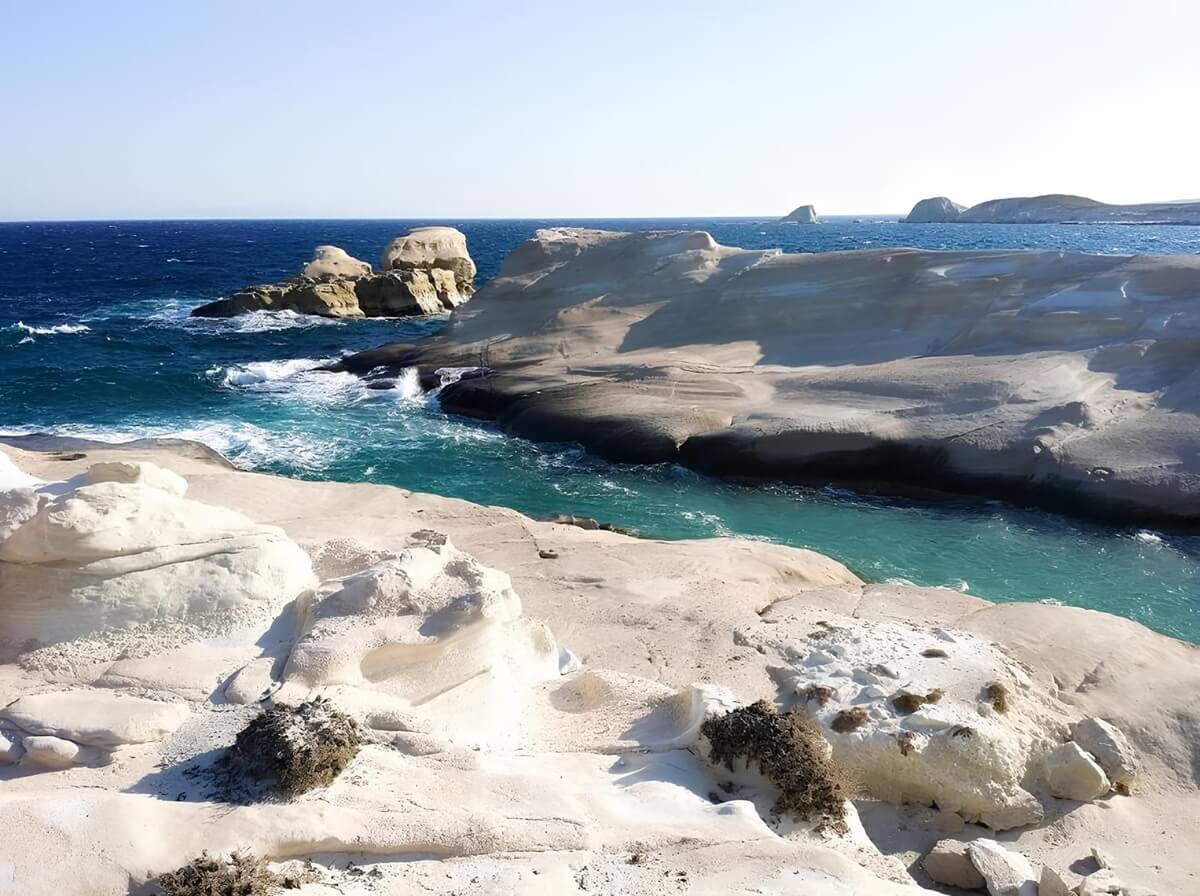
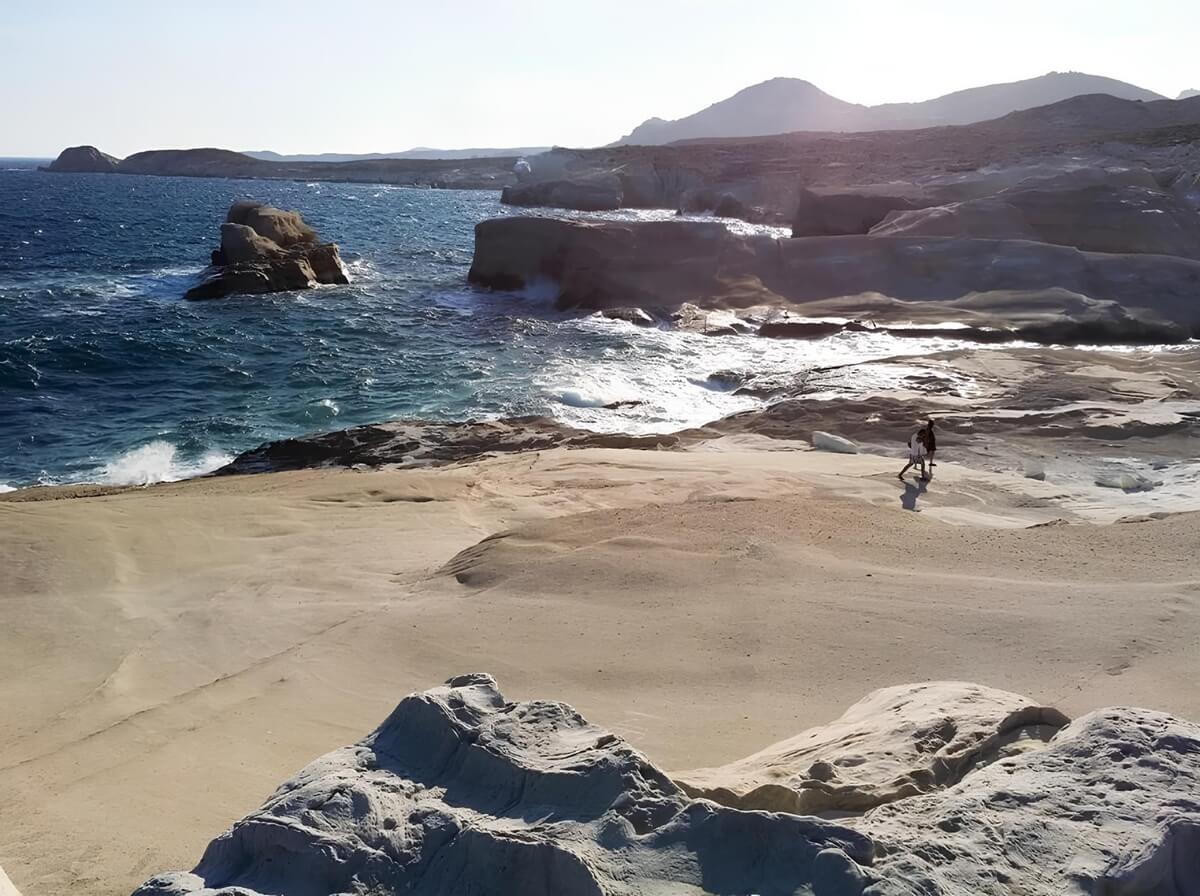
For example, Sarakiniko beach looks like the official representation of the Moon on Earth. Even if it’s too cold to swim, it’s worth coming here and walking on the white volcanic rocks.
A bus from Adamas port runs to Sarakiniko and back 3 times a day
Walking on the rocks is more comfortable in closed shoes
If you like equipped beaches, choose Paliochori with colorful cliffs or Firiplaka with clean water.
Sun loungers here cost from 6 euros. There may not be enough if you arrive after 11 am.
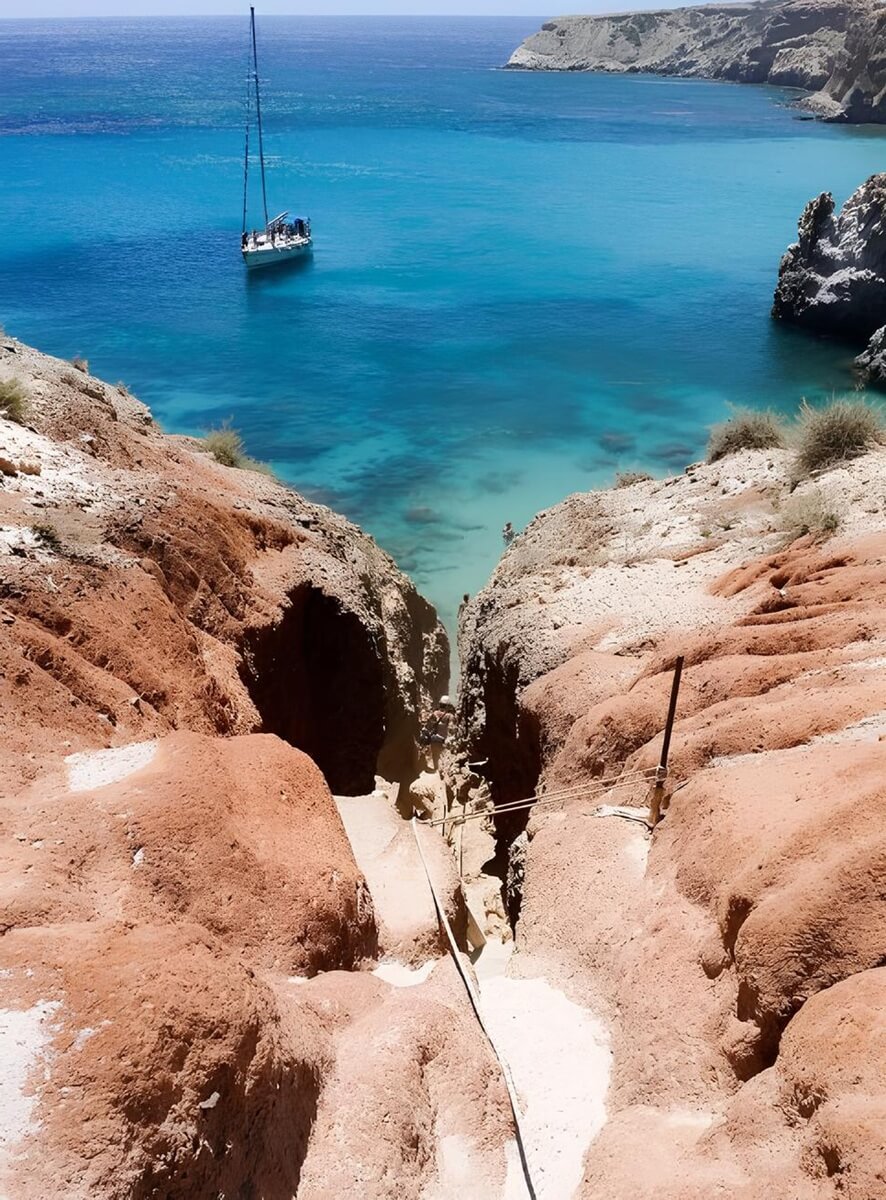
Our favorite beach on Milos is the unequipped Tsigrado. There are few people there, no wind, azure water, and you can swim under the rocks.
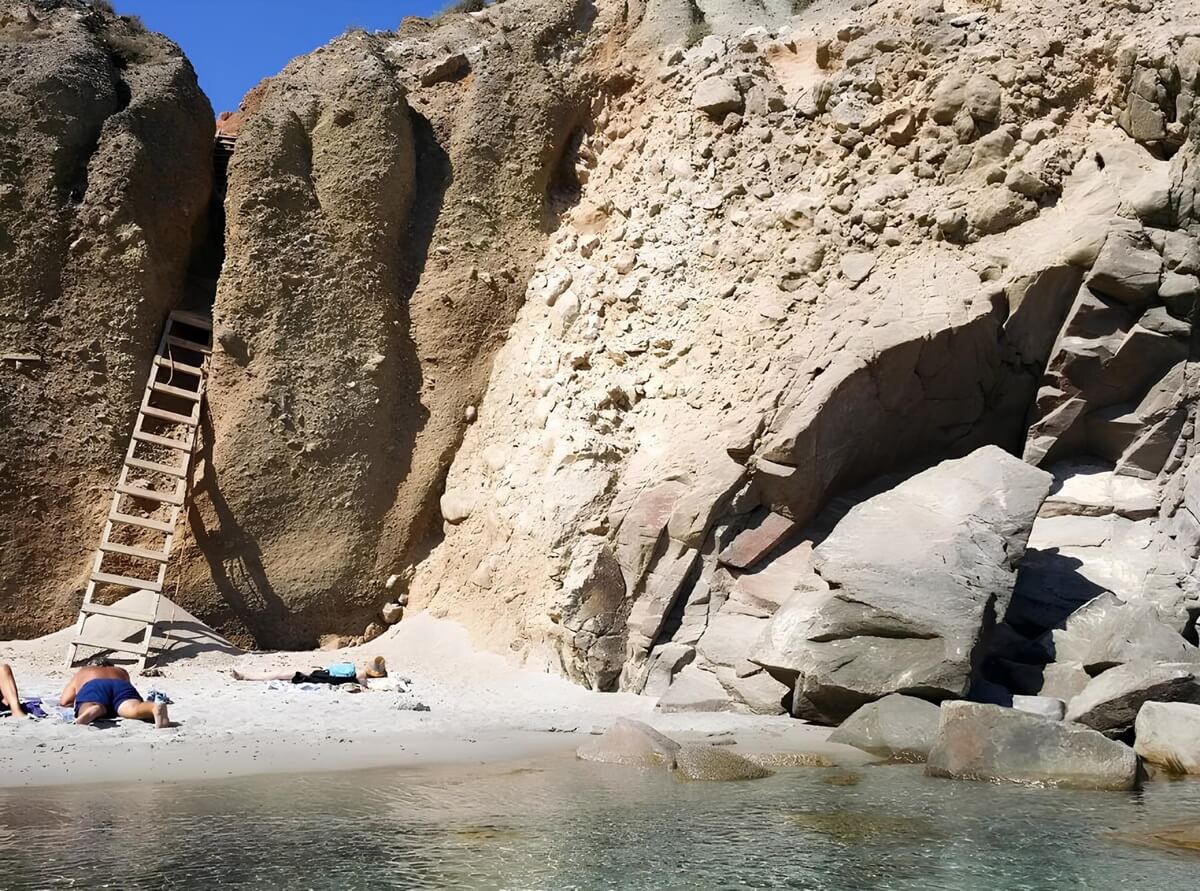
Getting there is difficult. First you have to descend through a narrow crevice in the rock, then down a ladder. If you’re with children, afraid of heights, without closed shoes, or don’t like discomfort, this beach won’t suit you.
Descent to Tsigrado beach. While descending, sand falls on your head. It seems like only crazy people climb there
Actually, the descent is shorter than it looks and, from the beach side, doesn’t seem so scary anymore
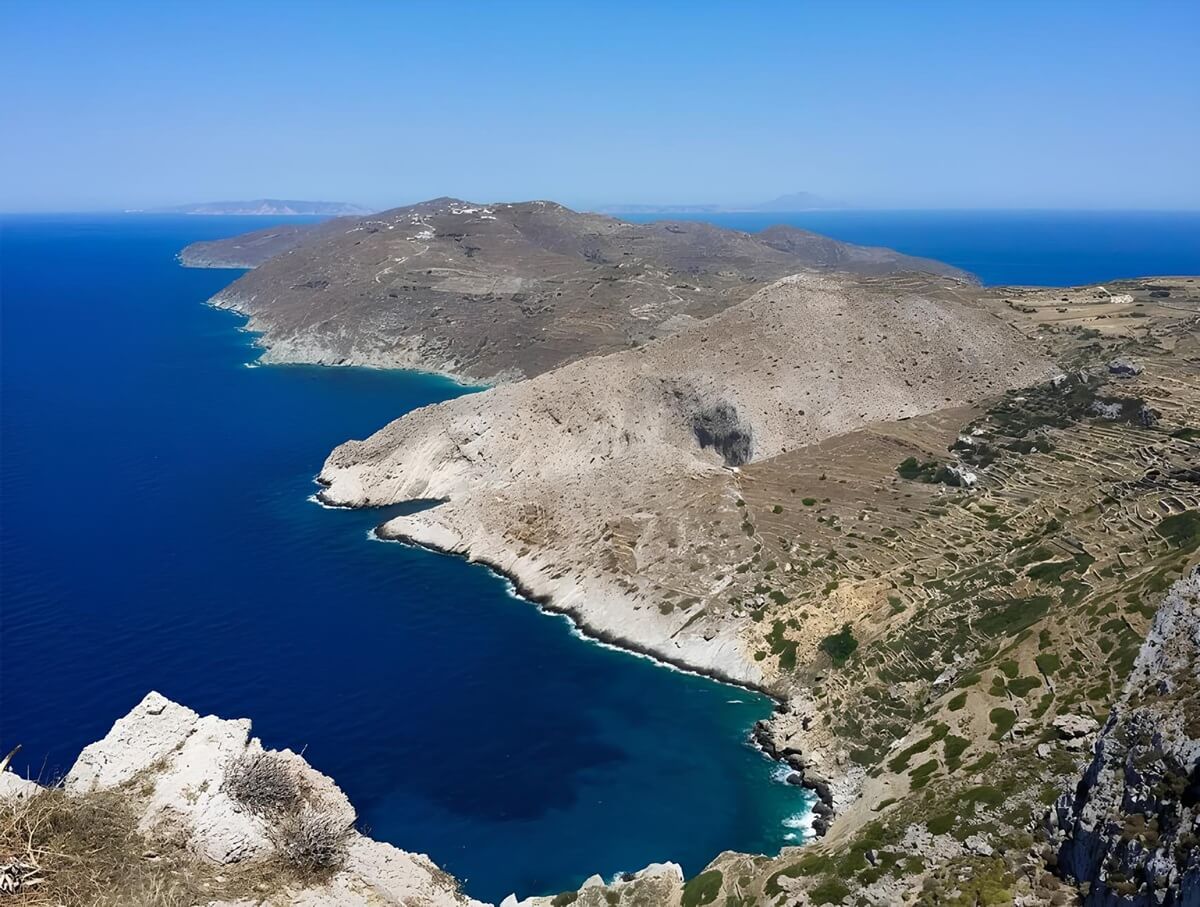
Folegandros is a rocky island with even fewer tourists than Milos. CNN once included the village of the same name, located in its northeastern part, in the list of 7 most beautiful villages in Europe.
The main attraction is the Church of the Virgin Mary on top of a hill in the town of Chora. This is the best observation deck on Folegandros. It’s a long climb there, but the views are worth it:
View from the hill in the town of Chora – the best observation deck on Folegandros island
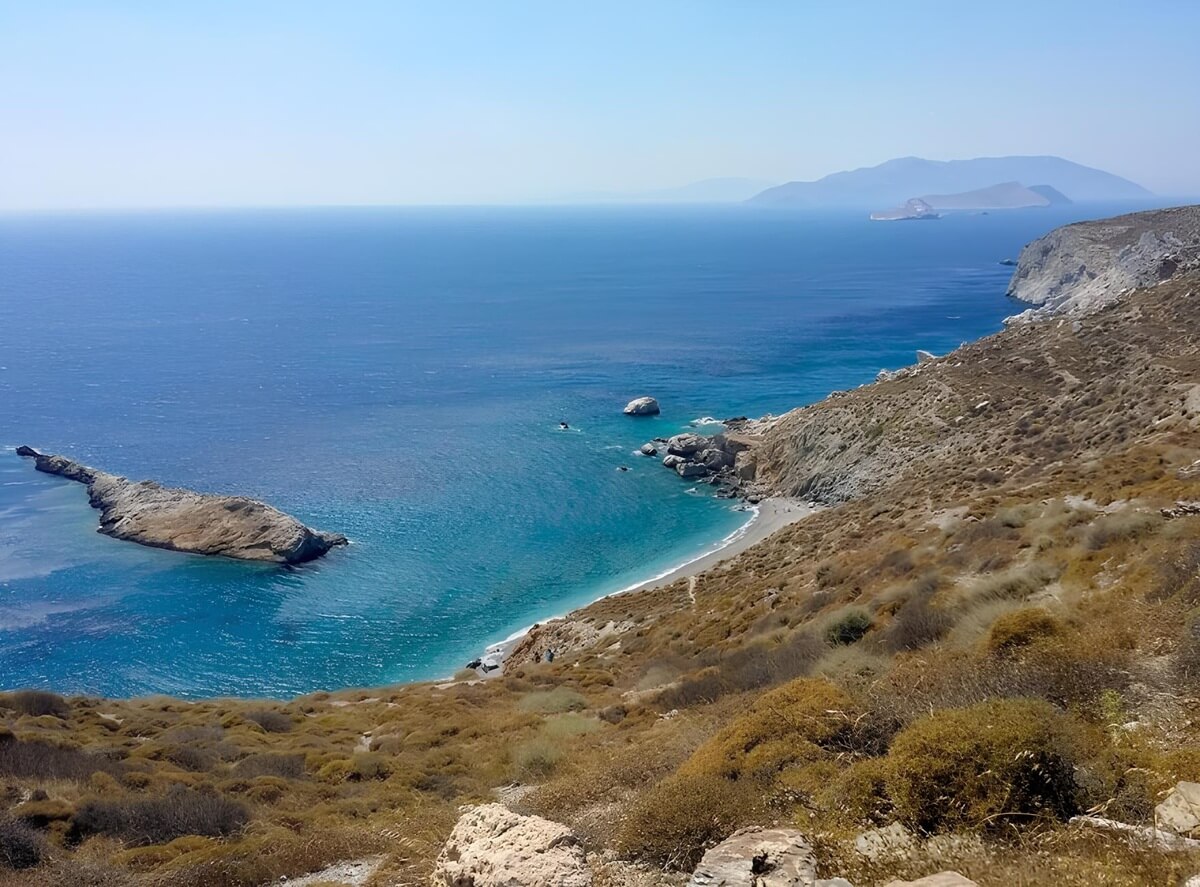
The most popular beaches on Folegandros are located away from the port and center. You can get to Agali by bus, to Agios Nikolaos you need to walk from Agali, and to Katergo you can get by boat or walk through the mountains.
Approaching Katergo beach by boat is not as spectacular as walking to it
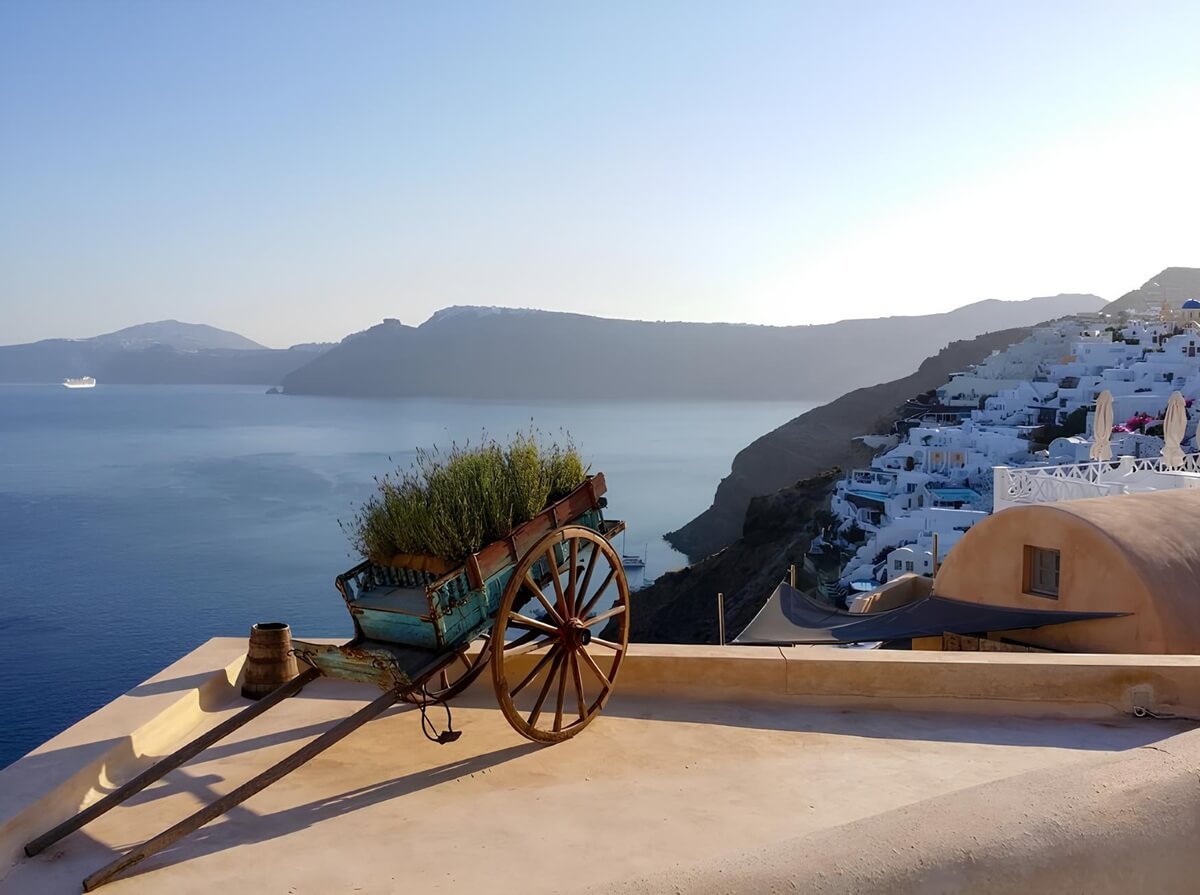
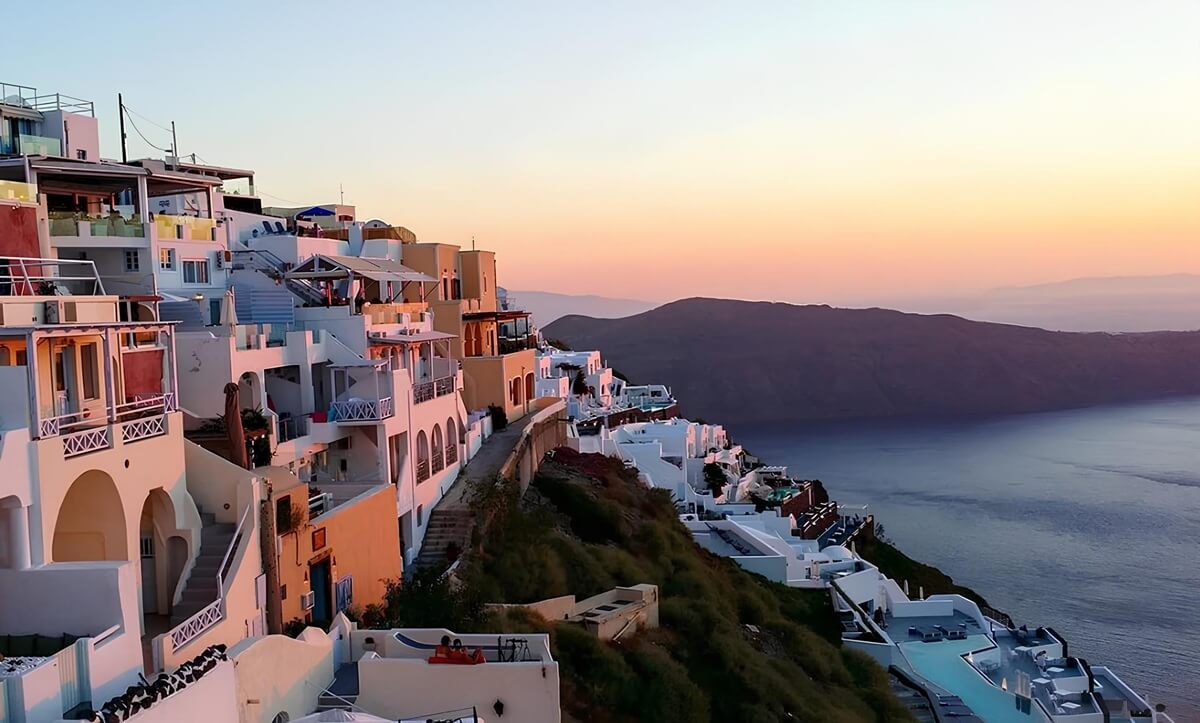
Santorini is one of the most popular Greek islands. The main attraction is the towns of Imerovigli, Oia, and Fira, which rise on a cliff opposite the volcano.
During the day and evening, there are so many tourists here that you’ll end up in at least 20 camera lenses while admiring the sea. Therefore, the best time to enjoy the views and walk around town is at sunrise.
We liked the sunrise in the town of Oia
Sunset in Imerovigli
We enjoyed swimming on Milos and Folegandros more than on Santorini. On Santorini, the water is dirtier and there are more people. Of all the beaches, the most convenient are Kamari and Perissa with black volcanic sand. A lounger per person cost from 4 euros.
Buses. Regular buses run around the islands, tickets cost from 1.7 euros. You can take them to other towns, main attractions, and beaches. The schedules are convenient, buses run frequently.
Cars. To visit all the attractions and not depend on bus schedules, we rented a car for a day twice: on Milos and on Folegandros.
We spent 47 euros on renting each car, and 15 euros went on gas for a day of active driving. Usually, the rental price for a small car like a Hyundai Getz starts from 40 euros per day. If you book and pay on the website in advance, you can expect a discount.
I recommend searching for cars in Greece on the Discovercars. To make sure the found car price is the most advantageous, check prices on the Economybookings and Autoeurope.
Restaurants. On any trip, we ask locals to recommend a restaurant to us. The best places on Milos, in our opinion, are the Sirocco tavern on Paliochori beach and the Armenaki tavern in Pollonia.
On Santorini – the Captain Dimitris tavern in the southern part of the island.
We didn’t like the restaurants on Folegandros.
On average, pastries and coffee for breakfast cost 7-10 euros for two, a small fish and salad for lunch – from 20 euros.
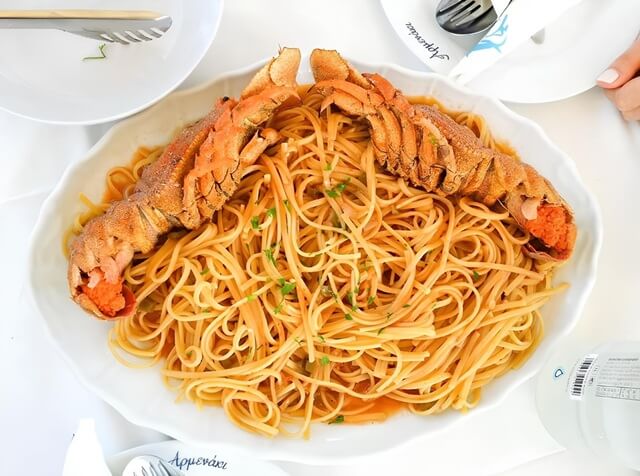
Such pasta with wine and tip on Milos island cost 55 euros
Buying necessary items on the islands is more expensive than bringing them from home. We spent about 30 euros on this. Here’s a list of things I recommend taking with you:
Our budget can be reduced if you cook food yourself all the time, buy plane tickets in advance, get to Santorini by low-cost airline and go to other islands from there.
Expenses for 11 days for two people (excluding the cost of flights to/from Athens) – 1,748 euros:
| Category | Amount |
|---|---|
| Ferries | 230 euro |
| Hotels | 599 euro |
| Restaurants | 403 euro |
| Groceries (snacks or self-catering) | 90 euro |
| Car rental | 124 euro |
| Buses | 59 euro |
| Entertainment | 200 euro |
| Miscellaneous | 43 euro |