Car hire in Zakynthos in 2026: comparing airport and city rental, seasonal price differences, insurance tips and a full cost breakdown for our 4-day drive around the island
Updated:
Where is it better to rent a car in Zakynthos: at the airport or in the city?
Renting a car at Zakynthos Airport immediately after landing is convenient for the following reasons:
- There is no need to arrange additional transport to the city, which saves time, effort, and transfer costs.
- The airport usually offers a wider selection of cars, especially during high season, which increases the chances of finding a vehicle that suits your needs.
- Rental companies at the airport have more convenient opening hours, aligned with flight arrival times.
- Most companies at the airport operate around the clock.
However, there are also downsides worth considering:
- Rental prices can be higher during high season — July and August (by 15–25%) compared to renting in the city.
- During peak season, queues for collecting a car are possible.
- Be prepared for stricter insurance and deposit conditions.
- Some local companies without offices directly at the airport may charge extra for delivering the car to the arrivals terminal.
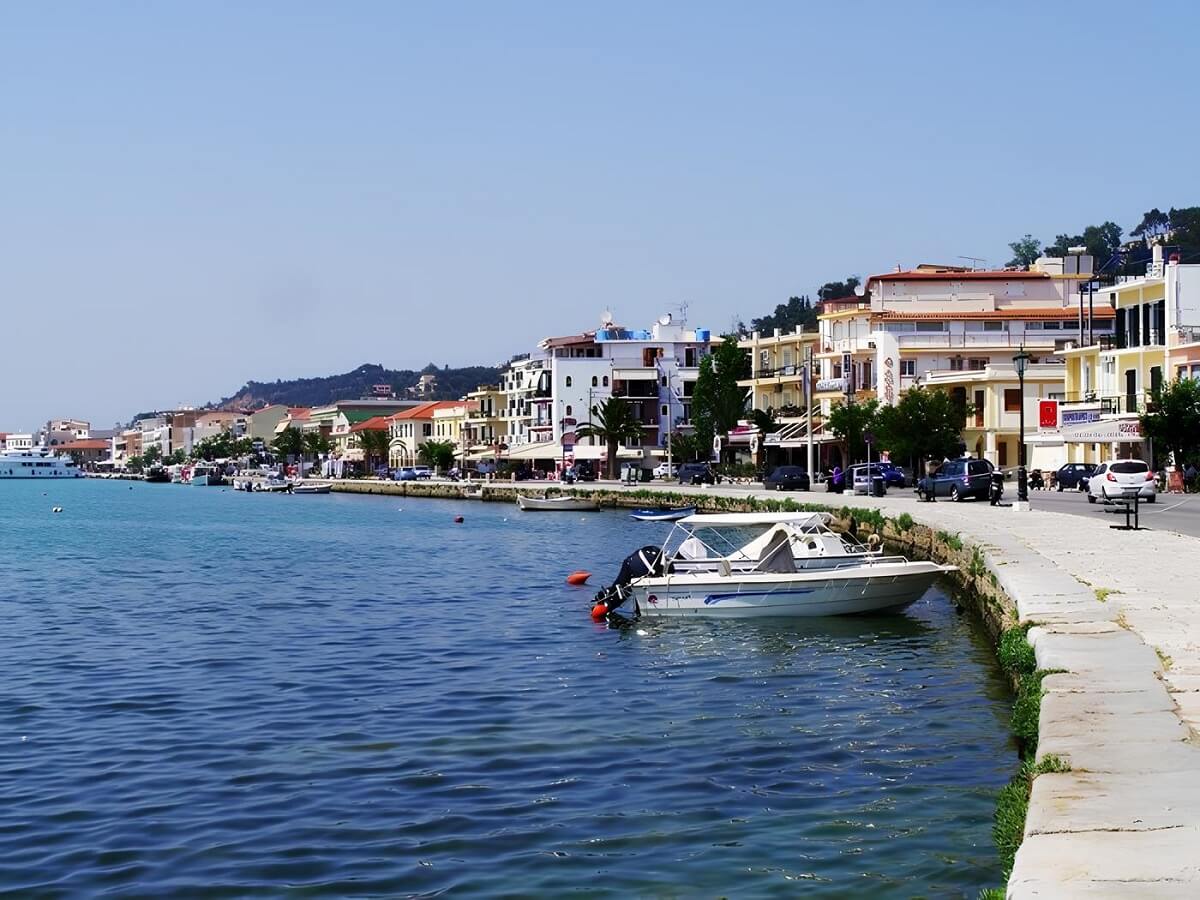

This is what the seafront of the island’s capital, Zakynthos town, looks like
Renting a car in Zakynthos town can be more economical:
- Rental prices can be lower during high season — July and August (by 15–25%) compared to renting at the airport.
- Local companies may offer more flexible insurance and deposit terms.
However, renting in the city has its drawbacks too:
- You will need to arrange a transfer from the airport to the city, which takes additional time and money (for example, in June a transfer from the airport to the city starts from 27 euro).
- The selection of cars in the city may be more limited, especially during the height of tourist season.
- There is a risk of encountering an unreliable company (which is why I recommend reading reviews carefully and checking the reputation of your chosen rental — our benchmark is user ratings on DiscoverCars, and we look for companies with an average score of no less than 7.5).
Booking a car in advance through rental aggregator platforms can save you a significant amount. For example, booking through DiscoverCars:
- six months before the trip can give savings of 25–35%;
- three months ahead — 15–25%;
- one month ahead — 10–15%;
- one week ahead — 0%.
Of course, it all depends on the location, season, and rental duration, but these are our observations based on average prices across Greece, from the locations where we have searched for rental cars on our previous trips.
In addition to DiscoverCars, I can also recommend Economybookings and AutoEurope, which are also large international aggregators of rental companies operating in Greece. The best advice I can give for saving money is to browse rental offers on each platform and then book wherever the terms are most favourable.
As for us personally, 90% of our bookings still go through DiscoverCars, because beyond the prices and additional free services (such as a second driver), they also offer excellent and advantageous insurance terms. But more on that later.
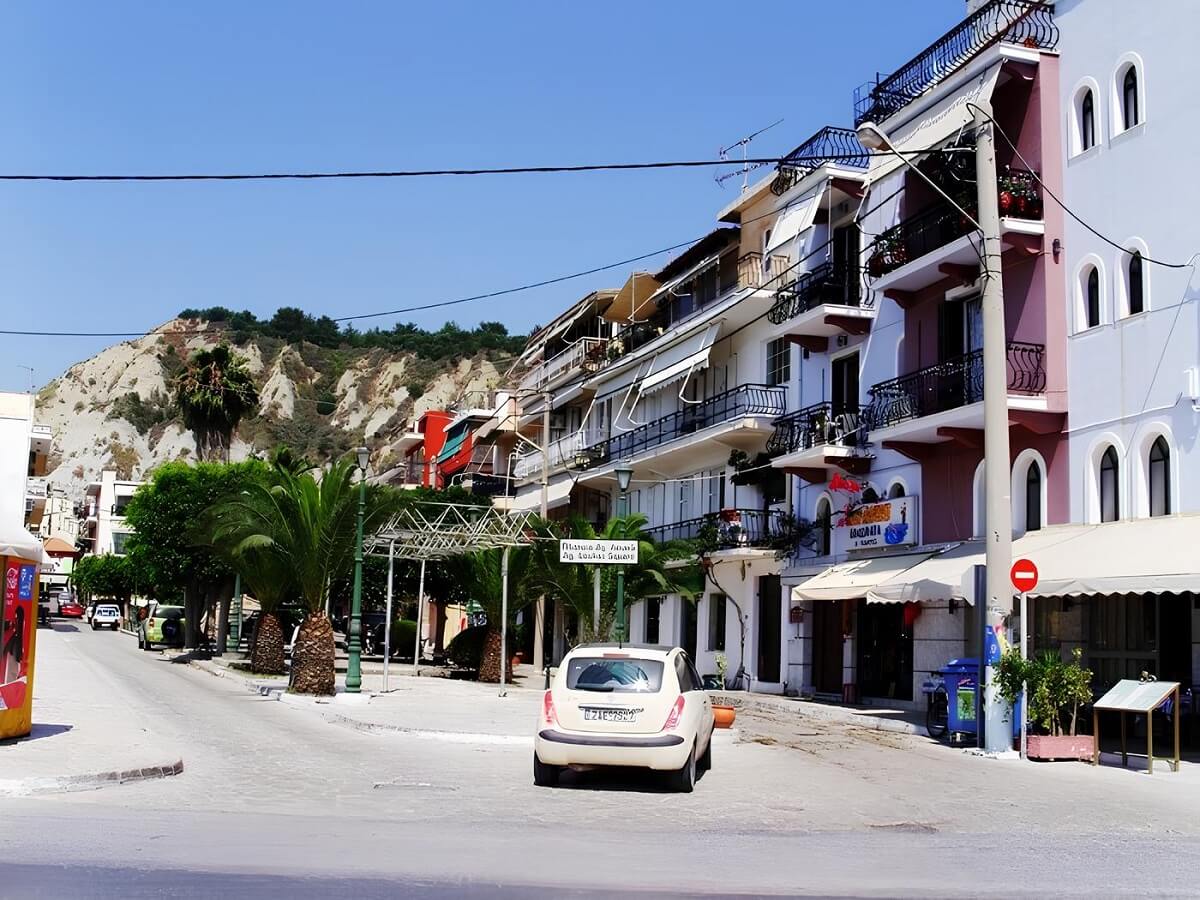

Zakynthos town looks as though it’s bathed in sunlight, framed by limestone cliffs
What car did we choose for our trip around Zakynthos?
This was essentially a continuation of our journey through the Greek islands. Before this, we completed a similar 4-day road trip around Santorini (there is a separate article about that on the site). After that, according to our plan, we flew from Santorini to Zakynthos, having made a 4-day stopover in Athens to rest.
We were looking for a car in Zakynthos for 6 days, starting from 23 June.
When it comes to the best cars for travelling around Zakynthos, I recommend looking at compact crossovers (compact SUVs), as they combine sufficient ground clearance with good manoeuvrability.
Three optimal car models for this kind of trip:
- Hyundai Kona. Thanks to its drive mode selection system, the car adapts easily to challenging terrain. A ground clearance of 17 cm allows it to handle dirt roads without problems. Good directional stability makes the Hyundai Kona an excellent choice for winding mountain roads.
- Seat Arona. Its main advantages are compact size and adaptive cruise control, which, for example, simplifies driving along the Vassilikos–Zakynthos road. Also worth noting is the spacious 400-litre boot, which comfortably accommodates luggage for several days of travel.
- Toyota C-HR (I will share my own experience of its advantages below).
These three models offer good handling on mountain roads, more effective safety systems, and an optimal balance of power and economy. This is especially important when the route includes challenging climbs, narrow winding roads, and dirt tracks.
For our trip around Zakynthos, we settled on a Kia Stonic (or similar class). It is not the ideal option due to its relatively soft suspension, which is not designed for intensive use on rough dirt roads. However, our choice was driven by several factors, including the balance of price, comfort, and rental terms.
At the pickup point, we received a Toyota C-HR, which had a 1.2-litre petrol turbocharged engine producing 116 hp with a 6-speed manual gearbox (front-wheel drive), a ground clearance of 160 mm — this was a 2020 model (from 2023 onwards, starting with the second generation, these cars are produced only with an automatic gearbox). A manual isn’t a problem for us, and such cars cost less to rent.


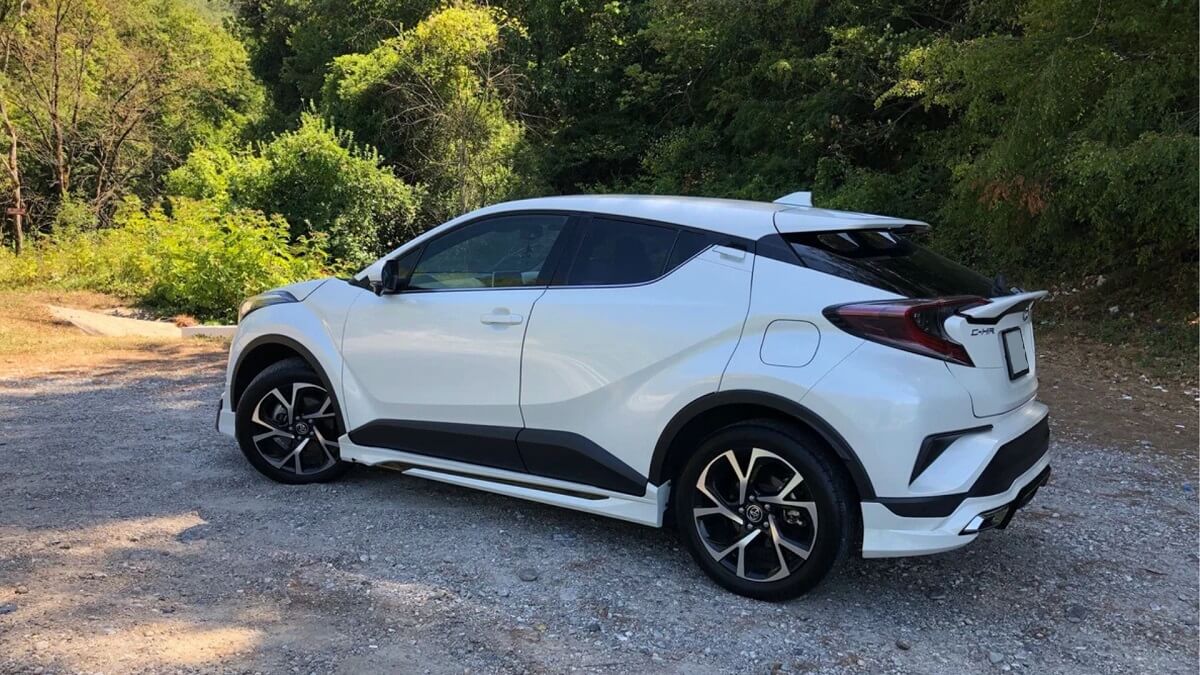

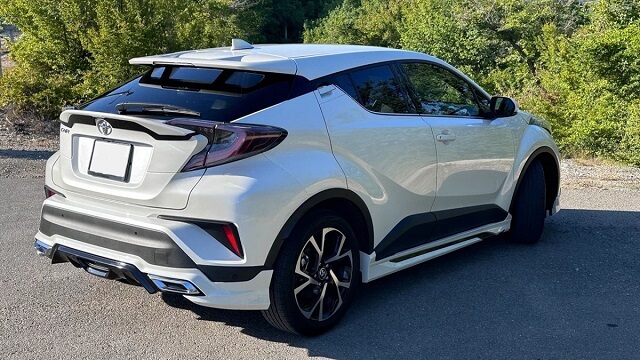
This is what our Toyota C-HR looked like — the car we drove around Zakynthos. Very futuristic
The Toyota C-HR proved to be the most versatile option for our route:
- It performed brilliantly on the coastal road from Kalamaki to Vassilikos, thanks to its comfortable suspension.
- Its excellent sound insulation provided comfort on long stretches along the main road.
- In addition, the Toyota Safety Sense system helped us navigate the winding roads of Anafonitria safely, where unpredictable bends can be a challenge even for experienced drivers.
We booked the car in advance through DiscoverCars at a local company called Cargini, three months before the trip. We had never booked through this company before, but their rating of 8.8 from users on DiscoverCars reassured us (as a reminder, we generally look for rental companies with a score of no less than 7.5).
- Rental cost — 215.31 euro for six days.
- No airport surcharge.
- Deposit was 700 euro, significantly less than the standard 1,500–1,800 euro for this class of car in Zakynthos.
- Unlimited mileage.
- Second driver service — 30 euro for the entire rental period.
We also took out additional insurance through DiscoverCars for 70.32 euro for the full rental period.
Regarding fuel policy, we try to choose the full-to-full option, which eliminates the risk of unexpected fuel costs.
The option of returning the car at a different location on the island is not very popular — only a few local companies offer this. Unlike Santorini, where it costs 100–150% more, the difference on Zakynthos is minimal, but the choice of cars is limited. Given the limited availability of suitable options, we decided to return the car to the airport where we picked it up.
Beyond the quite favourable rental terms, we also saved at least 41 euro on transfers to and from the airport to the hotel (that was the best price we found on the local driver transfer platform Gettransfer for our arrival and departure dates).
A tip regarding car rental:
- In Zakynthos, I recommend booking through local companies such as Vazeos, Cargini, Auto Mega, or Zante Rental — they often have better prices and terms than international brands.
- The roads in Zakynthos are generally manageable, but always document all existing damage carefully (ideally by filming it) and make sure your insurance covers gravel roads.
Car rental prices in Zakynthos: what time of year is cheaper for planning a road trip around the island?
Seasonality, demand, and prices can significantly affect rental costs and vehicle availability. If you want to save money and avoid crowds, the best period for renting is the shoulder season: May, the first half of June, or October. During this time, prices are considerably lower and the choice of cars is wider.
In summer, especially July and August, finding a good car without booking 2–4 months in advance is nearly impossible, and prices can double compared to early June.
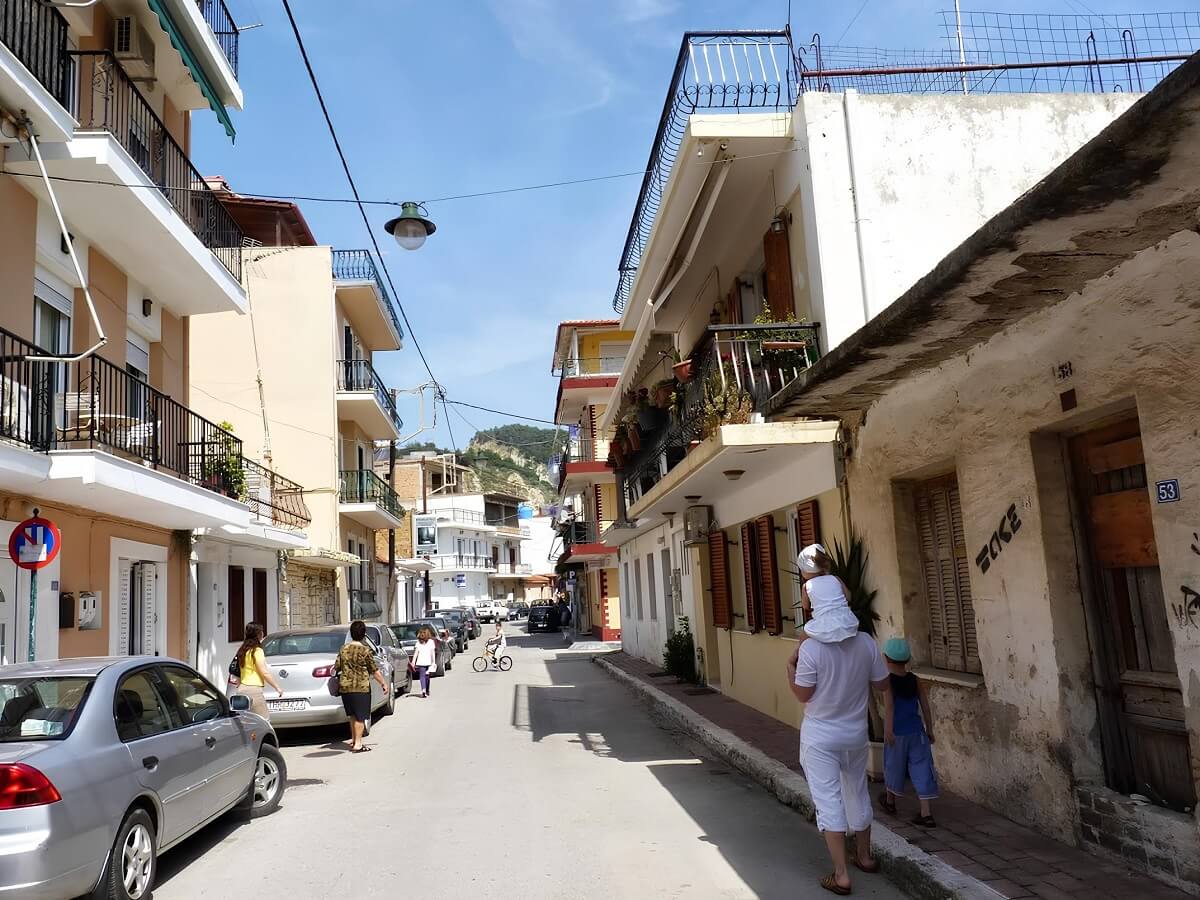

This is how many cars are parked on the streets of Zakynthos in June
The low season (November–April) is not the best time for a trip, though car rental — for example, a Hyundai Kona — is at its cheapest (15–25 euro per day). Many companies don’t operate in winter, and some attractions may be closed.
Tip: we usually book a car 2–5 months before a summer trip and 3–4 weeks ahead during the shoulder season.
For a six-day rental as in our case, prices vary by month as follows (checked for the same class of car we rented — compact SUV — in early March 2025, based on dates from the 23rd to the 28th of each month):
- In April, a similar car can be found for 145–195 euro.
- In May — 195–245 euro.
- In June, prices rise to 215–305 euro.
- In July and August, they jump to 500–700 euro.
- In autumn, in September and October, prices drop back to 370–495 euro.
The following factors also affect the price:
- Rental duration. Renting for a longer period (from 7 days) can earn a discount of roughly 10–15% per day.
- Insurance. The additional full coverage we took out adds around 11–22 euro per day (depending on the vehicle class), but it can save you from unexpected costs — for example, in the event of minor damage caused by gravel, of which there is plenty in Zakynthos.
A few more tips regarding visits to some popular spots on the island:
- In high season, the roads are crowded, especially near popular beaches and Navagio Bay.
- If you’re planning a trip to the Vassilikos peninsula, May and early June offer far fewer people while the beaches remain excellent.
- Mount Skopos is a wonderful spot for panoramic photos, but the roads are narrow, so it’s better to choose a compact car and visit at the start of the season when traffic is lighter.
- It’s worth visiting authentic villages such as Volimes and Anafonitria — again, especially in autumn when there are very few tourists.
Insurance for a rental car in Zakynthos: what we chose and how much it cost us
In Zakynthos, most rental companies include only minimal protection in their basic insurance:
- TPL (third party liability),
- CDW (damage coverage with an excess),
- TP (theft protection).
But it’s worth knowing that these policies do not cover damage to the undercarriage, tyres, glass, or accidents on dirt roads, which are common in Zakynthos.
What follows is not an advertisement for insurance — nobody pays us for it — but our personal experience, which may help you save considerable money and stress on the road. We compared insurance options before the trip and concluded that the “Full Coverage” policy from DiscoverCars is the best solution for Zakynthos. It cost us 11.72 euro per day, and it was a sensible investment. The alternatives turned out to be either more expensive or less advantageous:
- Local companies offered basic insurance but with an excess of 500–1,000 euro and no coverage for tyres, glass, or the undercarriage.
- International companies had SCDW (extended coverage) for 18 euro/day, but with a range of restrictions and the need to pay extra for additional risks.
For our route, full coverage was a necessity. Here’s why:
- Day 1: The road from Zakynthos town to Volimes via the port of Agios Nikolaos included serpentine roads with steep climbs. Local insurance policies often don’t cover damage on such sections.
- Day 2: The Navagio viewpoint — a place where I scratched a wheel rim on a sharp rock. With basic insurance, this could have cost me 150–200 euro.
- Day 3: The route through Kalamaki to Vassilikos included dirt roads leading to Gerakas and Dafni beaches. And it was on one of those roads (to Gerakas) that I slightly scraped the undercarriage — something most local insurance policies don’t cover for off-road damage.
Thanks to DiscoverCars “Full Coverage,” we worried far less about potential extra costs. This insurance covers all risks and guarantees:
- Full reimbursement of the excess in the event of damage.
- Protection without exclusions for mountain roads and off-road driving.
- Coverage of damage to rims, tyres, undercarriage, and glass.
- No need to block a large deposit on your card.
To sum up, I spent 70.32 euro on insurance for 6 days, whereas SCDW from Europcar would have cost me 138 euro, and basic local insurance plus potential damage charges — over 300 euro.
Full coverage isn’t always necessary, but if you’re planning a trip around Zakynthos, don’t cut corners on insurance. The roads here can be hazardous, and mountain serpentines and dirt tracks can be a real test for any car. It’s better to invest a little extra in comprehensive coverage and focus on enjoying the island rather than worrying about potential repair bills.
Our road trip around Zakynthos. Day 1: Zakynthos town – port of Agios Nikolaos – Volimes
The first day of our road trip in Zakynthos began with an early morning departure from Zakynthos town heading towards the port of Agios Nikolaos, and from there on to the mountain village of Volimes. This route covers only 34 km, but thanks to numerous stops and scenic spots, the day turned out to be packed and unforgettable.
Before setting off, we had breakfast at the Avli restaurant. They serve wonderful Greek yoghurt with honey and nuts, fresh pastries, and a traditional feta omelette. Breakfast came to 45 euro for two. The atmosphere on the terrace overlooking the bay was definitely worth every cent.
- Port of Agios Nikolaos
The drive to the port of Agios Nikolaos took about an hour. It’s a small marina with gleaming white yachts and fishing boats, with a special maritime atmosphere. We decided to stop here, have a coffee, and enjoy the sea views. We strolled along the waterfront for a few hours and stayed for lunch.
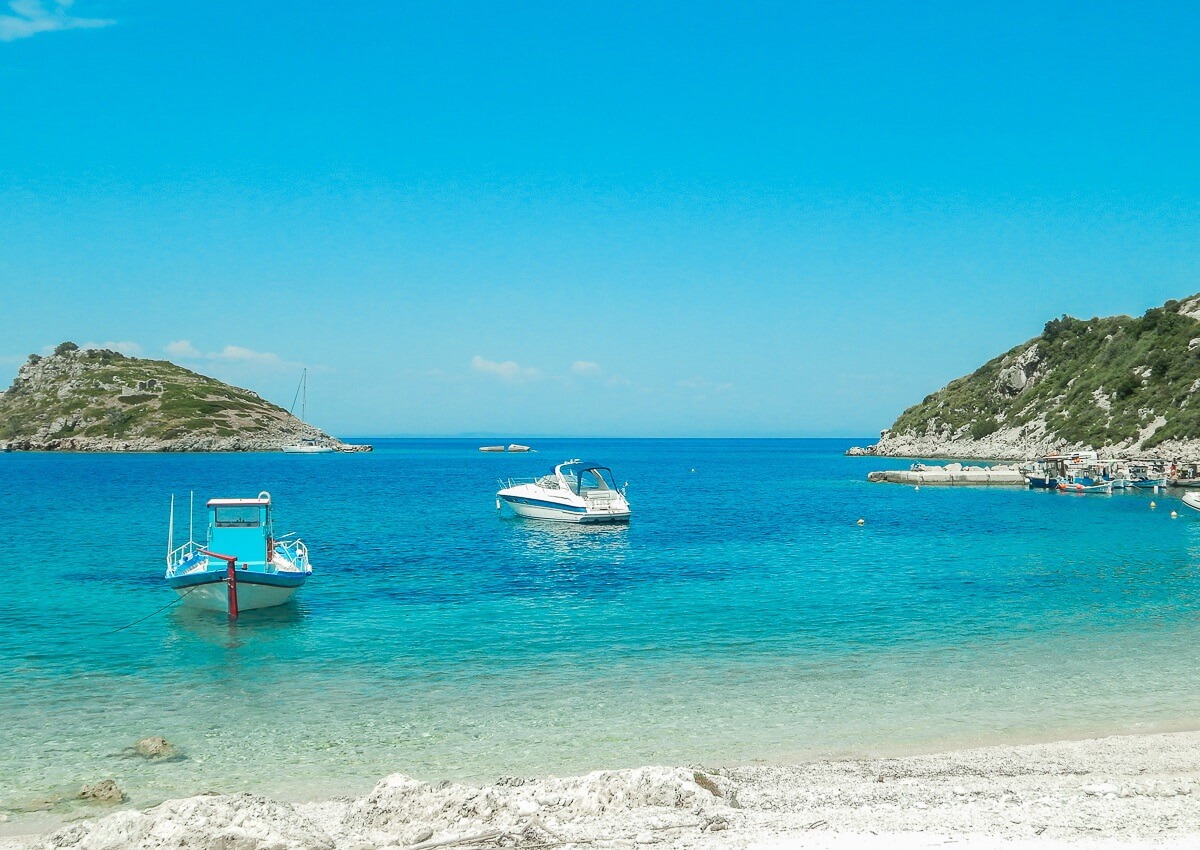


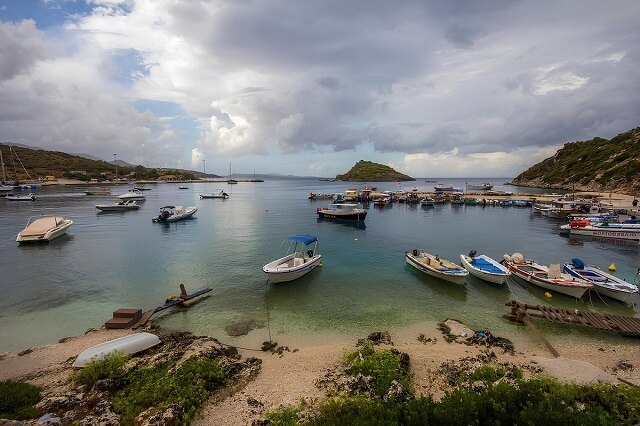
The port of Agios Nikolaos has many fishing boats (photo 1), and nearby — a beach with crystal-clear water (photo 2)
At the local taverna Poseidon, we enjoyed fresh mussels, a Greek salad, and red mullet. Lunch came to 60 euro for two. This is one of those occasions when the food is not just tasty but genuinely authentic.
We paid 2 euro for parking and headed on.
If the weather is right for a swim, it’s worth stopping at Alikanas Beach. It’s a wonderful spot with a sandy shore and clear water. Sun lounger hire costs 10 euro per set, and cafés along the shore serve light snacks. The best time to visit is in the morning, when the sea is calm and the tourist crowds haven’t yet arrived.
- Volimes
After lunch, we headed to Volimes — one of the most characterful villages on the island. The drive took an hour and a half, though the distance isn’t all that great in kilometres. This was where I first appreciated the Toyota C-HR on mountain roads — its excellent handling and stability through tight bends genuinely inspire confidence.
Volimes is known for its authentic atmosphere, craft workshops, and local wineries. We spent the rest of the day here, wandering the narrow streets, visiting a winery, and sampling local wine.


Volimes draws visitors with its authentic atmosphere
Parking in the village centre is free, which makes a pleasant contrast to prices in tourist areas.
As an alternative option for an afternoon outing, I recommend the Monastery of Saint George of Kremnon. This is a 16th-century historical monument with breathtaking sea views. Entry to the monastery is free, though donations are welcome. The best time to visit is morning or evening, when it’s not so hot.
After a wonderful day of exploring, tired but satisfied, we had dinner at Spiros Family Restaurant — a lovely family restaurant with a flower-filled terrace. We ordered a traditional mezze set, slow-roasted lamb, and the Greek dessert galaktoboureko. Dinner came to 75 euro for two.
For the night, we stayed at Anemelia Studios & Apartments — comfortable apartments with mountain views, breakfast included, and free parking. The cost of accommodation for the night was 85 euro.
Total expenses for the day:
- Fuel: 4 euro.
- Food: 180 euro.
- Accommodation: 85 euro.
- Parking: 2 euro.
- Toll roads: 0 euro.
- Total: 271 euro.
Should you take the "second driver" option for this kind of route around Zakynthos?
From our experience, the second driver service on a route around Zakynthos can be very useful as it allows you to share the responsibility at the wheel:
- Our route included challenging mountain serpentines and long climbs, especially in the northern part of the island, where the road to Volimes and Navagio Bay demands maximum concentration. Swapping drivers on such sections significantly reduces fatigue and improves safety.
- In addition, the average daily mileage on the route was around 42 km, but due to the mountainous terrain and numerous stops, time behind the wheel increased to 2–3 hours per day. Sharing the driving made it possible to enjoy the views and made the trip less tiring.
- Another argument in favour of this option: if one driver becomes unwell, the other can legally take the wheel.
On the other hand, if one driver feels confident behind the wheel and is ready to handle the route alone, this option can be skipped. The second driver service costs 30 euro for the entire rental period. It’s not a large amount, but it can be saved if it’s not needed — the key is to plan rest stops carefully in advance.
We found it more comfortable to share the driving. Looking at the overall trip budget, 30 euro amounts to less than 2.5% of total expenses. It’s a small price for comfort, safety, and the chance to share the experience of the journey.
Day 2: Volimes – Navagio Bay – Anafonitria
The second day of the road trip around Zakynthos was devoted to one of the island’s most famous sites — Navagio Bay — and the mountain village of Anafonitria. We covered just 40 kilometres in total, but this route was the most spectacular and memorable.
- Navagio Bay
The morning began with breakfast at the hotel, after which we set off for the Navagio Bay viewpoint. This is one of the most photogenic spots in Greece: from a height of over 200 metres, you get a panoramic view of the turquoise sea, white beach, and the rusting hull of the shipwrecked Panagiotis. Entry to the viewpoint is free, as is parking.
Best time for photos — early in the morning, when the sunrise creates perfect lighting.
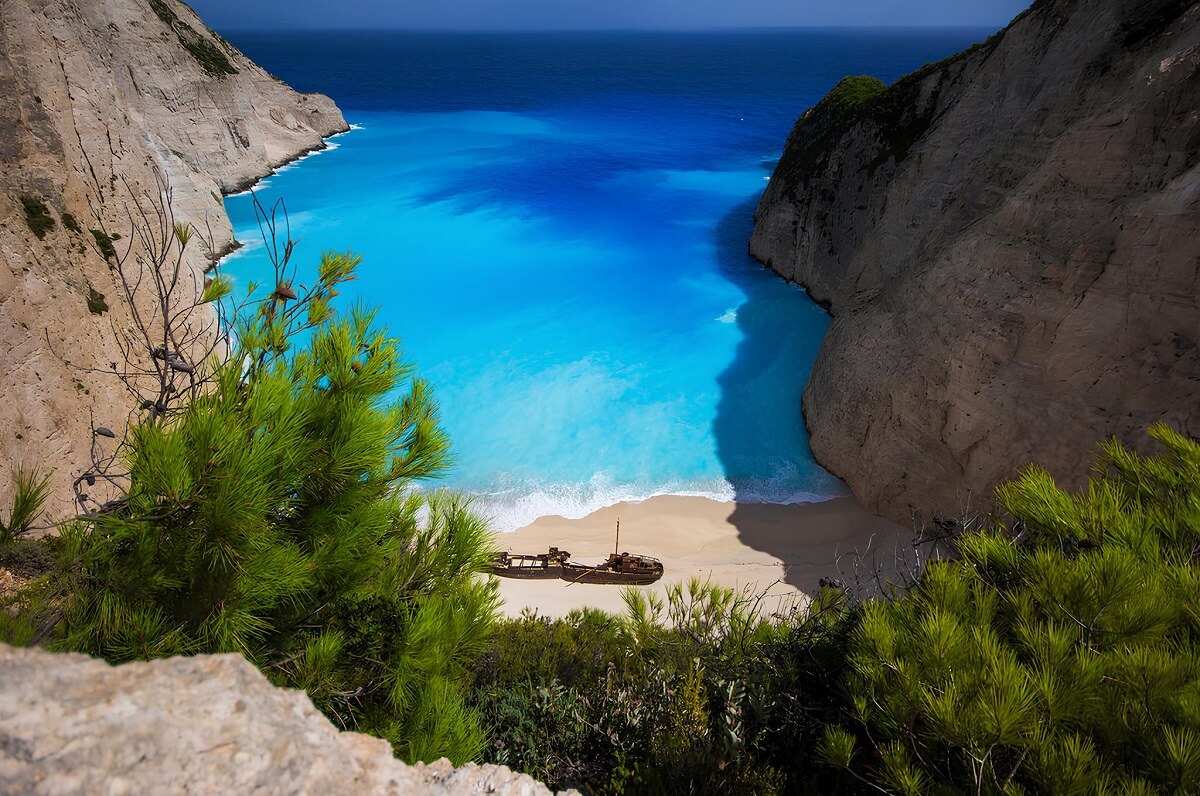

View of Navagio Bay and the shipwreck on the way to the viewpoint
After visiting the viewpoint, you can continue on, but I recommend taking a boat trip to Navagio Beach. It departs from the nearby Porto Vromi beach, costs 35 euro per person, and allows you to see the bay from the water and swim in its crystal-clear waters.
An alternative on the water is a trip to the Blue Caves, which captivate visitors with an extraordinary play of light in the water. Tours cost from 25 euro per person, and the best time to visit is between 9:00 and 11:00.
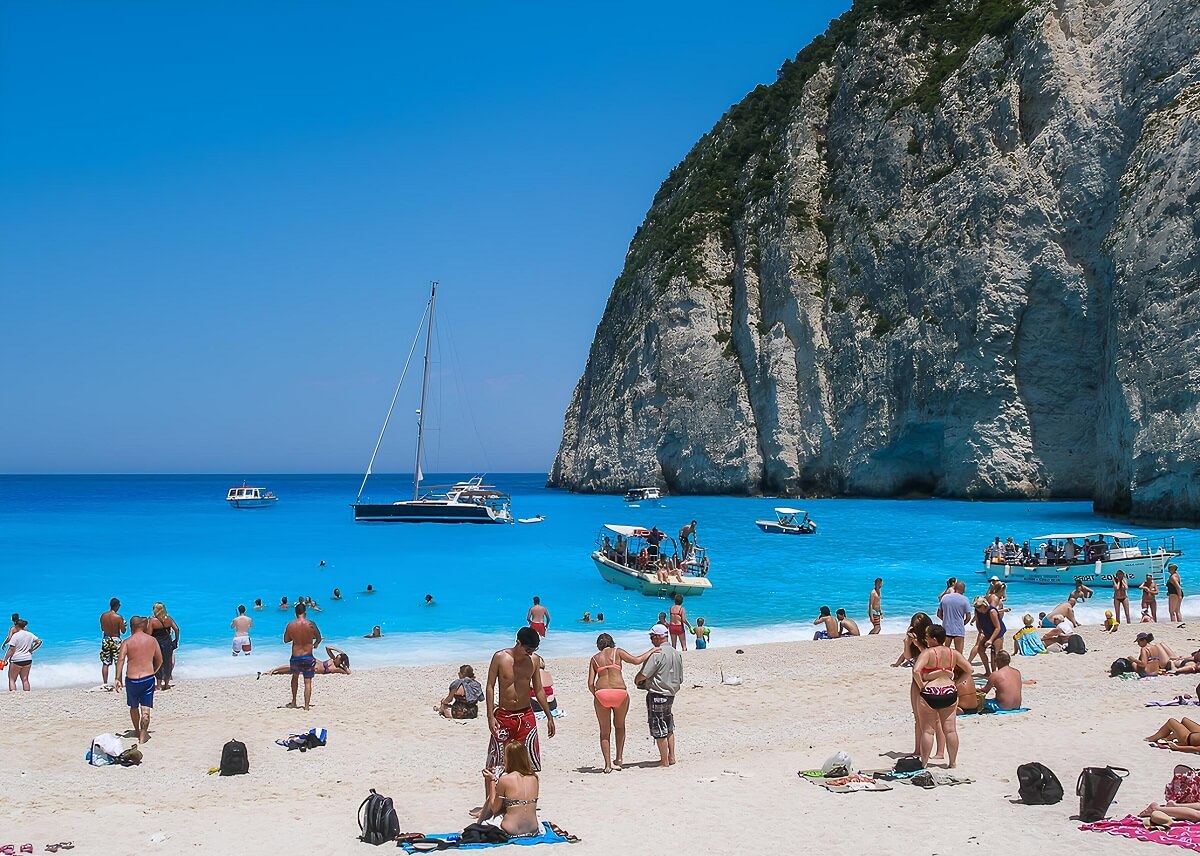
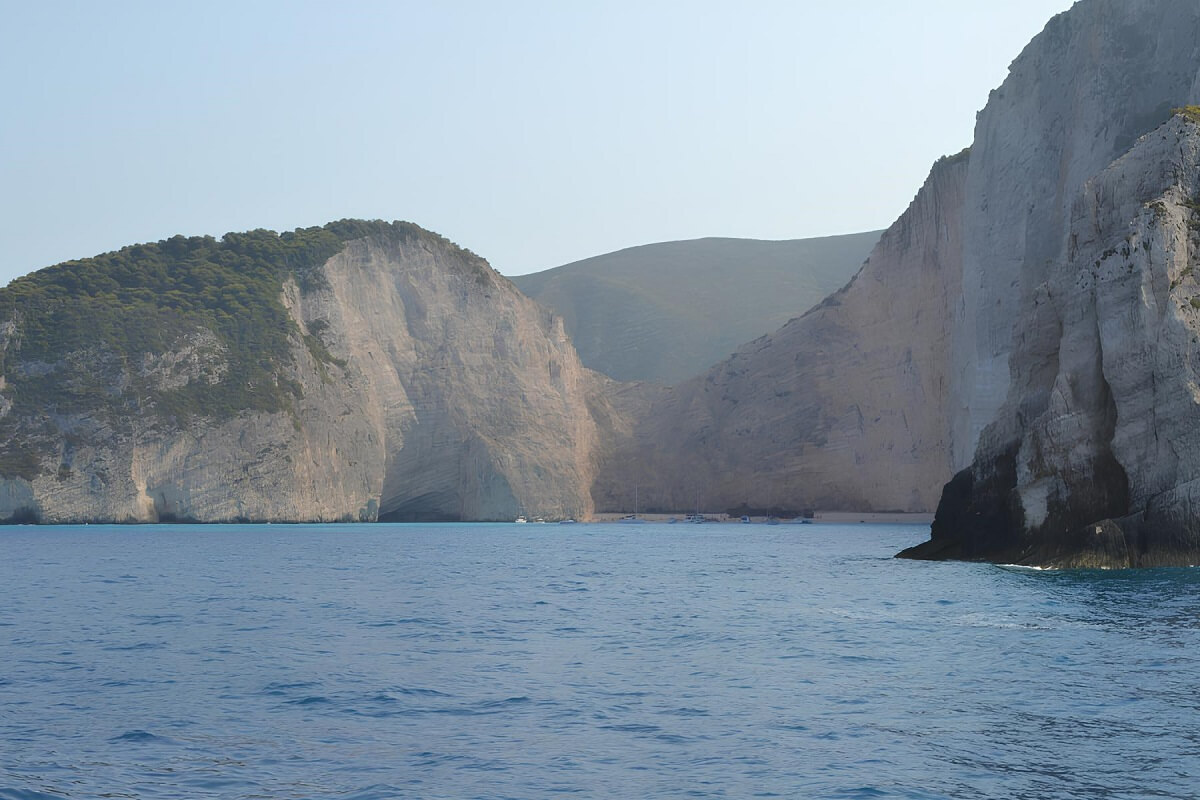


A boat trip to Navagio Beach allows you to see the bay from the water (photo 2) and spend some time on the beach (photo 1)
For lunch, we stopped at the Porto Vromi taverna with views over the bay. We ordered fresh grilled octopus, sardines saganaki (sardines fried in a special pan), and a classic Greek salad with local cheese. Lunch came to 65 euro for two, but the setting is worth every euro.
- Anafonitria
Next, we headed to Anafonitria — an ancient mountain village with an authentic atmosphere. Here it’s worth visiting the Anafonitria Monastery, where Saint Dionysios — one of Zakynthos’s most revered saints — once lived. Entry to the monastery is free. Parking in the village centre is also free.

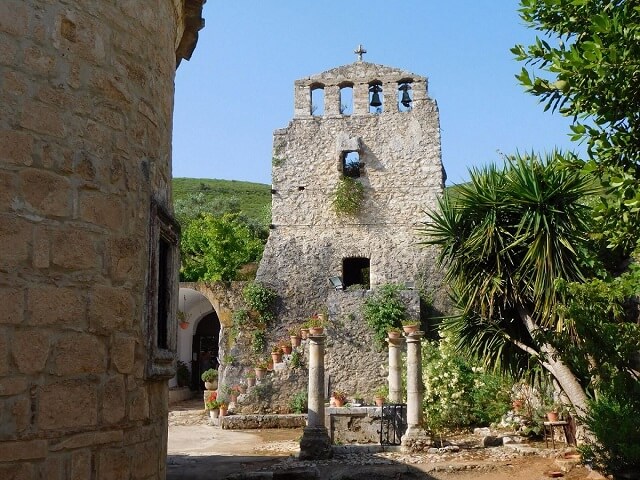
The Anafonitria Monastery is small and very ancient, beautifully decorated with potted flowers
We spent a few hours in Anafonitria, wandering the narrow streets and browsing local shops selling natural honey, homemade wine, and olive oil.
As an alternative afternoon stop, I recommend visiting a family winery near Anafonitria. Here you can not only learn about the local winemaking process but also taste the wine. A tasting costs 15 euro per person, lasts about 1–1.5 hours, and you can buy a bottle to take home if you wish.
We spent the evening at the Elinon Gefsis restaurant, housed in an ancient stone building. We ordered baked cheese saganaki, homemade moussaka, fresh fish, and local white Verdea wine. Dinner cost 85 euro for two.
We stayed the night at Anastasia Studios — a cosy studio set among olive trees. The accommodation cost of 95 euro included a homemade Greek breakfast prepared by the host herself, as well as free parking.
Total expenses for the day:
- Fuel: 4.68 euro (2.4 L at an average price of 1.95 euro per litre).
- Food: 150 euro.
- Accommodation: 95 euro.
- Parking: 0 euro.
Total: 249.68 euro.
If you add the boat trip to Navagio Beach (70 euro for two), total expenses for the day come to 319.68 euro.


In Anafonitria, handmade rugs are also sold
The third day of our road trip through Greece: Anafonitria – Kalamaki – Vasilikos
The morning began with breakfast at Anastasia Studios, included in the accommodation price. We took our time, as ahead of us lay an unhurried day full of beautiful scenery and pleasant discoveries.
- Kalamaki
The first stop on the route — Kalamaki Beach. The drive from Anafonitria took about 1.5 hours, but it was a pleasure: winding roads opened up wonderful panoramas, and a gentle sea breeze added to the comfort. Kalamaki Beach is not just a beach — it’s a genuine reserve for Caretta-caretta turtles. We couldn’t resist taking a walk along the shore to watch them.


Kalamaki Beach is clean and quiet in the morning
To make our time there even more comfortable, we hired a set of sun loungers with a parasol for 10 euro. We also decided to join a tour that allows you to see the turtles up close (25 euro per person).
The beach has everything you need: free parking, showers, changing rooms, and plenty of cafés. Morning hours are the ideal time to visit, when there aren’t too many people and the water is at its calmest.
As an alternative to Kalamaki, consider the Keri Lagoon — a sheltered cove with clear water and picturesque cliffs. It’s quieter, and sun lounger hire costs 8 euro per set. Parking is also free, and there are several tavernas nearby.
For lunch, we headed to the Crystal Beach taverna. A wonderful spot right by the sea, perfect for seafood dishes. We ordered shrimp saganaki (16 euro), seafood risotto (24 euro), a Greek salad (14 euro), and a refreshing lemonade. Lunch for two came to 70 euro in total, and it was worth every cent.
- Vassilikos
After lunch, we headed to Vassilikos. The drive took about an hour, and when we arrived, we were greeted by a cosy fishing village with a traditional atmosphere. We were drawn to the Sea Turtle Protection Centre — places like this are important for conservation. The nearby Dafni Beach is also an important nesting site for these rare animals.
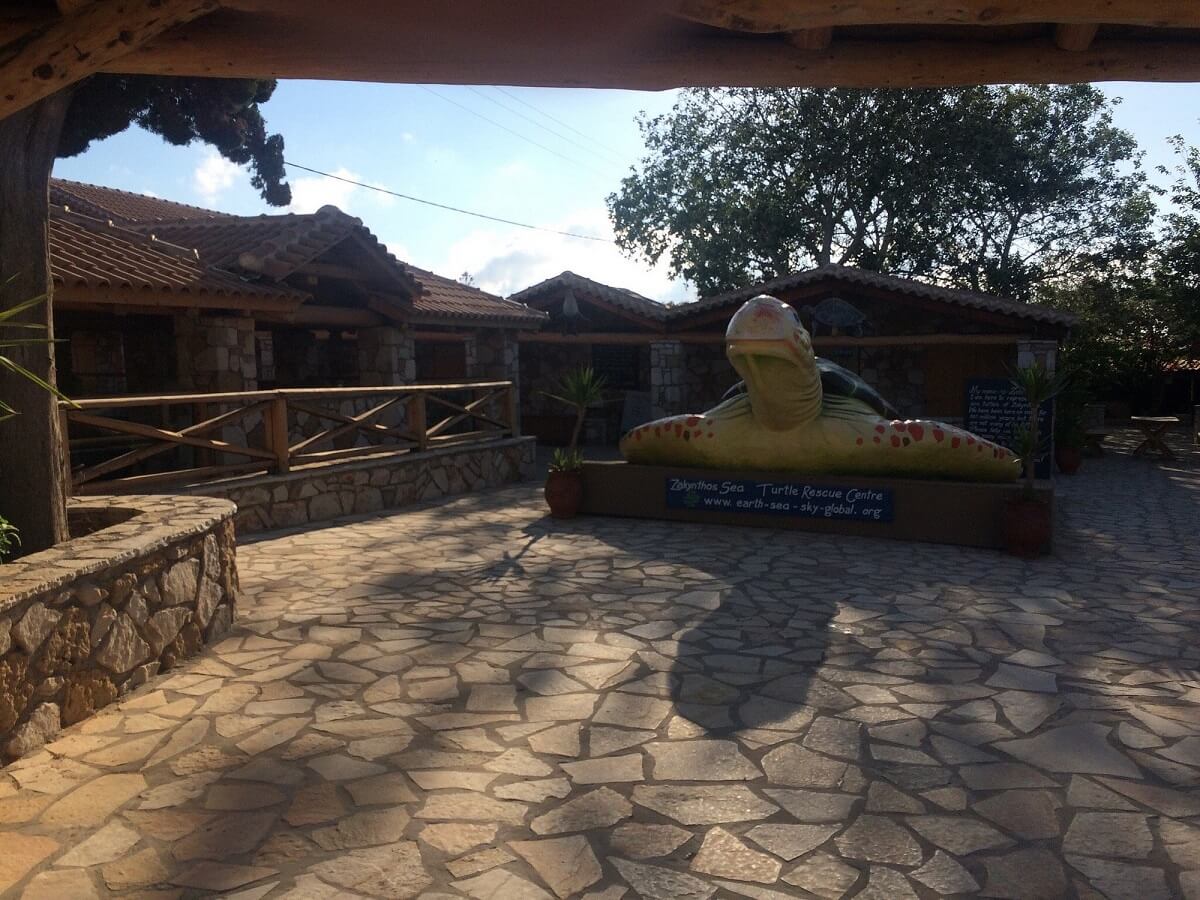

The Sea Turtle Protection Centre explains in detail how the little hatchlings emerge, and features this large sculpture
Vassilikos is also known for its fresh seafood, so we couldn’t resist sampling local dishes at one of the tavernas. Parking at the harbour costs 2 euro per hour.
We stayed at Vasilikos Beach Studios (95 euro per night). A cosy spot, just 5 minutes’ walk from the beach, with a delicious homemade breakfast, a pool, free Wi-Fi, and even a mini kitchen in the room. Most importantly — a peaceful atmosphere that allows you to truly unwind.
For dinner, we chose Taverna Nikos — a family taverna with sea views, perfect for watching the sunset. We tasted fresh scallops (26 euro), lobster pasta (42 euro), and traditional Greek yoghurt with honey and nuts (12 euro), accompanied by a bottle of local white Robola wine. Dinner came to 90 euro in total — a perfect end to the day.
Expenses for the day:
- Fuel: 4.31 euro.
- Food: 160 euro.
- Accommodation: 95 euro.
- Parking: 4 euro.
- Tickets: 0 euro.
Total: 263.31 euro.
Day 4: Vassilikos – Zakynthos town
The day began with a delicious hotel breakfast, after which we set off for Cape Gerakas, about 40 minutes’ drive from Vassilikos.
- Cape Gerakas
This place impresses with its majestic rocky scenery and historic lighthouse. The viewpoints offer breathtaking panoramas of the Ionian Sea, and in the clear waters below you can spot sea turtles in their natural habitat. A network of walking trails allows you to explore the unique natural landscape of the cape. Parking is free, and we spent about two hours enjoying the views.
Descending to the lower level, you reach Gerakas Beach. This is one of the most beautiful spots on the island, surrounded by red cliffs. Turtles nest here, so access to certain areas is restricted during nesting season. The water at the beach is incredibly clear, and sun lounger hire costs 8 euro per set. The ideal time to visit is in the morning, when there are still few people.

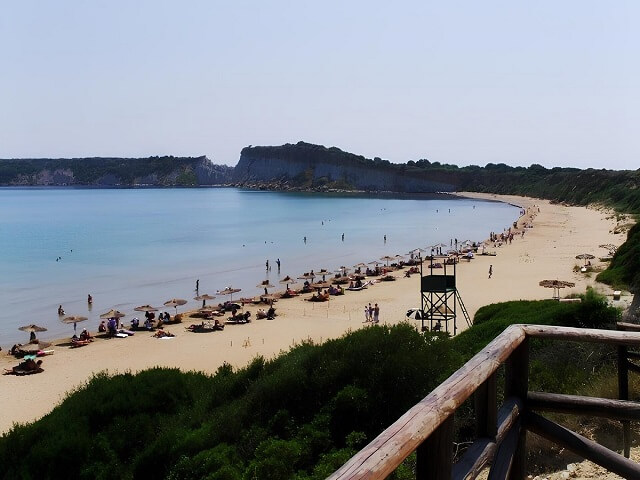
At Gerakas Beach, sunbathing is only permitted on a narrow strip near the waterline, so as not to disturb turtle nests
As an alternative, you can visit Porto Roma Beach — a sheltered cove with fine sand and calm waters, ideal for families. The beach is less crowded, surrounded by picturesque cliffs that offer shelter from the wind. There is free parking, sun lounger and parasol hire, and a small beach bar.
For lunch, we visited the Porto Roma taverna, situated right on the beach overlooking the bay. We ordered fresh grilled squid (22 euro), Cretan dakos salad with rocket and prawns (18 euro), and homemade lemonade (8 euro). Lunch for two came to 65 euro in total.
- Zakynthos town
After lunch, we headed to Zakynthos town, a drive of about 1.5 hours. We climbed up to Bochali Hill, a historic neighbourhood with a 15th-century Venetian fortress. From here, a panorama opens over the town, the harbour, and the Ionian Sea. We explored the fortress ruins and visited the Church of the Virgin Mary Chrysopigia Chrysostomou. Parking near the fortress costs 3 euro per hour; we spent about two hours there.


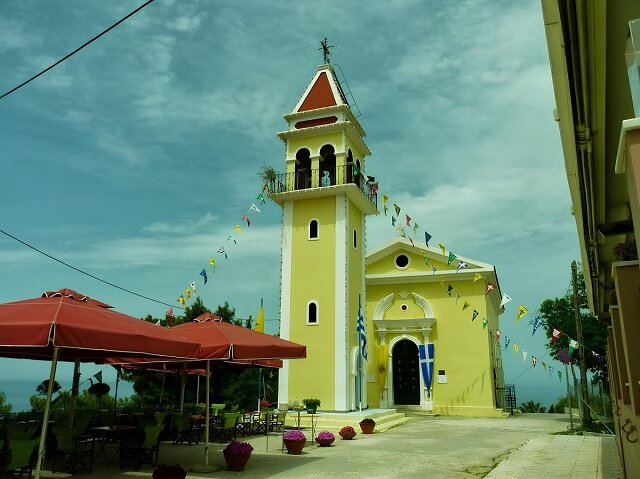
Bochali is a small settlement with two well-known landmarks: a 15th-century Venetian fortress (photo 1) and the Church of the Virgin Mary Chrysopigia (photo 2)
Alternatively, you can visit the Church of Saint Dionysios — the most important Orthodox church on the island. This impressive temple with a richly decorated interior houses the relics of Saint Dionysios. Entry is free, but a dress code applies: covered shoulders and knees.
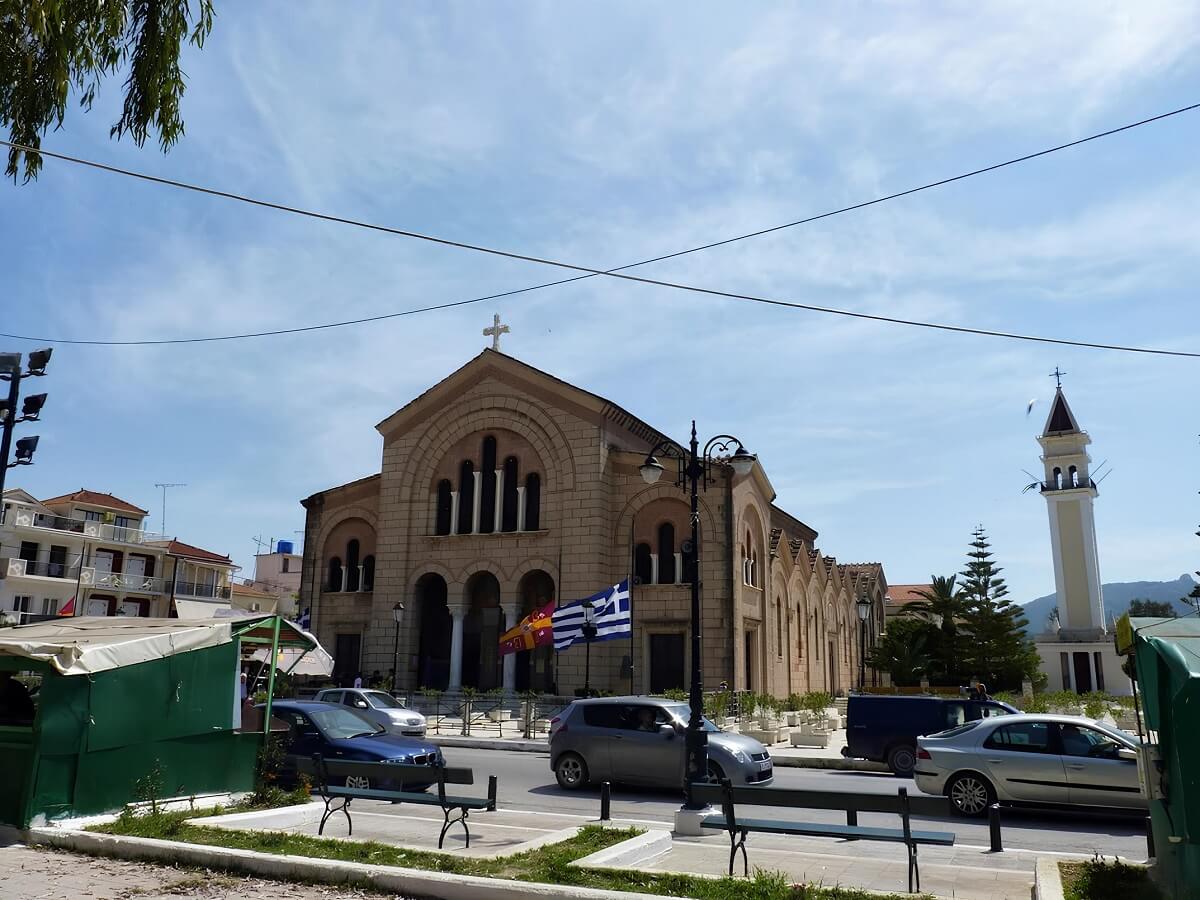
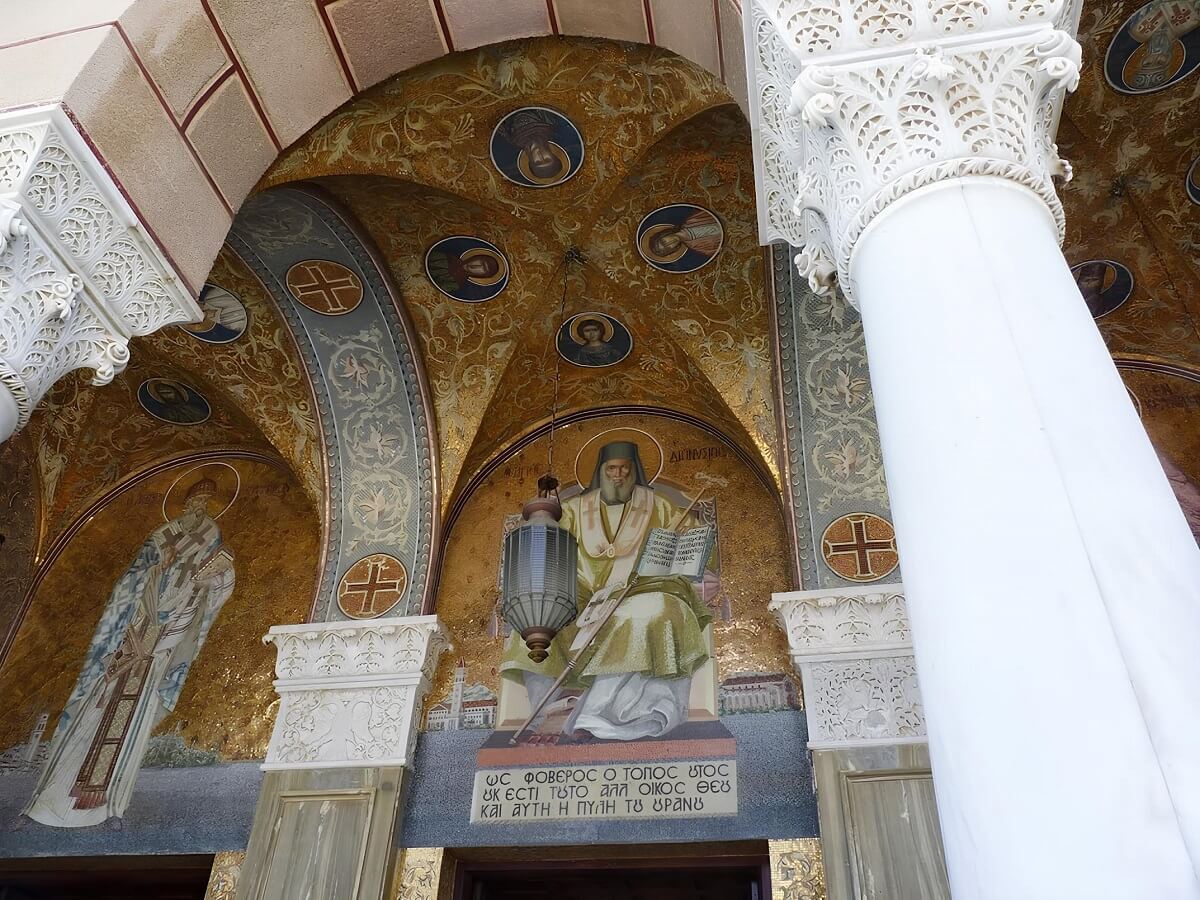


The Church of Saint Dionysios is a beautiful and imposing building in Zakynthos town (photo 1), and its frescoes are no less impressive than the building itself (photo 2)
We had dinner at the Prosilio restaurant on Bochali Hill, with a panoramic view of the town and the sunset. We tasted tuna tartare (24 euro), cuttlefish ink risotto (28 euro), grilled sea bream fillet (32 euro), and a bottle of local Goustolidi wine. Total dinner bill for two — 95 euro.
We stayed at the Strada Marina Hotel (85 euro per night, including taxes and fees). A convenient hotel located in the town centre, making it easy to explore the surroundings.
Total expenses for the day:
- Distance covered: 60 km.
- Fuel: 7.28 euro.
- Food: 160 euro.
- Accommodation: 85 euro.
- Parking: 6 euro (Bochali).
- Tickets: 0 euro.
Total for the day: 258.28 euro.
It’s worth noting that there are no toll roads on Zakynthos island, which makes the trip more economical.
Challenging road sections (or those requiring particular driver attention) on our route around Zakynthos
The route around Zakynthos demands heightened attention from the driver on certain sections.
- The road from the port of Agios Nikolaos to Volimes passes through mountainous terrain with serpentine bends, narrow stretches, and limited visibility. In my view, it’s important to keep to the right, reduce speed to 30–40 km/h on bends, and sound the horn before blind spots.
- The ascent to the Navagio Bay viewpoint requires particular caution: the last 500 metres have a gravel surface, and a steep gradient of up to 15% can make handling more difficult. It’s better to arrive early to avoid parking problems, and to use the handbrake when parked.
- The stretch from Anafonitria to Kalamaki changes character from mountain road to flat terrain, but remains challenging due to a large number of poorly marked intersections, uneven road surface, and heavy traffic. Here it’s worth slowing down in built-up areas, avoiding sudden manoeuvres, and being prepared for unexpected moves by tourists on scooters.
- The coastal road from Kalamaki to Vassilikos also has its challenges. A narrow carriageway, partially unpaved sections, and large numbers of pedestrians near the beaches require slow driving and heightened attention near hotel and tourist zone exits.
- Returning to Zakynthos town, visitors encounter a sharp transition from open roads to a confusing one-way system in the centre. It’s important to study the town map in advance, pay close attention to road signs, and where possible leave the car in outlying car parks. During rush hour, congestion near the port can slow traffic considerably, so patience and strict observance of the rules is the key to safe driving.
To avoid unexpected situations on the roads of Zakynthos, I recommend refuelling in advance, keeping an eye on fluid levels in the car, and not ignoring engine braking on steep descents.
Driving at night on rural roads can be dangerous due to the absence of lighting and the possibility of animals appearing suddenly. Good timing and caution will help make the trip comfortable and safe.
How much did our 4-day trip around Zakynthos cost (car rental at the airport for 6 days + additional expenses along the route)?
We carefully calculated all expenses to understand the full cost of this trip.
Car rental costs:
- Renting a Toyota C-HR through DiscoverCars for 6 days came to 215.31 euro, which we consider quite good value for this island.
- We additionally took the second driver service for 30 euro.
- “Full Coverage” from DiscoverCars for 70.32 euro.
- The 700 euro deposit was returned without any issues after bringing the car back.
Total rental cost including all options — 315.63 euro.
Tips:
- We would recommend picking up the car at the airport, as this saved us 41 euro on the transfer.
- Always check the insurance terms and fuel policy carefully.
- Book the car well in advance, especially in season (2–4 months ahead).
- For the best savings when booking, we recommend browsing offers across multiple platforms first (we use three: DiscoverCars, Economybookings, and AutoEurope). These services allow you to compare offers from different companies — both international and local — on price for the vehicle class you need and other terms.
- Pay close attention to parking rules in Zakynthos town itself, as fines there are quite high.
We think our route was well balanced, with the mileage distributed evenly. The longest stretch was on the fourth day — 60 km — so it’s worth allowing more time for driving that day.
As for expenses during the trip itself:
- Fuel came to just 20.27 euro — minimal costs, given that we covered 169 km. There are no road tolls on the route. The most fuel is used in Zakynthos town, especially on the last day when you stop frequently.
- Food was our biggest expense — 650 euro over four days.
- Accommodation cost 360 euro.
- Parking — just 12 euro.
- It’s also worth noting that entrance tickets to attractions required no outlay in our case, though the boat trip to Navagio Beach costs 70 euro for two.
Total additional expenses along the route — 32.27 euro, and the entire trip excluding car rental came to 1,144.54 euro.
Together with the car, the total came to 1,460.17 euro.
So when planning a similar trip, we would recommend budgeting for the main costs:
- fuel (around 20–25 euro for the full route),
- parking (approximately 15 euro),
- car rental (40–50 euro per day).
To sum up, for 6 days of car rental and all transport costs, allow approximately 300–350 euro. And budget around 300 euro per day for two people, plus the cost of excursions.
From our experience, there are a few important points to keep in mind:
- Before collecting the car, it’s best to photograph it from all sides (ideally film it) to avoid disputes on return.
- It’s better to have offline navigation, as internet connection can let you down.
- Refuel at major petrol stations — the prices are lower there (British Petroleum, Shell, ELIN, Avin Oil).
- Also bear in mind that additional excursions can significantly increase your budget.
I hope our experience helps those planning a trip around Zakynthos island.