Updated:
The Peloponnese is the southernmost region of mainland Greece. While it may not be as popular as places like Halkidiki, it still draws a consistent flow of tourists. The reason is clear – the sea here is pristine, and the landscapes are stunning.
In this article, I’ll cover how to reach the peninsula and the best ways to travel around, the key attractions worth seeing, where to eat and stay, and, of course, highlight the most fascinating tours the region has to offer.
Breathtaking views, beautiful coastlines, charming coves, ancient landmarks, delicious food, and heavenly oranges – this is what the region, once called Morea, now known as the Peloponnese, is all about. Interestingly, the ancient name of the region gave its name to the mulberry tree (called “moria” in Greek), while the current name comes from King Pelops, the ruler of Olympia.
Located in the southern part of the country, the Peloponnese enjoys pleasant summer temperatures for both air and water. Yet, it remains far less crowded than other regions of Greece.
Peloponnese – a peninsula in southern Greece
The quickest and most affordable way to reach the Peloponnese is by flying through Athens, Kalamata, or Araxos. From Athens Airport, take bus No. X93 to the KTEL bus station (100 Kifisias Ave). The bus runs every 35 minutes (every 65 minutes at night), and the trip takes about an hour.
Buses from the station head to Corinth (tickets start at 15 euros), Nafplio (12-17 euros), Tripoli, Sparta (17-27 euros), Kalamata (18-33 euros), Pyrgos, and Patras. A taxi from the airport to Corinth will cost 95-125 euros, and to Nafplio, 100-135 euros. These prices are as of November 2021.
A rail service links Athens Airport with Corinth, the nearest Peloponnesian city. Suburban trains run every 2 hours, and the journey takes about 1.5 hours.
KTEL Messinias buses operate from Athens Airport to Kalamata, Pylos, Koroni, and Chora, running from 5:00 AM to 10:10 PM every 30 minutes. Tickets cost 4-5 euros. A taxi to central Kalamata costs from 65 euros, while a transfer to the Port of Kyllini costs 350 euros.
Araxos Airport is a small airport located on the western side of the peninsula. KTEL buses from the airport are scheduled around Ryanair flights and run infrequently: to Patras 3 times a week (10-15 euros per ticket), and to Kyllini 5 times a week (30-35 euros).
To save time, you can pre-book a taxi online. The cost from Araxos to Patras is 55-70 euros, and to the nearest five-star hotel, Grecotel Mandola Rosa, it’s 85 euros.
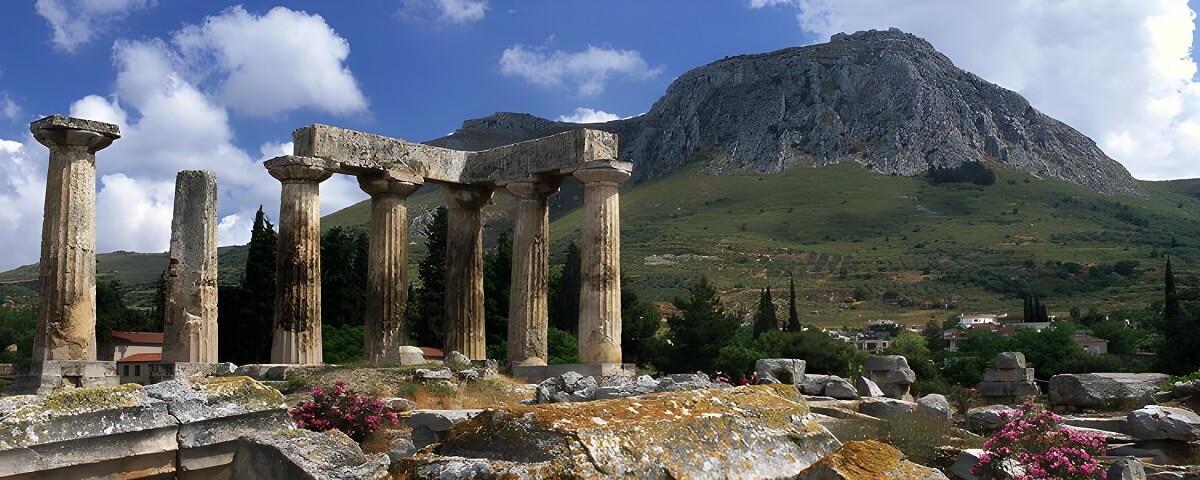
City buses run around Corinth, Kalamata, Patras, Aegion and Tripoli. Tickets cost 1-5 euros and are sold in shops, newsagents and special machines. You can also buy them from the driver, but with a 10 per cent surcharge. The ticket must be validated on boarding.
The main mode of intercity transport on the peninsula is buses of private carriers, which are members of the Greek transport syndicate KTEL. Each of the 7 prefectures has its own KTEL offices, which are responsible for organising bus services within the region, with the administrative centers of the neighbouring regions and with the capital of the country.
A bus ticket from Kalamata to Patras costs 24-35 euros, from Patras to Nafplion – 15-25 euros, from Tripoli to Kalamata – 15-20 euros, from Nafplion to Kranidi – 7-11 euros. If you buy round-trip tickets, the cost is 20-40% lower.
Taxi rides are not ruinous: boarding – 1.19 euros, 1 km trip in the city – 0.68 euros (from 0:00 to 5:00 – 1.19 euros), 1 km trip outside the city 1.19 euros, calling a car by phone – 3.39-5.65 euros, the minimum fee for a trip – 3.16 euros, tips are not mandatory, but welcome.
Cycling is one of the most popular outdoor activities in the Peloponnese. Almost any hotel offers the opportunity to hire a bicycle. The price of pleasure is 15-20 euros/day.
A car is the best companion for those who want to see the natural beauty and historical sites of the Peloponnese. There are offices of international Avis, Eurpocar, Sixt, etc. and local rental companies at airports and major cities of the peninsula.
Economy class car hire costs from 55 euros per day and 300 euros per week. The higher rates of international companies reflect the better technical condition of the cars.
Streets in the city centre are quite narrow, many with one-way traffic. Traffic jams are rare. There are few cars on country roads, but the locals like to drive, may move from one lane to another for no reason and are too lazy to switch on their turn signals.
There are no problems with parking in the Peloponnese. The cost of paid car parks: 2-5 euros/hour, but if you want, you can always find a free one.
Along with the modern Athens-Kalamata toll motorway and excellent roads along the coast, there are many narrow and winding mountain roads in the central part of the peninsula.
You may find it useful: I have an extensive article on my website about car hire in Greece, where I have explained all the intricacies of this service in the country. If you, like me, like to be independent of public transport schedules and routes when travelling, I advise you to take a few minutes and read it.
The most appealing aspect of the Peloponnese is its vast historical heritage and abundance of attractions, which we will now take a closer look at.
Among the many attractions of the Peloponnese, the picturesque Lousios Gorge certainly deserves special attention. Located high in the mountains in the western part of Arcadia, it is perhaps one of the most beautiful places in the region.
The Lousios Gorge stretches for approximately 15 kilometers, with a maximum width of around 2 kilometers. A rushing mountain river, the Lousios, flows along the bottom of the gorge, giving the area its name.
Local attractions of the Lucius Cave, structures that still stand and delight the eye
The Lousios Gorge is rightfully considered one of the most fascinating and colorful attractions of the Peloponnese.
In addition to the breathtakingly beautiful landscapes, you will find many interesting places here – ancient churches and monasteries, the ruins of the ancient Greek city of Gortys, famous for its Temple of Asclepius, as well as small traditional Greek villages nestled on the slopes of picturesque, forest-covered rocky mountains surrounding the gorge, and much more.
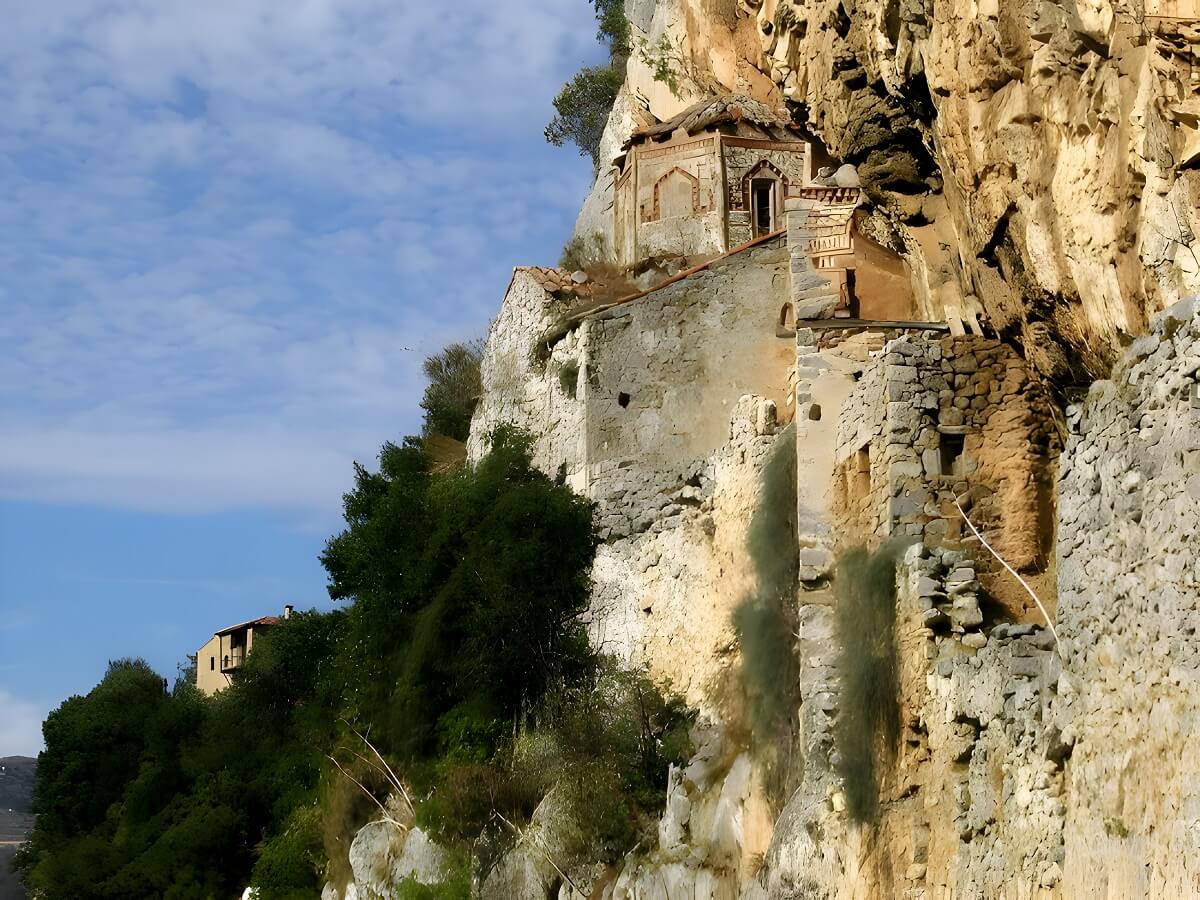
One of the temples on the mountain of the gorge, but it looks unstable
Of particular interest are the ancient temples – the “old” and “new” monasteries of the Philosopher (10th and 17th centuries, respectively), the Monastery of Saint John the Baptist (12th century), the Emialon monastery, and the church of Saint Andreas.
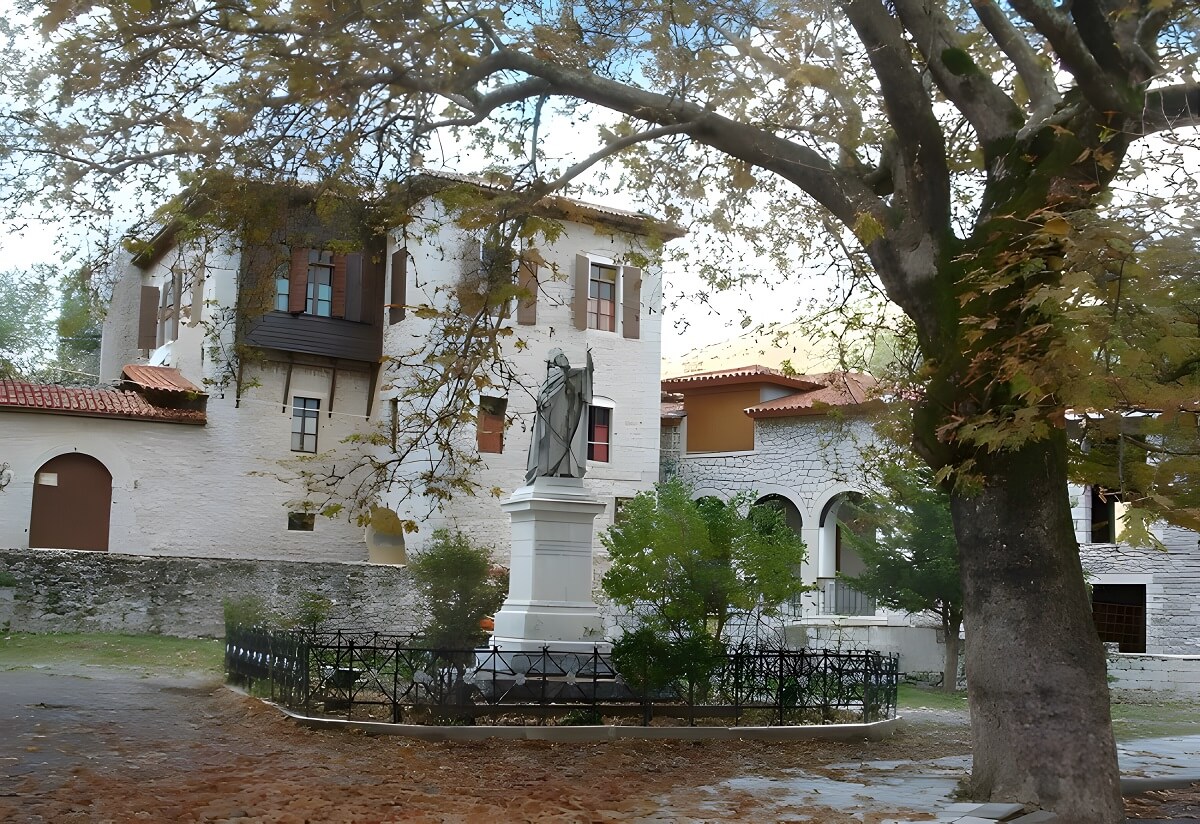
You should definitely visit the charming village of Dimitsana, located on the northern slopes of the gorge, at an altitude of about 950 meters above sea level. Near Dimitsana, you’ll also find the fascinating Open-Air Water Power Museum.
Equally worth exploring are the picturesque villages of Stemnitsa and Karitaina, each with a wealth of interesting sights and attractions.
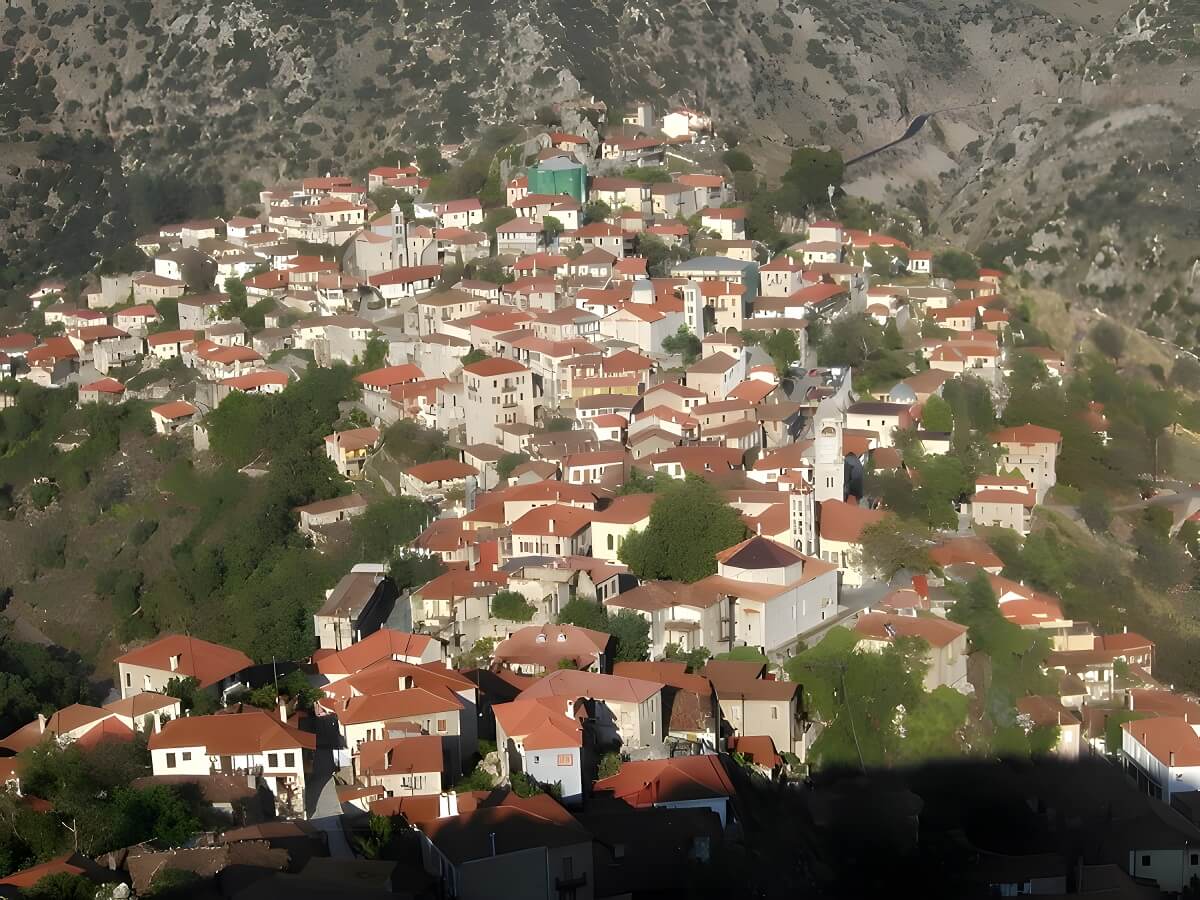
Dimitsana is a small mountain village on the Peloponnese Peninsula in the Arcadia region. The village lies 31 kilometers northwest of Tripoli and about 53 kilometers east of Pyrgos. Dimitsana is built in an amphitheater-like fashion on picturesque mountain slopes, standing at an altitude of 950 meters above sea level.
The village of Demitsana looks simply beautiful from the top
In ancient times, Dimitsana was the site of the ancient Greek city of Teuthis, whose inhabitants, according to legend, took part in the legendary Trojan War. Only minor fragments of buildings have survived from those times, including the remains of the walls of the ancient acropolis.
The buildings here come in the most unusual places
The exact date of the founding of modern Dimitsana is not reliably known. The first written mentions of the settlement name “Dimitsana” was found in documents from the archives of the Philosopher’s Monastery and dates back to 967.
During the Greek Revolution, Dimitsana was one of the main centers of the liberation movement. It was often referred to as the ‘powder keg’, as gunpowder production flourished here during the struggle for independence.
And here is a structure resembling either a temple or a church in the village itself
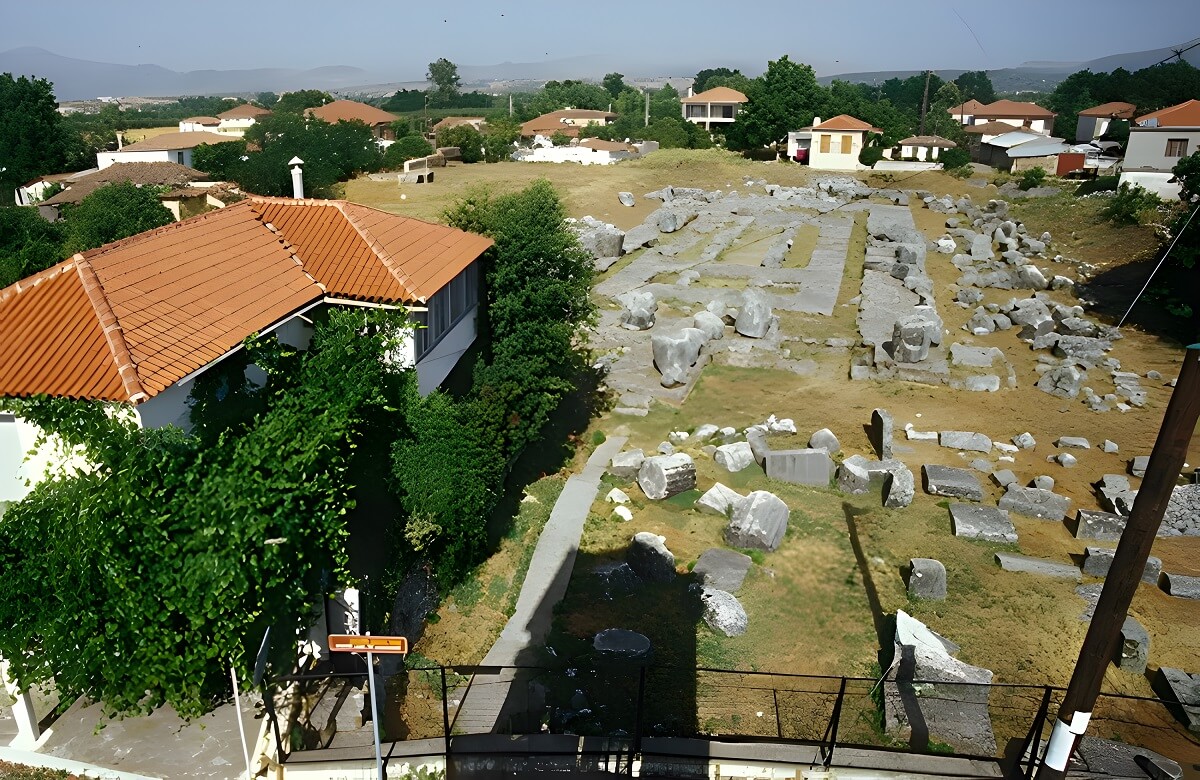
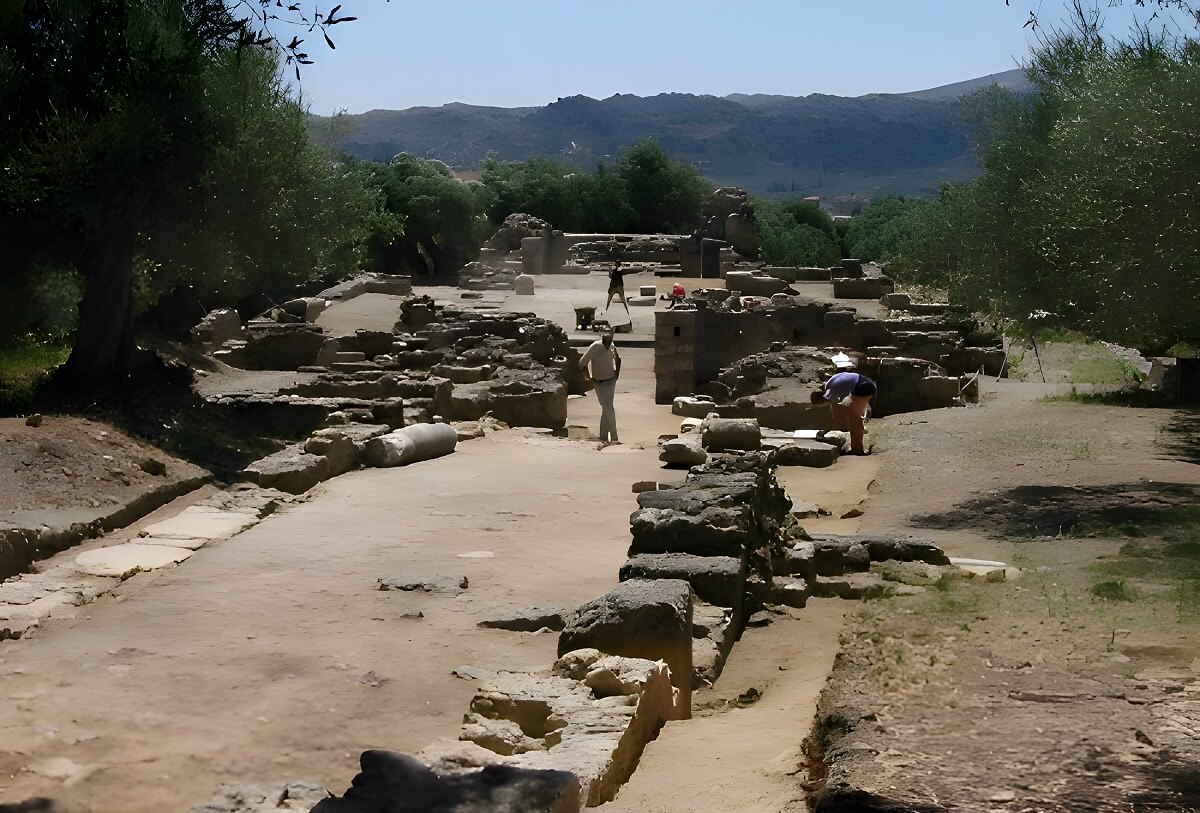
About 10 kilometres south-east of the Greek city of Tripoli (Arcadia) lies the small modern village of Alea. In ancient times, it was the site of Ancient Tegea, an important economic, political and religious centre of the Peloponnese.
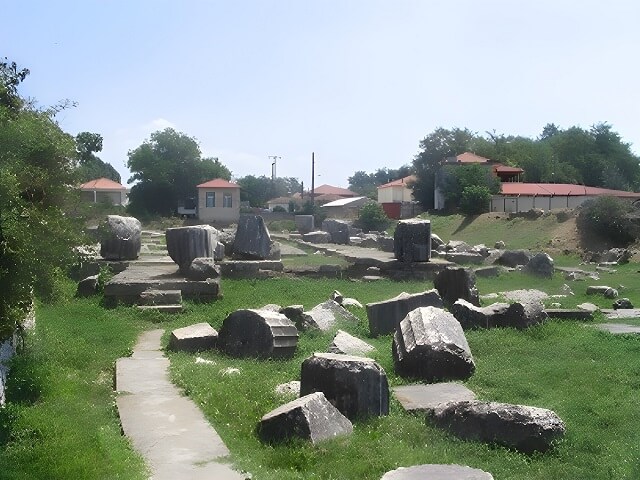
Ancient Tegea is covered with ruins, but they do not spoil its appearance, archaeologists still sometimes dig in the remains of these walls
It was in Tegea that one of the oldest and largest temples dedicated to the goddess Athena, the Temple of Athena Aleia, was located. According to legend, the original temple was built by King Alea, the founder of Tegea.
In 395 B.C. during a great fire the sanctuary was practically destroyed, but already in 365 B.C. under the direction of the famous ancient Greek architect and sculptor Skopos a new temple was built, which in size and pomp far surpassed other Peloponnesian temples.
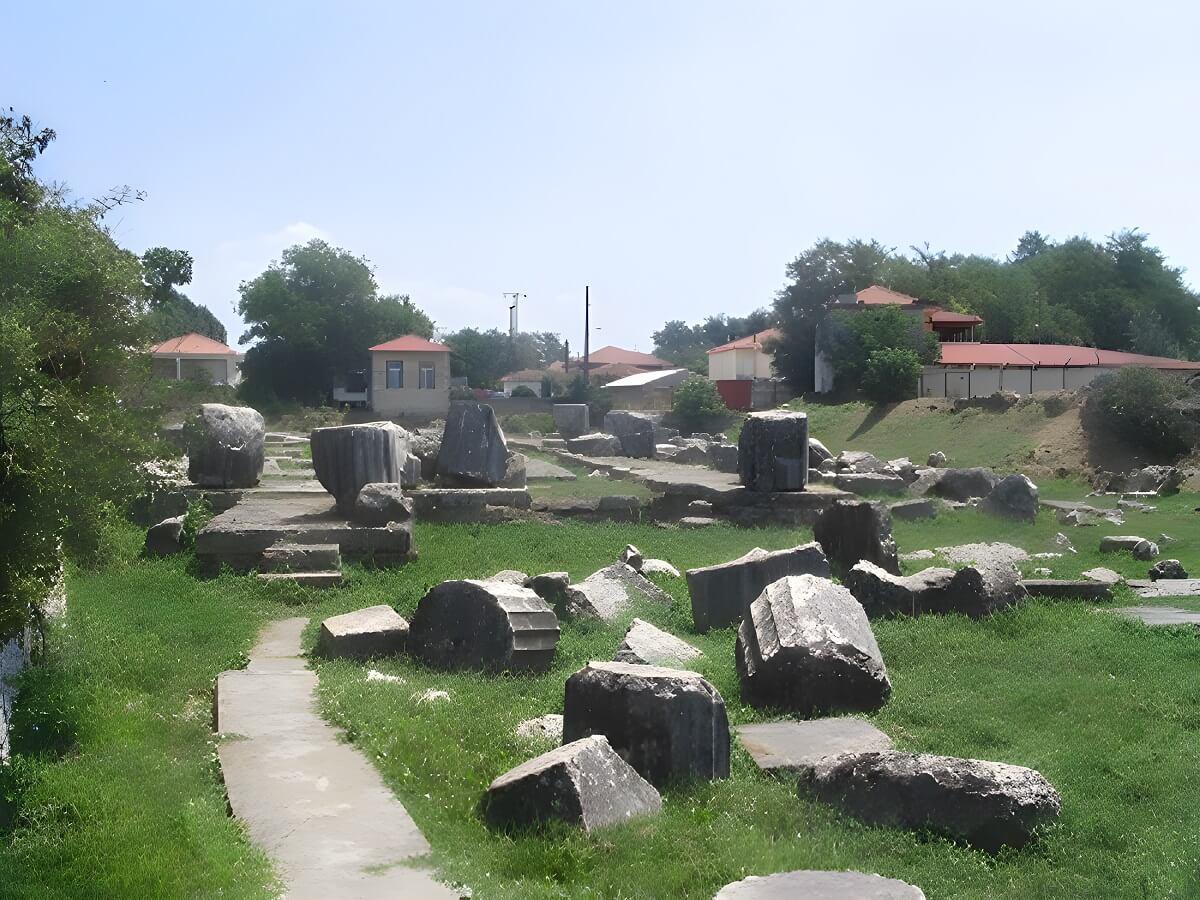
The remains of columns can be found here frequently
The sanctuary of the goddess Alea was built in the Doric style and surrounded by a triple row of columns. The walls were adorned with Corinthian half-columns. The sculptural decoration of the temple was largely executed by Skopas himself.
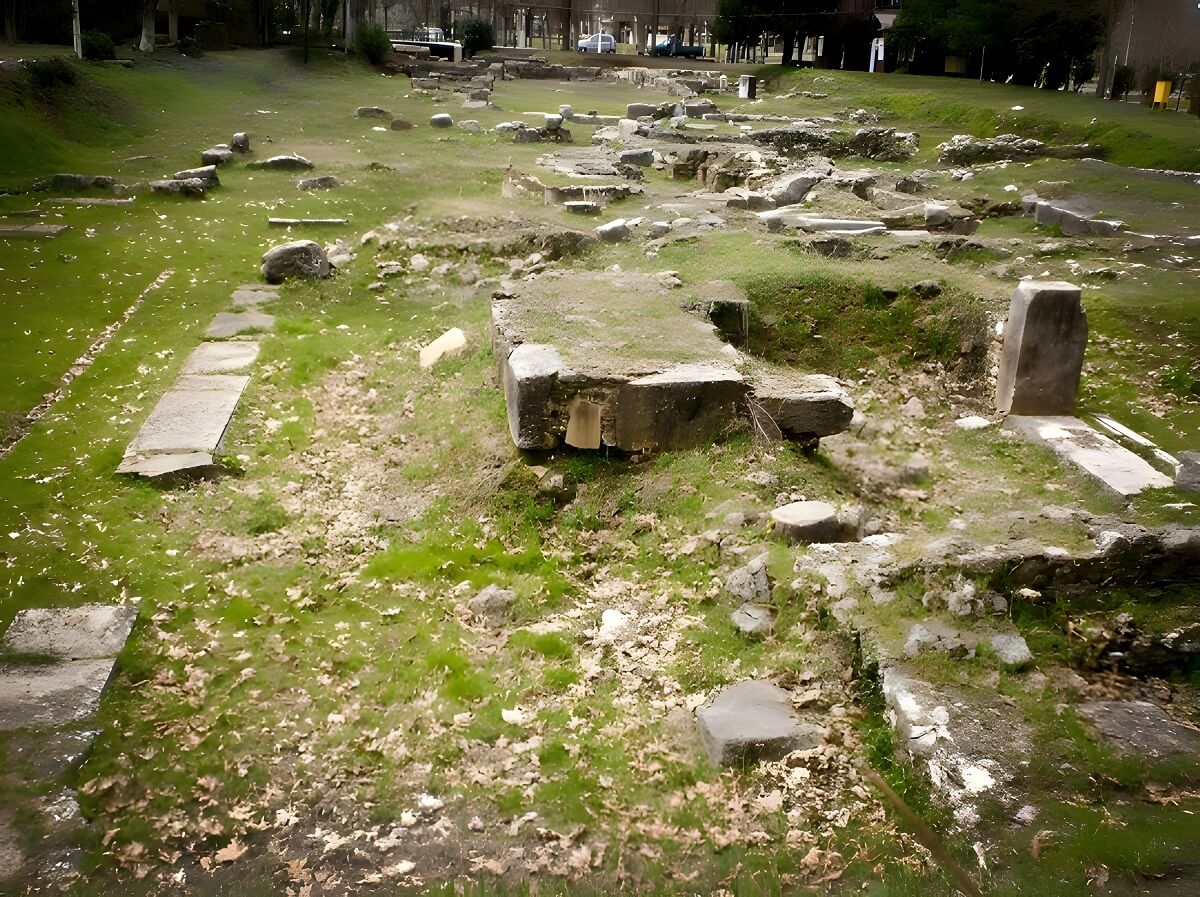
Unfortunately, to this day, only ruins remain of the once powerful Tegea and the majestic temple of Athena Alea, remained only ruins, which are an important historical and archaeological monument. There is a small Archaeological Museum near the ruins of the ancient temple.
The medieval fortress town of Monemvasia is one of the most colorful and impressive attractions in Greece. The city is situated on a huge and seemingly impregnable rock, formed by a massive earthquake in 375, near the south-eastern coast of the Peloponnese.
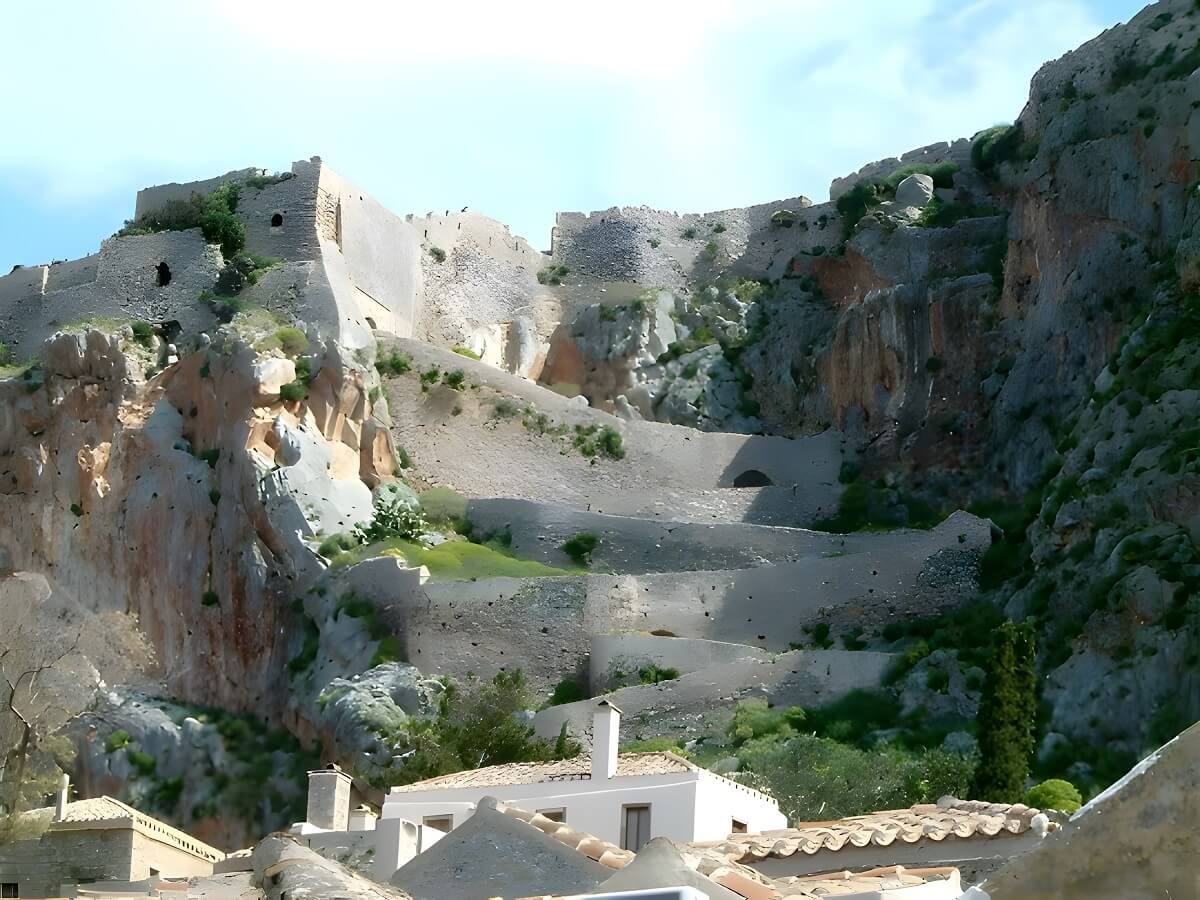
Landscape of a huge staircase leading to the top of the mountain
Monemvasia was founded in 582-583, and its first inhabitants were Peloponnesian Greeks fleeing from the massive invasion of Slavs and Avars.
The name of this ancient city comes from the Greek “moni emvasi,” which means ‘the only entrance’, as access to the island was only possible from one side.
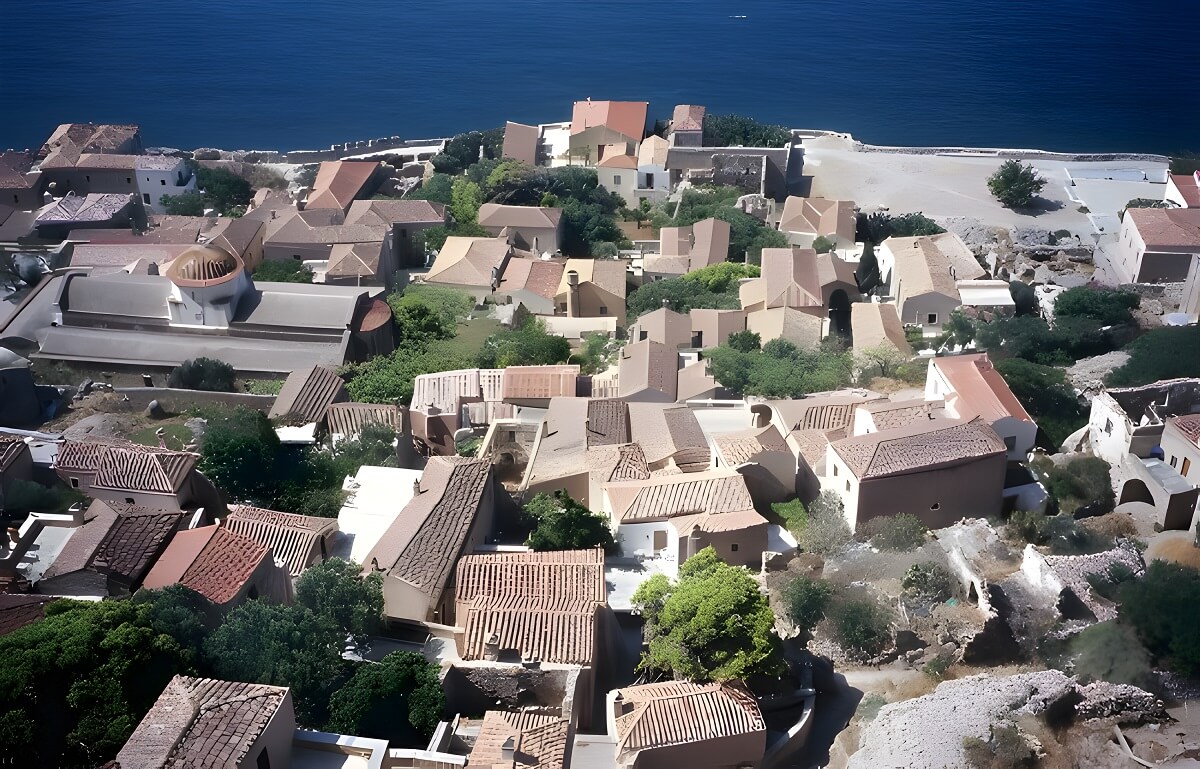
This village looks much like most other villages in the Peloponnese
By the 10th century, Monemvasia, located at the crossroads of important trade routes, had become an important commercial and maritime centre. Despite constant attacks from various invaders, Monemvasia remained part of the Byzantine Empire for almost 700 years.
In 1249, after almost three years of siege, the city fell into the hands of the Crusaders, but just 10 years later, it returned to Byzantine control, becoming the main port of Mistra, the capital of the Morea Despotate.
In 1460, for a few years the Papal See gained control over Monemvasia. In the following centuries the Venetians and Turks alternately dominated the area.
One of Greece’s most famous archaeological sites is undoubtedly the legendary ancient Greek city-state of Sparta. The ruins of ancient Sparta lie in the southern part of the Peloponnese (a region historically known as Laconia in ancient Greece), near the modern city of Sparta, and are one of its main and most popular attractions.
Unfortunately, Sparta can no longer be seen in person, only the remains remind us that it once existed
Most historians believe that Sparta was founded after the Dorians conquered the Peloponnese, around the 11th century BC. The rise of Sparta as one of the most powerful cities of Ancient Greece began during the time of the legendary Spartan lawgiver Lycurgus and the Messenian Wars.
Sparta’s military might was well-known far beyond the borders of present-day Greece, and it held hegemony within the Peloponnesian League, founded in the 6th century BC.
Unfortunately, only fragments of some structures remain from the once-mighty city, dating from the 7th century BC to the 2nd century AD, including the ruins of a Roman theater and the remnants of ancient sanctuaries.
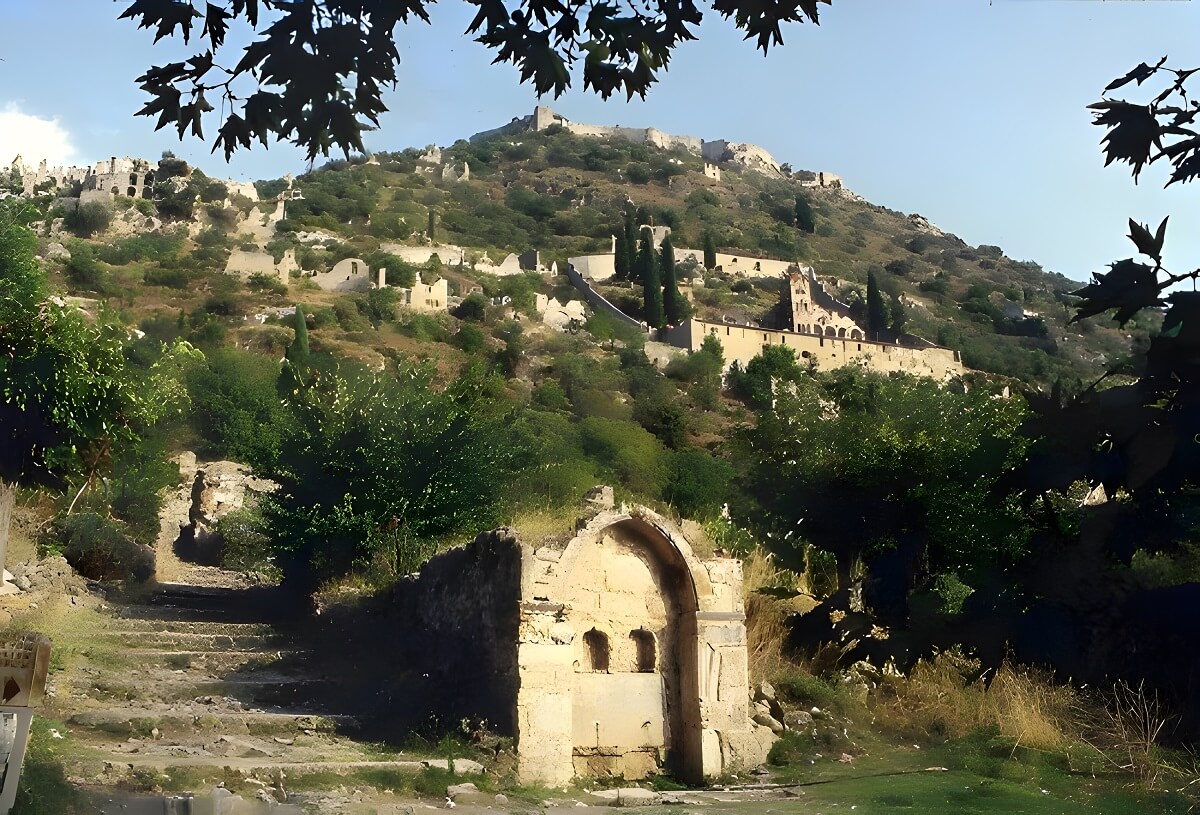
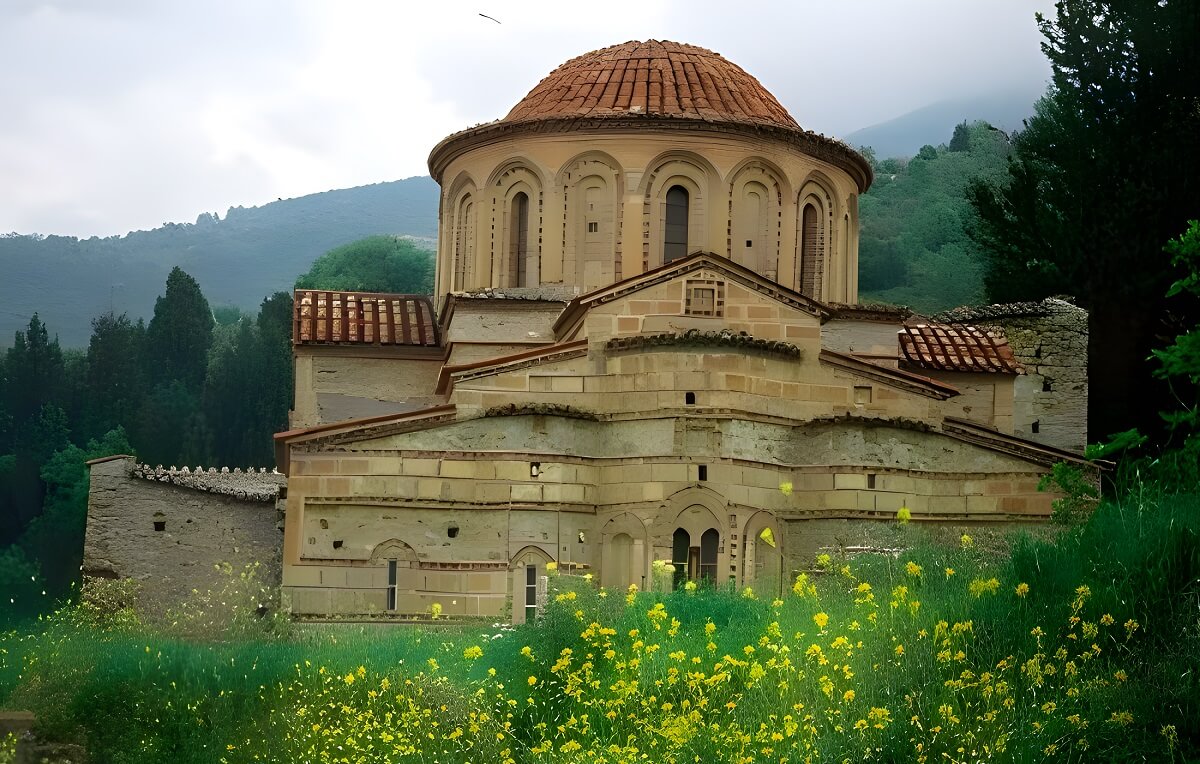
One of the most interesting and popular attractions of the Peloponnese is the ruins of the medieval city of Mystras, situated on the mountain slopes of Taygetus, near the city of Sparta.
Mystras, near Sparta, takes us back to the centuries when all the buildings were still intact
Mystras was founded in 1249 by the decree of William II of Villehardouin, the ruler of the Principality of Achaea. A fortress was built on a steep rocky peak, which became the main residence of the Principality of Achaea in the Peloponnese.
Today, Mystras, which has preserved a number of beautiful architectural, cultural, and historical monuments to this day, is a true open-air museum. Since 1989, Mystras has been included in the UNESCO World Heritage List.
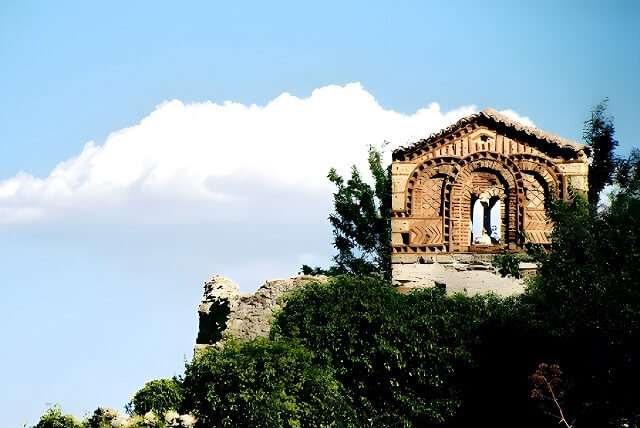
It was a pleasure to be here, beautiful scenery, ancient architecture – everything you need for relaxation and tranquility
Among the most interesting buildings is undoubtedly the Metropolis of Mystra, one of the oldest monasteries of the city, as well as its main religious center. It was here that the last Byzantine Emperor Constantine Paleologos IX was crowned in 1449. The Metropolis is now home to the fascinating Mistra Museum.
It may be useful: a complete article about the ancient city of Olympia is available at this link.
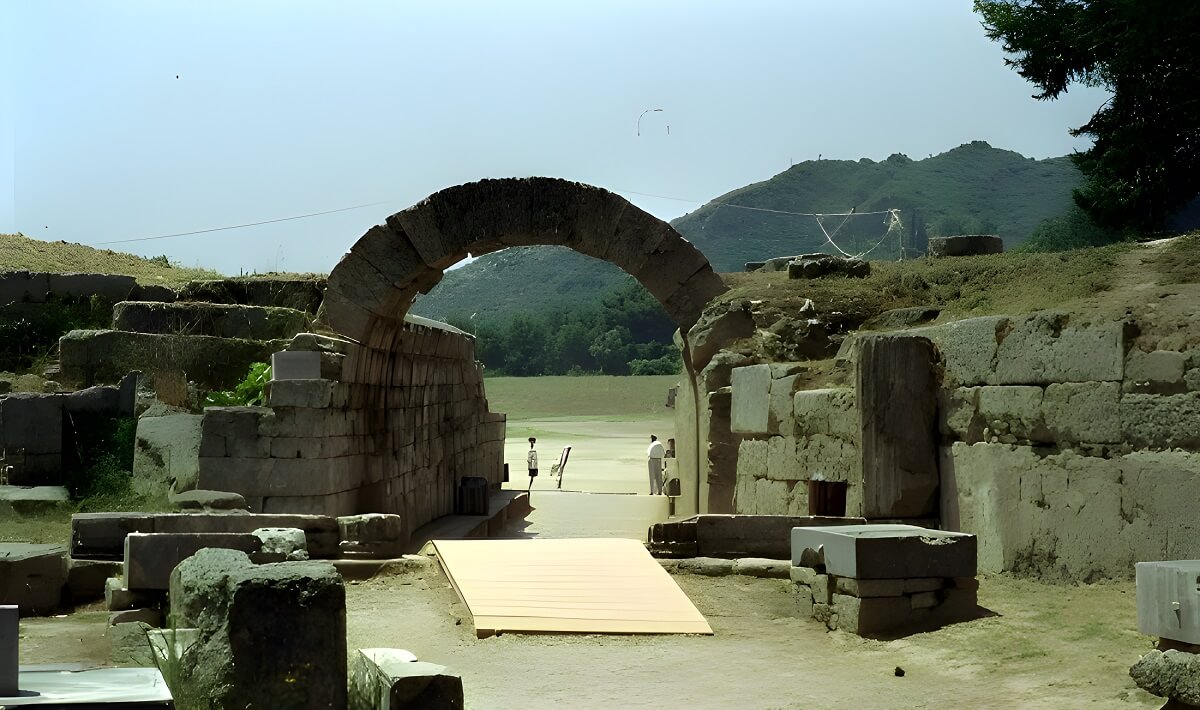
At the confluence of two rivers – Alphios and Kladeos, was founded Olympia, for a thousand years served as a sanctuary of Zeus and the place of sports competitions – the Olympic Games.
Of course, like most of the old buildings, Olympia has also suffered from time and is now mostly just ruins
The Temple of Zeus was constructed around 470 BC by the architect and sculptor Phidias. The remaining fragments of its foundation and broken columns offer a glimpse into the immense scale of this structure.
In ancient times, the temple was decorated with marble and frescoes. Inside stood the renowned statue of Zeus, crafted by Phidias from gold, ivory, and wood. It was considered one of the Seven Wonders of the World. Phidias created the statue in a dedicated building called the Workshop, which was later converted into a Christian church.
Nearby was the Temple of Hera, one of the oldest surviving temples in Greece (dating from the early 6th century BC). The capitals of its columns are all uniquely different. This is also where the flame for the modern Olympic Games is lit.
You might find it useful: you can find a tour of Ancient Olympia at this link
The beaches in the Peloponnese are sandy or sandy with a few small pebbles. Families with children should consider the northern coasts of Achaea and Corinthia. On the southern coast there are deserted picturesque beaches.
As a rule, on the beaches of Peloponnese there are umbrella and sun lounger rentals (umbrella + two sun loungers – 10-15 euros), taverns, cafes, bars, food stands, stores with souvenirs and beach accessories. Fans of active recreation can go water skiing for 25-35 euros, fly a parachute for 70 euros, ride a jet ski for 30-45 euros.
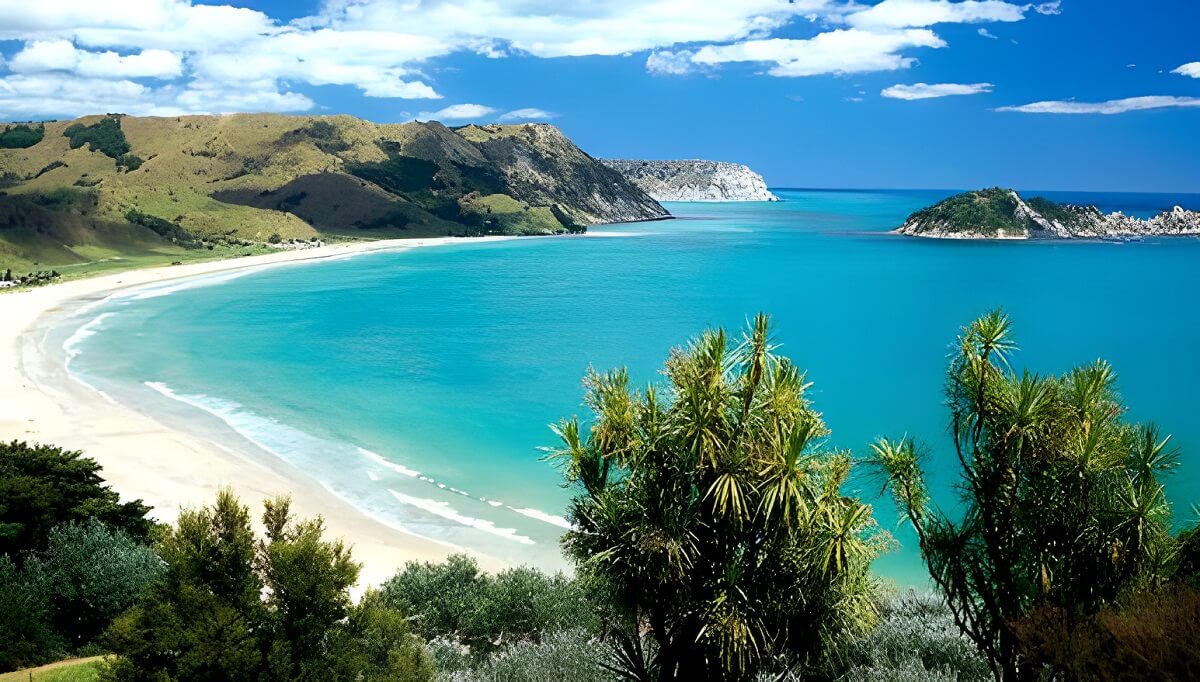
There are a huge number of beaches here; you can’t visit them all
Messinia is perhaps rightly considered one of the most picturesque areas of the peninsula. The local beaches are direct proof of this.
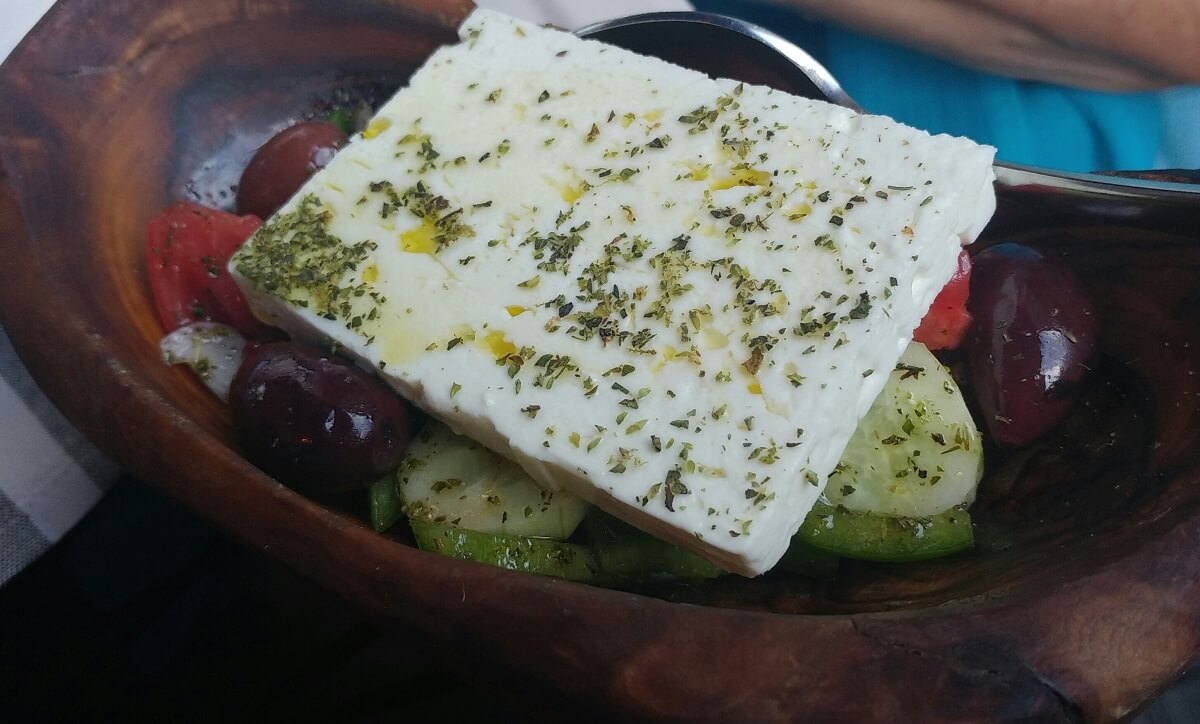
It is no wonder that in the country that gave the world nectar and ambrosia, the cult of food flourishes. It’s hard to imagine lunch in the Peloponnese without a rustic choriatiki salad.
Village salad “horiatiki”
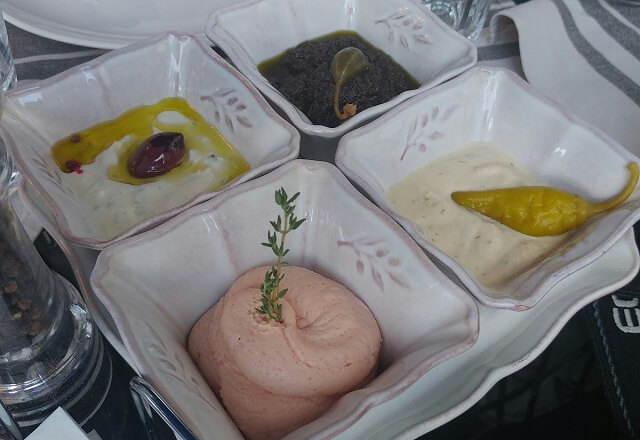
Next to it you will surely find stuffed eggplants and zucchini, several varieties of olives and a brilliant in its simplicity and flavor zadziki sauce made of yogurt, cucumbers and garlic. On the menu of every place there are small kebabs “souvlaki ” and moussaka of minced lamb layered with vegetables.
In the mountainous areas of the Peloponnese, goat meat in a pot, lamb and river trout on coals are excellent. Fish and seafood are popular on the coast.
Several types of zadziki sauce
The main Easter dish of the Peloponnese is “kokoretsi ”, a grilled roll of lamb giblets. However, you can order it in the restaurant at any time of the year.
To appreciate the real Greek cuisine, it is not necessary to look for a restaurant with starched tablecloths. It is better to choose a tavern where Greeks themselves dine and order 5-6 dishes to try a little bit of everything:
This is the restaurant I’ve been to most often, the food wasn’t bad and I would definitely want to go back there again
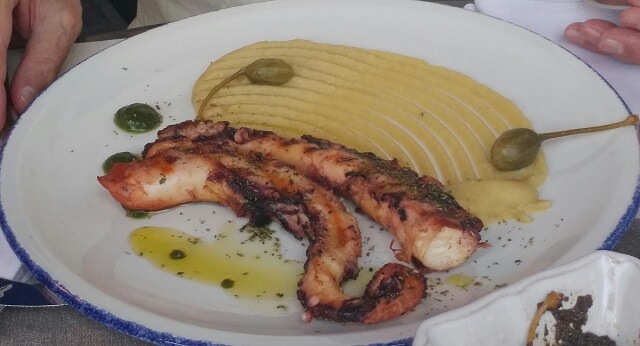
What is definitely worth trying is the octopus, the presentation and the delicate flavor of the meat won me over
The most popular fast food is a flatbread “gyros” filled with meat, French fries and vegetables at a price of 2 euros. It is followed by the ubiquitous Big Macs, pizza and boiled corn.
Hermes, the god of commerce, still reigns supreme in the Peloponnese – his bronze, marble or ceramic figurines are a popular souvenir, as are statuettes of other Olympian gods. They compete with amphorae, ritons, funny figurines of donkeys, models of Greek churches.
It is worth looking at locally made clothes and shoes – inexpensive and of high quality. Gold and silver jewelry, ceramic dishes, natural cosmetics based on olive oil, handmade aromatic soap are also good.
In the vicinity of Kalamata grow the best olives on the peninsula with thin purple skin, the oil from which is above all praise.
The Monastery of St. Constantine and Helen in Kalamata sells silk products, woven by nuns on hand looms, preserved since the Byzantine Empire.
In the village of Pyrgos Dirou, there is the wonderful goat cheese “touloumissio tiri”.
In the mountain village of Kaminia, warm sheep’s wool sweaters knitted by locals.