Updated:
Crete is the largest Greek island, the birthplace of Zeus, and a tourist center of the Mediterranean. It was here that one of the oldest civilizations – the Minoan – originated. While archaeologists excavate palaces built during the reign of King Minos, tourists explore the ruins of the Knossos labyrinth, where according to legend the ancient Greek monster Minotaur dwelt.
In Crete, both lovers of sightseeing holidays and those who came to the sunny island to recharge their energy and simply lounge on the sand will feel equally comfortable. Here you’ll find a magical blue-green sea, bright sun, and excellent beaches. There are palm trees, mountains, and gorges. The inhabitants of Crete are always friendly and hospitable.
In this article, I’ll tell you about this island, how to get there, what to see and what to do here, where you can have a delicious meal, and other useful information for those wishing to visit this place.
Crete is a crossroads of cultures and peoples, heir to the Minoan, Greek, and Byzantine civilizations, located at the border of three continents – Europe, Asia, and Africa, and washed by three seas at once – the Cretan, Ionian, and Libyan.
It was on Crete, according to Greek myths, that Zeus, the ruler of the Olympian gods, was born, where the Minotaur lived, for whom Daedalus built the labyrinth, and where Theseus held onto Ariadne’s thread. These places once belonged to the Turks, Venetians, and Arabs: mosques, fortresses, and monasteries from different eras peacefully coexist on the island.
Small but very cozy Crete island
Crete is a true island of records. It is the largest and southernmost island of Greece, as well as the fifth largest in the Mediterranean. Here you’ll find the longest gorge in Europe, and azure waters wash some of the most beautiful beaches in the world, most of which are marked with the Blue Flag for ecological cleanliness.
Crete island stretches from west to east for 260 kilometers, while from north to south its width varies from 12 to 50 kilometers. Mountains dominate the island’s landscape, the highest of which is Mount Ida (2,457 meters). Mountain ranges are cut by canyons, and in the valleys you’ll find vineyards, olive, orange, and date groves. Crete is famous for its large number of caves with stalactites and stalagmites – there are over three thousand of them.
Besides the classic flight by plane, tourists have another way to get to Crete – by sea on a ferry or high-speed vessel. Heraklion remains the busiest port on the island, although there are also sea connections with Chania and Rethymno.
The most popular route is from Athens, with ferry services to both Piraeus port and the increasingly popular Rafina port, located 15 km from Athens airport. Ferries from companies ANEK, Minoan Lines, Hellenic Seaways, SuperFast, etc. operate on this route.
Other popular routes include passenger ferry lines from Athens through the Cycladic islands (Santorini, Milos, Paros, Ios, etc.) and further to the Dodecanese islands (Rhodes, Karpathos, Kasos).
During high season, the number of high-speed vessel trips from Heraklion to the Cycladic islands, particularly to Santorini, increases. In winter, with the decrease in tourist flow, the intensity of sea connections decreases accordingly.
Additionally, on the northern coast of Crete, about 40 km from Chania, there is a small port of Kissamos, from where once a week the passenger ferry Ionis of the Avlemon Shipping Company departs on a circular route to Athens, to the Ionian Islands, to the Peloponnese.
Transport connections on Crete are quite well developed; you can reach almost any settlement by bus or taxi. If you want to explore the colorful rural Crete, you’ll need a rental car. Some towns and villages on the southern coast can be reached by sea – by ferries and boats.
The most popular transport on the island is the bus. Buses on Crete run with a frequency of 1-2 times per hour, less frequently in rural areas. They connect all major cities and resorts of Crete – Heraklion, Agios Nikolaos, Sitia, Ierapetra, Chania, Rethymno. The largest bus operator is KTEL, on whose website you can buy tickets in advance.
Ferries and boats operate between some settlements located on the southern coast of Crete.
You can travel by sea on the following routes:
If you want to see as many places as possible on Crete, you should rent a car.
The main road on the island is E75 (or EO90), which stretches along the northern coast from Sitia to Kissamos through Heraklion, Rethymno, and Chania. You can travel on it at an average speed of 70-80 km/h.
All other Cretan roads are winding, and the actual route length is two to three times greater than the straight-line distance between points, keep this in mind.
There is one famous attraction on Crete where approaching by car is completely useless – the Samaria Gorge. The fact is that after walking through the gorge, you’ll end up so far from your car that you won’t want to return.
Therefore, it’s better to visit Samaria by public transport. By the way, you can also use taxis, which are plentiful at the entrances to this unique natural tourist attraction.
Might be useful: I wrote more about car rental on Crete in this article
Taxi is not the most popular transport on Crete, although it’s inexpensive (agree on the trip cost in advance, bargaining is appropriate). In cities, taxis can be found at taxi stands, called by phone, or ordered online. If you find yourself in rural areas, you can call a taxi by contacting a local tavern.
Crete is a paradise for history and archaeology lovers; the number of local ancient monuments is huge even for Greece, which has no shortage of archaeological finds.
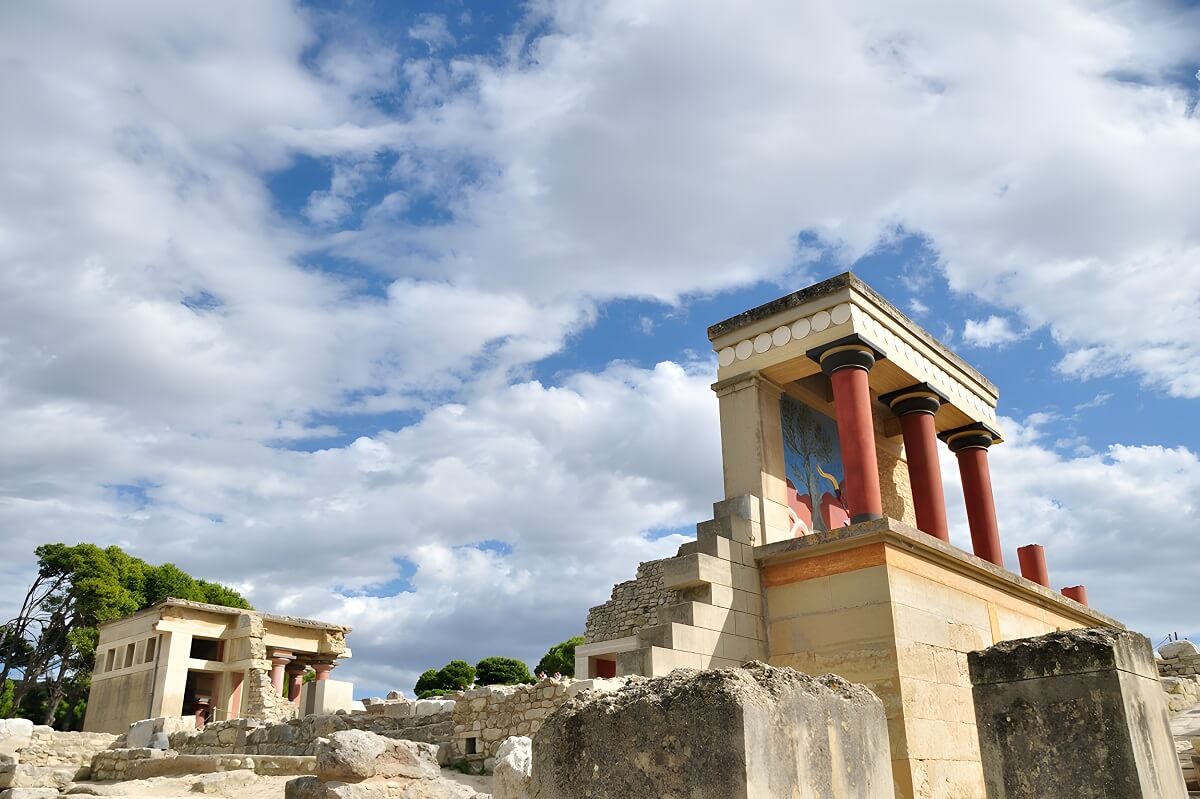
The most famous historical attraction of Crete is Knossos Palace. This is the most famous building of Minoan Crete, located 5 km south of Heraklion. Once here, you’ll discover ruins of a huge palace, inner courtyards, private apartments, baths, frescoes, and much more.
Knossos Palace – first on the list to visit
Excavations began in 1878 under the direction of Cretan archaeologist Minos Kalokairinos and continued from 1900 to 1930 under the direction of British archaeologist Sir Arthur Evans, who at his own discretion restored parts of the palace, which caused mixed reactions in society.
Might be useful: see tours to Knossos Palace via this link
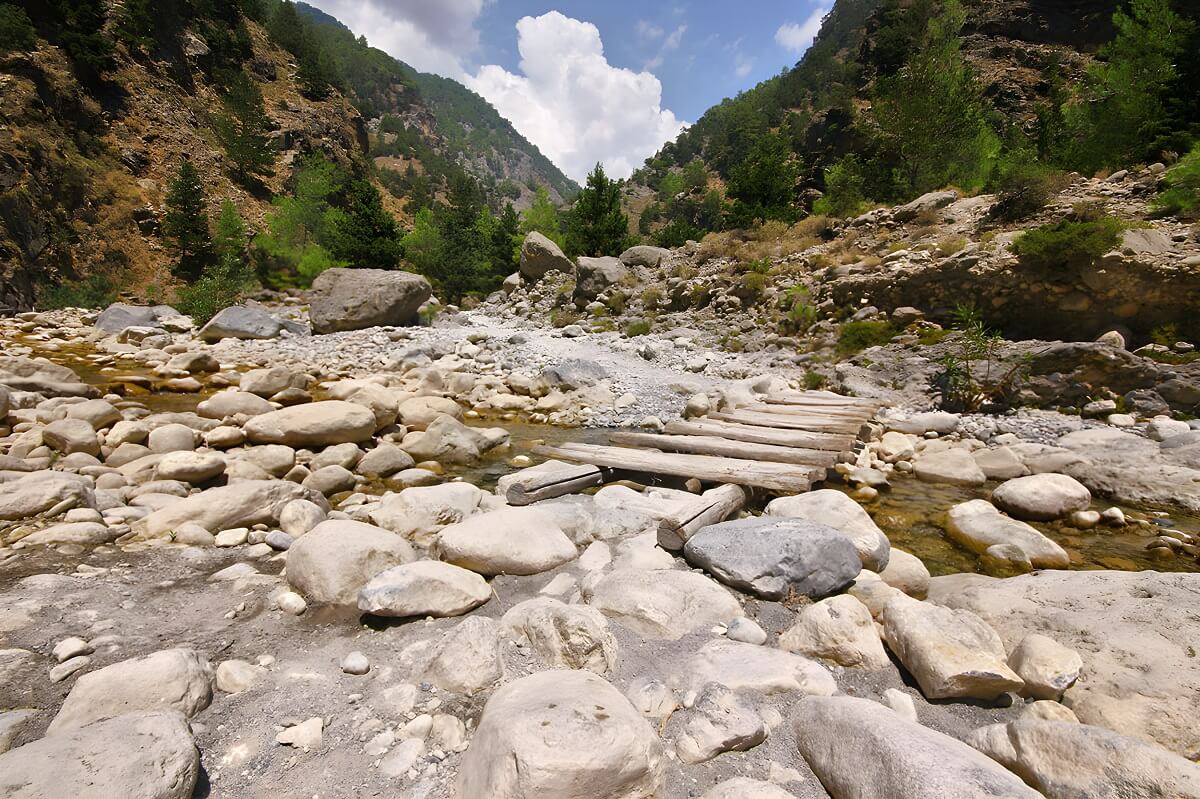
The impressive 18-kilometer Samaria Gorge is located in Samaria National Park and is on the tentative UNESCO World Heritage list. The canyon begins at Xyloskalo near the mountain village of Omalos and descends 1,250 meters down to the coastal village of Agia Roumeli. The Tarraios River flows through the gorge, which almost completely dries up in summer but becomes quite full in winter.
Walking through Samaria Gorge, the terrain is rocky but not dangerous
The rocky path along the gorge is quite winding and unlikely to suit people in poor physical condition. On the busiest days, up to 3,000 people pass through the gorge.
The walk can take from four to six hours depending on your physical fitness. The gorge is open to visitors from May to mid-October.
Might be useful: see all tours to Samaria Gorge via this link
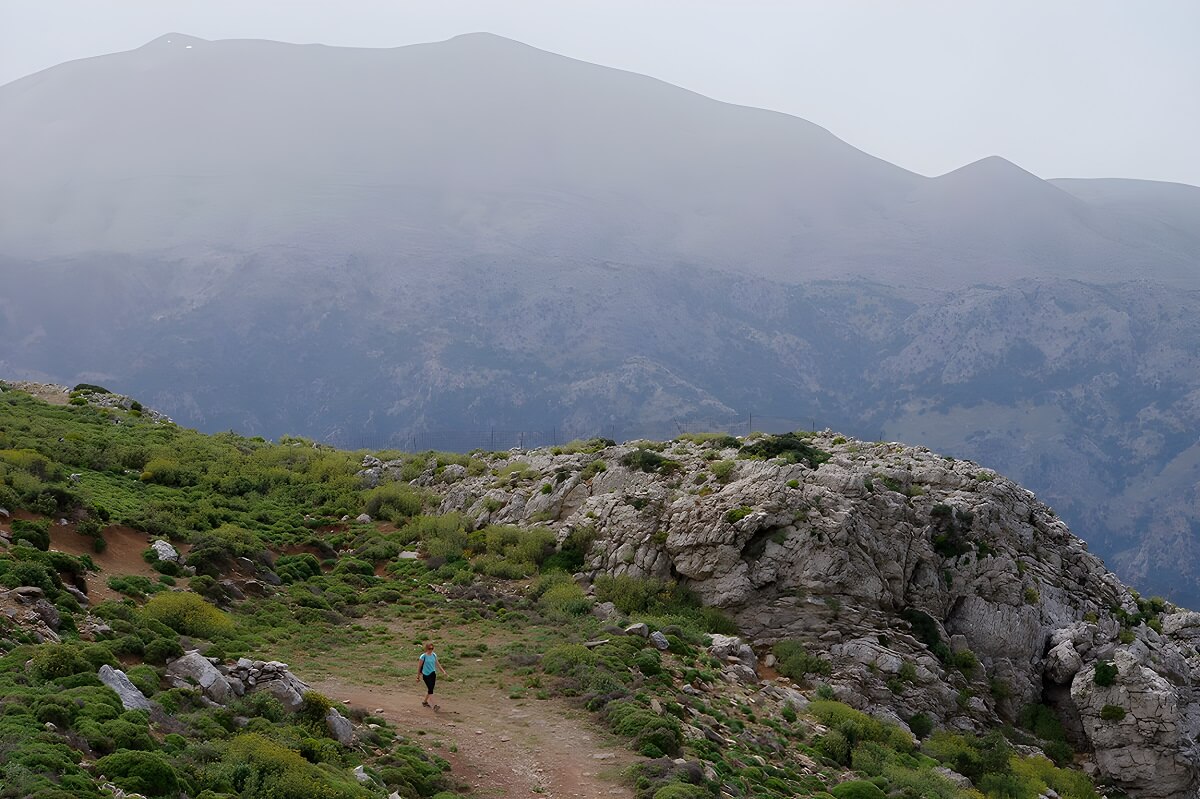
Mount Ida, or Psiloritis, is the highest mountain on Crete, reaching 2,456 meters in height. The mountain is considered sacred, as legend says that Zeus spent his childhood here. The legendary Cave of Zeus is also located here.
View from Mount Ida, the beauty is somewhat breathtaking
The mountain is part of the European hiking trail E4 and is ideal for hiking, during which you can enjoy beautiful nature and discover cozy mountain villages.
Might be useful: an excellent tour to Mount Ida (Psiloritis) can be found via this link
Dikteon Cave, also known as the Cave of Zeus, is located in the eastern part of Crete near the village of Psychro. If not for its mythological significance, the cave wouldn’t differ much from the other 3,000 caves located on the island.
Legend says that it was here that the goddess Rhea gave birth to Zeus. Given this circumstance, it’s not surprising that the cave still attracts thousands of tourists.
Might be useful: an excellent tour visiting Dikteon Cave (Cave of Zeus) can be found via this link
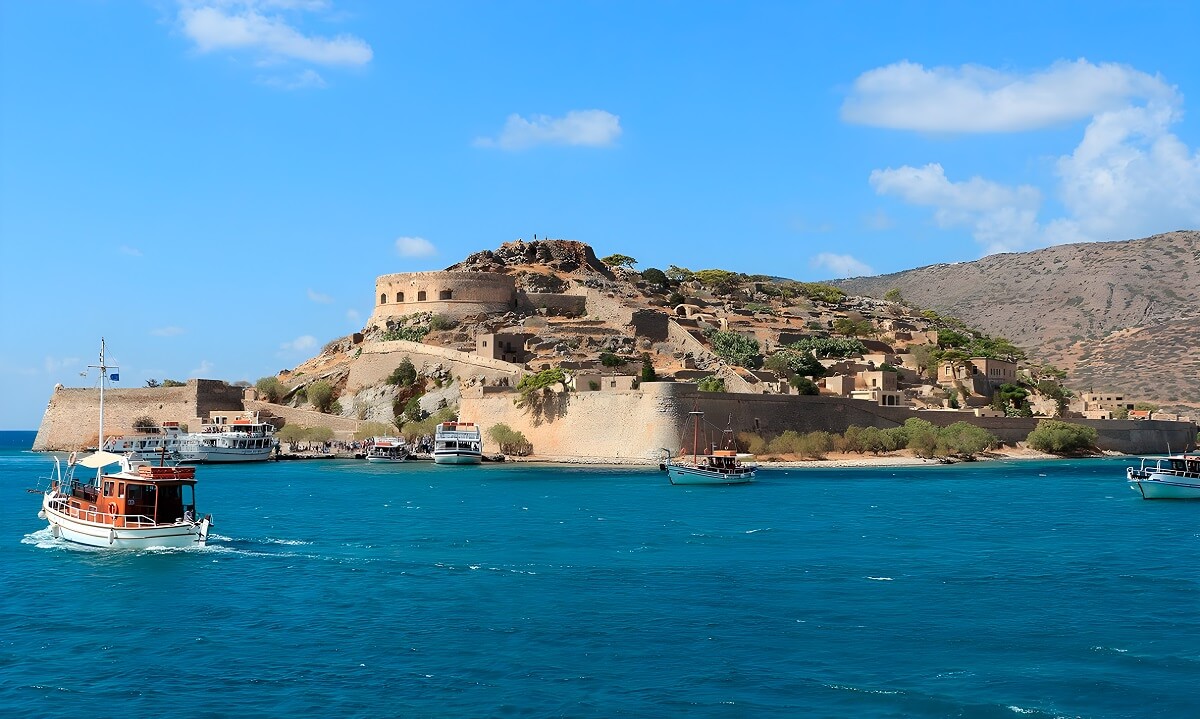
Spinalonga is a small rocky island off the coast of Elounda, also known as the “leper island,” since this is where people with leprosy were exiled until 1957. Now Spinalonga is uninhabited, and this is exactly what attracts hundreds of tourists wanting to immerse themselves in the dark atmosphere of the cursed island.
Might be useful: see all tours to Spinalonga island via this link
Spinalonga island from a distance looks very majestic and powerful
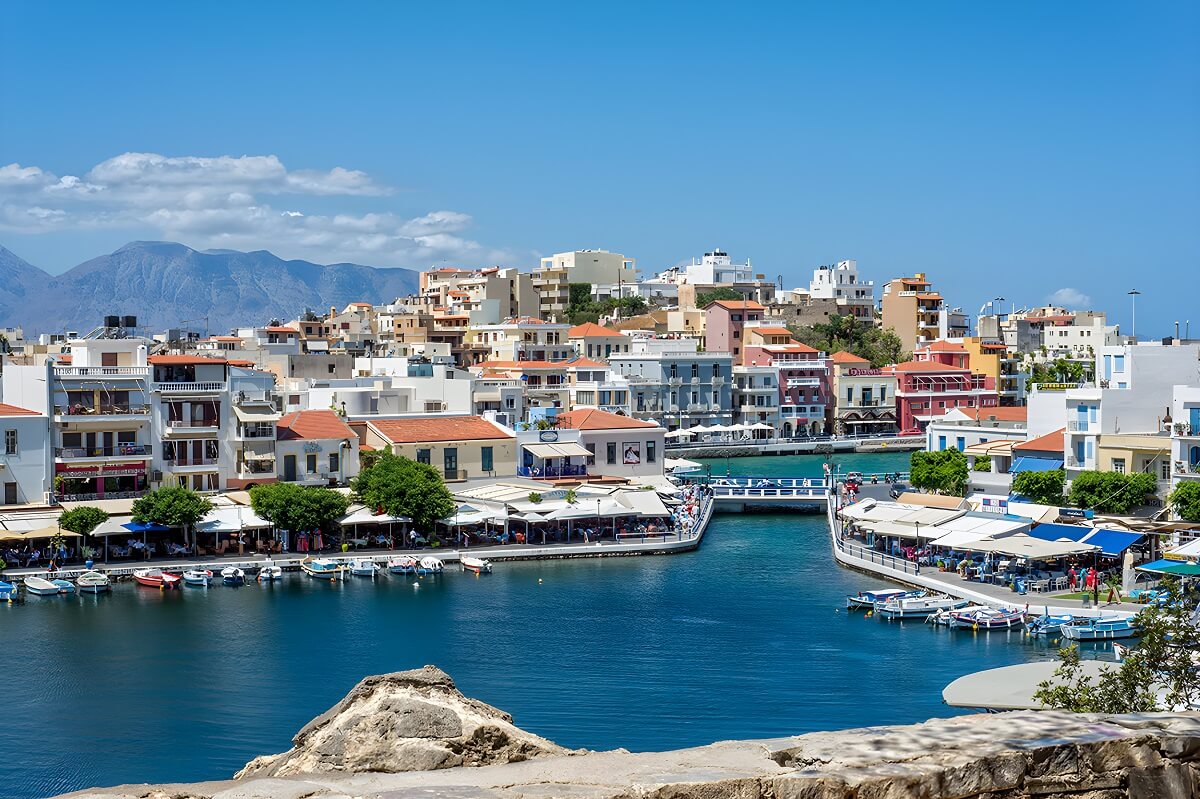
Along the northern coast of eastern Crete, about 65 kilometers east of Heraklion, is Agios Nikolaos – one of Crete’s most popular modern resorts. It’s situated on hilly terrain above Mirabello Bay next to the luxurious beach hotels and villas of Elounda.
Huge collection of moored boats at Agios Nikolaos
Be sure to stroll around Lake Voulismeni with its numerous cafes and restaurants and take a boat trip to Spinalonga island, where the Greek TV series based on Victoria Hislop’s book “The Island” was filmed.
Near Agios Nikolaos you can also visit Dikteon Cave with its stalactites and stalagmites or head to the mountains to the charming village of Kritsa, where local artisans sell traditional leather goods, ceramics, and handmade carpets.
On the way to Kritsa, stop by the small 13th-century church of Panagia Kera (Mother of God Kera) to admire magnificent Byzantine frescoes.
Might be useful: see all tours from Agios Nikolaos via this link
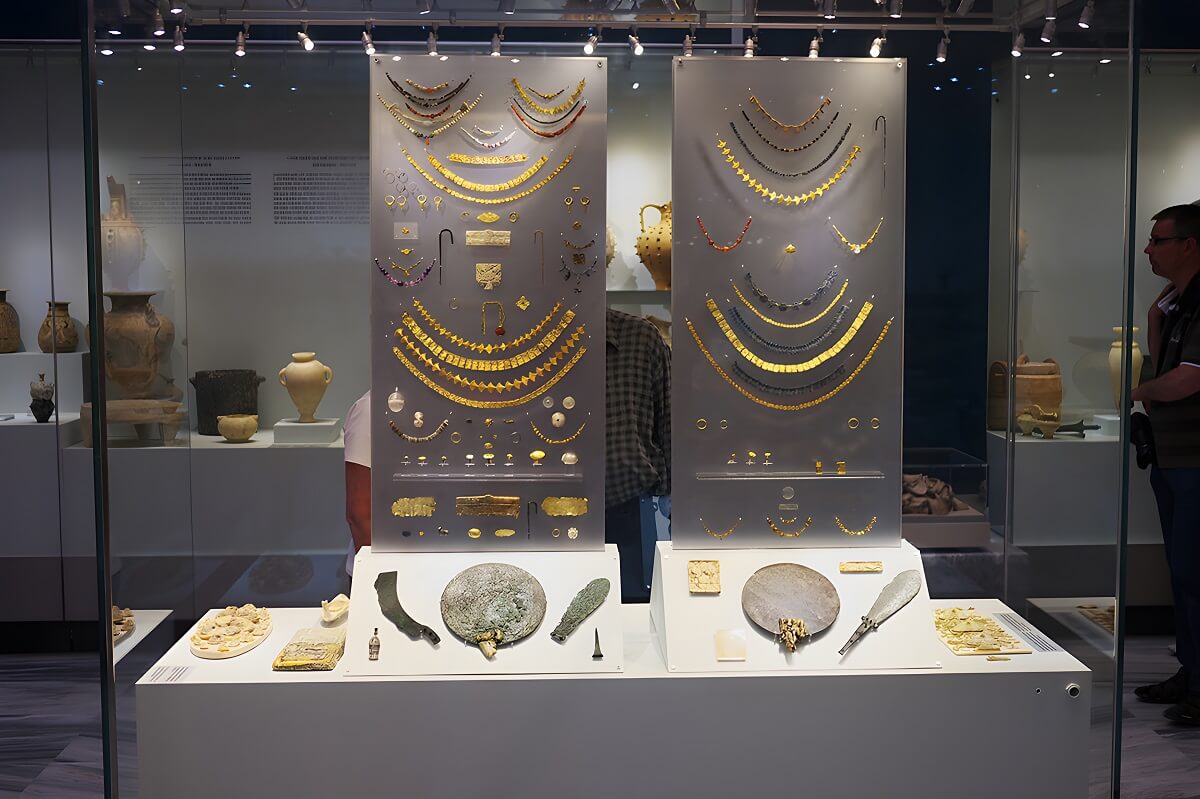
This magnificent museum is one of the largest and most important in all of Greece. The two-story renovated building from the 1930s, which was awarded the international Bauhaus prize, houses priceless artifacts spanning 5,500 years of the island’s history – from the Neolithic and Minoan periods to the time of Roman rule.
Rooms are marked with different colors, and display cases with exhibits are arranged both chronologically and thematically with descriptions in English. Visiting this museum will significantly enhance your knowledge of Crete’s rich history.
Might be useful: see tickets and tours to the Heraklion Archaeological Museum via this link
Exhibits in the Heraklion Archaeological Museum
If you’re planning a holiday on Crete, find out what festivals and celebrations are taking place on the island at that time. As a rule, there’s a rich cultural program year-round, but most events are held during summer months.
Since Cretans are quite religious, religious holidays occupy a significant place in their lives. Tourists will find it interesting to observe the celebration of Christmas or Easter, during which grand folk festivities take place.
One of the most spectacular holidays, whose timing depends on Easter dates, is the “Apokries” carnival. It’s held in February or March throughout Crete, but the most colorful events take place in Rethymno – including costumed processions, games, dances, and singing of traditional Cretan “cantadas.”
Crete celebrates May 1st on a grand scale – it’s a holiday of spring, flowers, and wreaths. In all cities and villages, house doors are decorated with wreaths made of herbs and flowers, woven by the residents themselves. People go out into nature or participate in folk festivities in cities.
Wine is the national drink of Crete, and many festivals are dedicated to it: almost every town and village on the island holds a wine festival once a year. The most famous is the ethno-festival in Rethymno, held at the end of July. The main event of the holiday is tasting local wines; the cultural program also includes concerts, shows, and entertainment for children.
Among other interesting Cretan festivals:
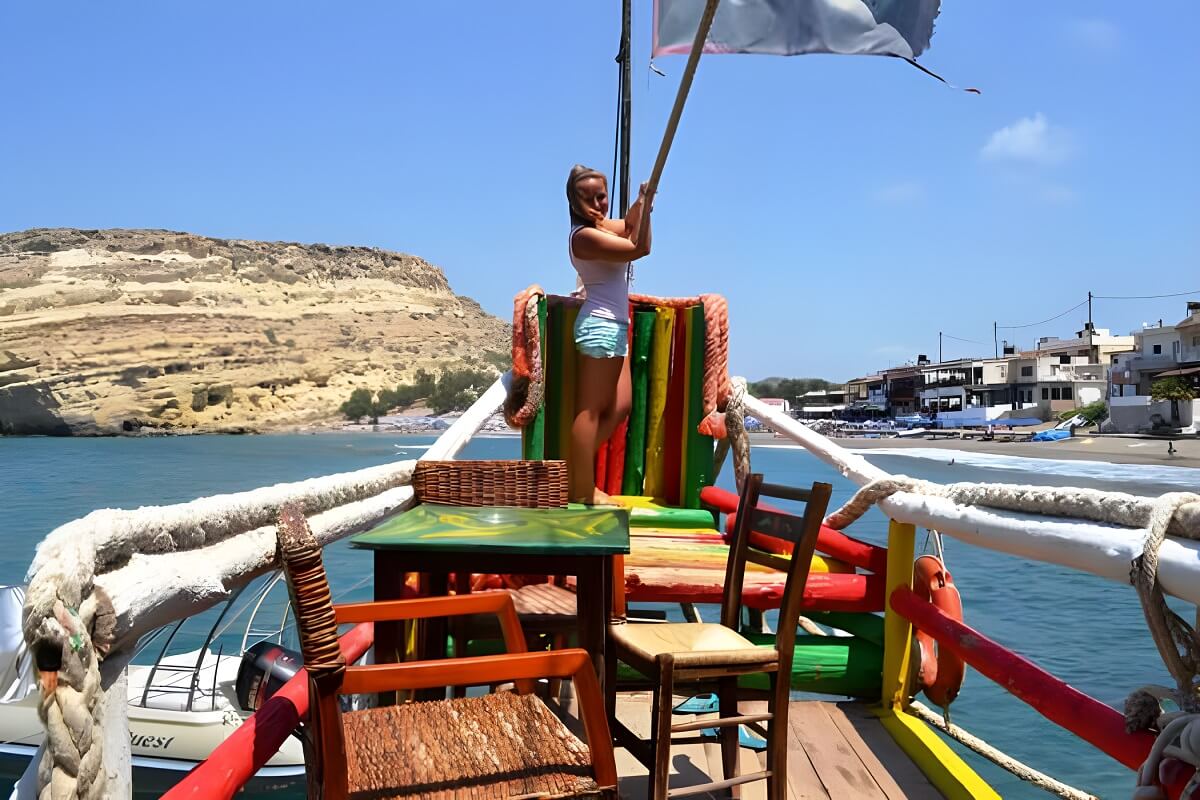
Matala Beach Festival hippie festival
Tourists enjoy attending Crete’s music festivals, most of which are beach festivals held during summer season. Don’t miss Chania Rock Festival at the end of June, set against the ruins of the San Salvatore bastion, whose headliners at various times have included Sabaton, Kreator, Soulfly, etc.
At the end of July, you can visit the Mediterranean Festival in Sitia, combining music and painting, and throughout August – attend the Contemporary Music Festival in Avdou village near Krasi. In addition to performances by local and visiting musicians, visitors are offered tastings of Greek cuisine and local wine.
In Anogia at the end of July, another festival takes place – dedicated to Balkan music and dance, attended by participants not only from all over Greece but also from Bulgaria, Serbia, Romania, etc.
Traditional Cretan cuisine is Greek but with its own peculiarities and variations. As on the mainland, local restaurants serve very large portions, with lots of fish, meat, and vegetables on the menu.
In addition, “compliments” are customary in Cretan restaurants and taverns: besides your ordered dish, the waiter will bring some appetizer, dessert, or a glass of raki.
Fish on Crete is most often cooked over an open fire, less often steamed. Local seafood soups or fish broths are especially delicious. Fresh vegetables or rice are offered as a side dish for main fish dishes.
Popular seafood includes lobsters, shrimp, sea urchins, octopuses, cuttlefish, and squid. Meat is mostly stewed in wine sauce, grilled, or served as steaks. Cretan cooking predominantly uses olive oil, as well as cheeses – feta, mizithra, and graviera.
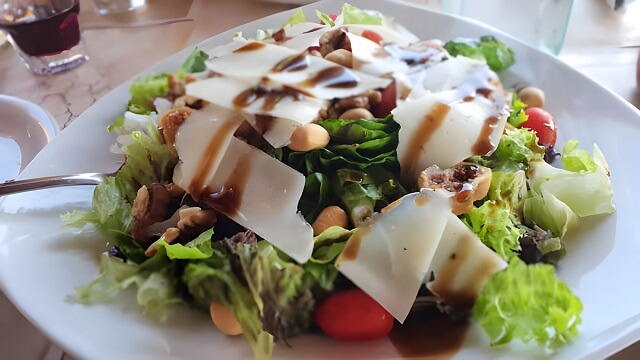
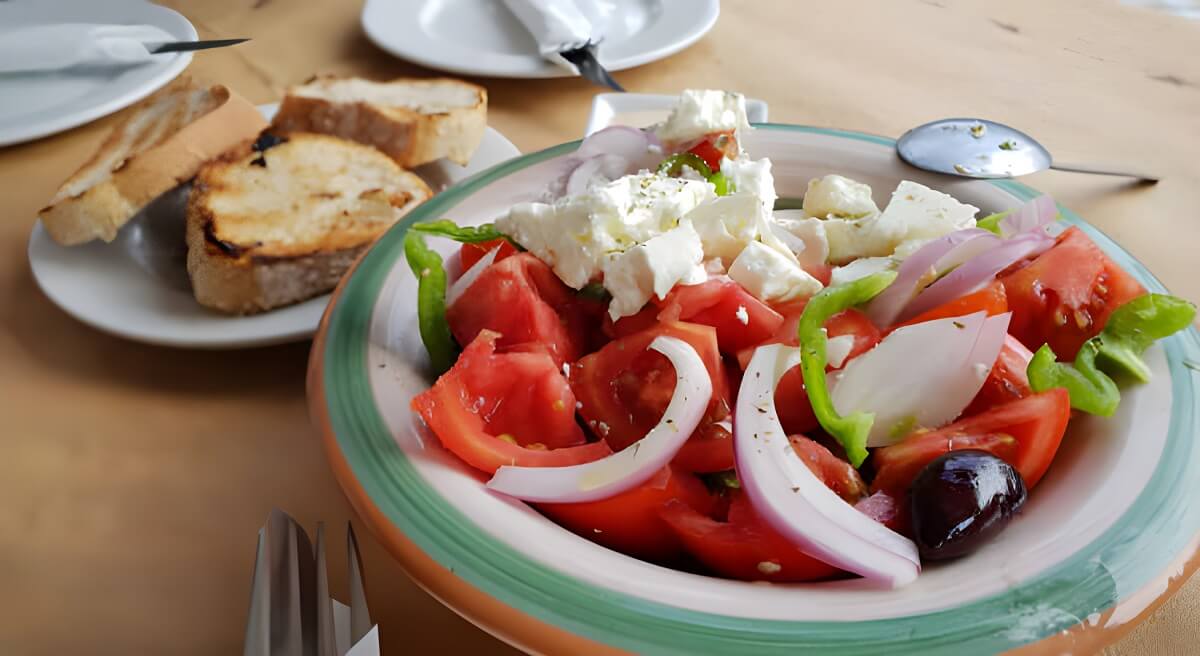
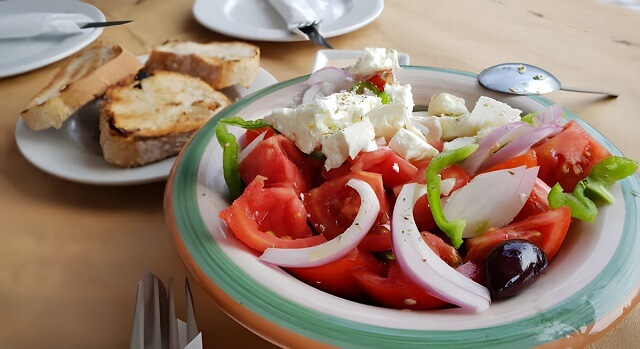
My lunch at Spilios tavern in Falasarna
Traditional Cretan dishes include:
Other well-known Greek dishes are also available on Crete: gyros, souvlaki, Greek salad, tzatziki, moussaka, etc.
The most popular alcoholic drinks on the island are wine and raki. Raki is grape vodka with 38% strength, which is drunk everywhere on Crete: it’s offered to tavern visitors after meals, left for guests on the table in rental accommodation, served to travelers in monasteries, etc. Raki is as popular on Crete as anise vodka “ouzo” is on the mainland.
Among non-alcoholic beverages, the most popular are coffee and juices. Tea here is only brewed from herbs.
Many European restaurants operate on the island – they’re for those who miss their familiar food. For example, you can find excellent Italian pizzerias, establishments serving classic steaks, fast food, or haute cuisine bestsellers.
But while vacationing on Crete, you should still give preference to local restaurants and eateries, especially small village taverns, where you can better learn about island life and traditions and meet its inhabitants.
My lunch at Kexagias tavern in Sfakaki
Crete is a wonderful place to combine beach relaxation and shopping.
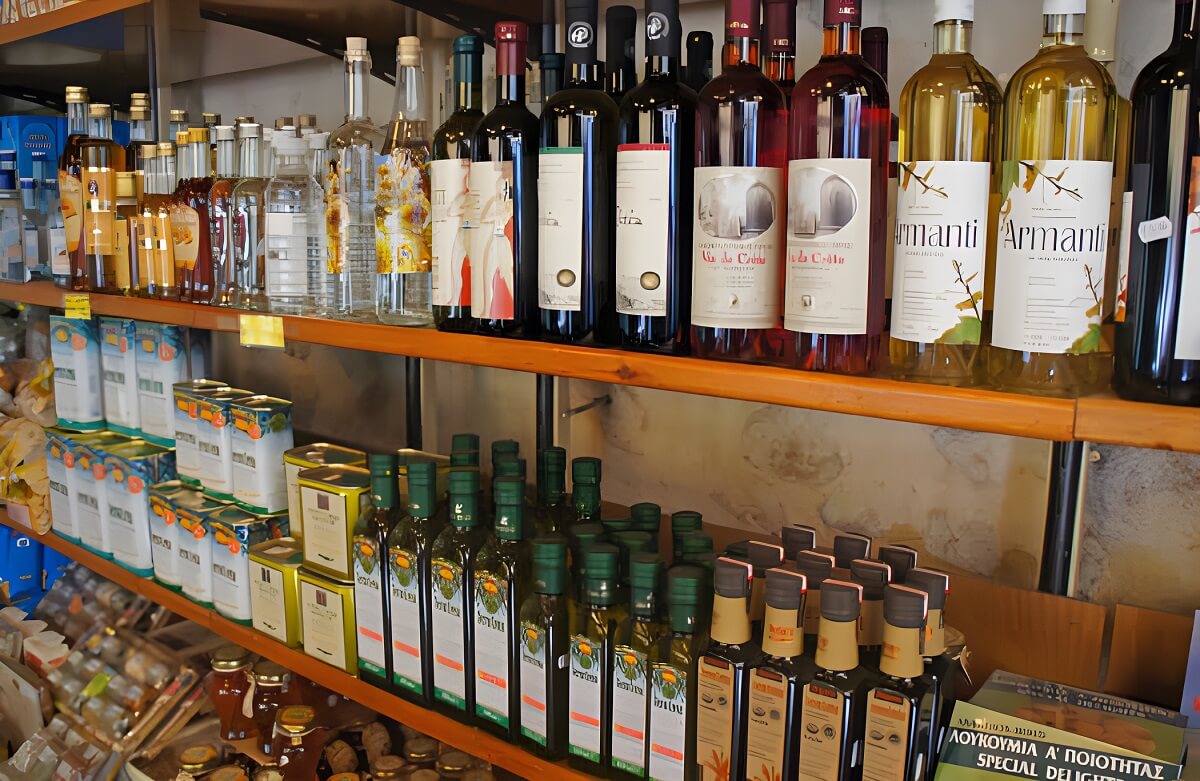
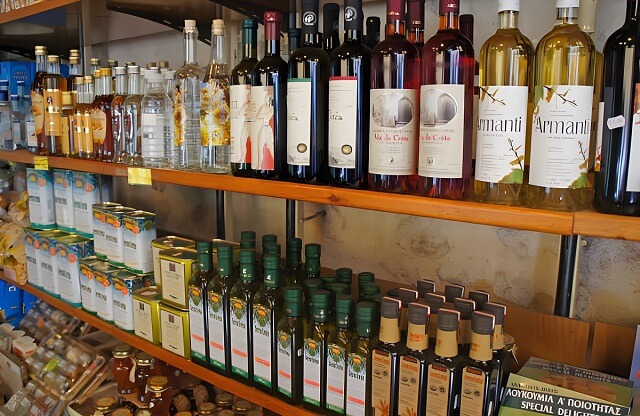
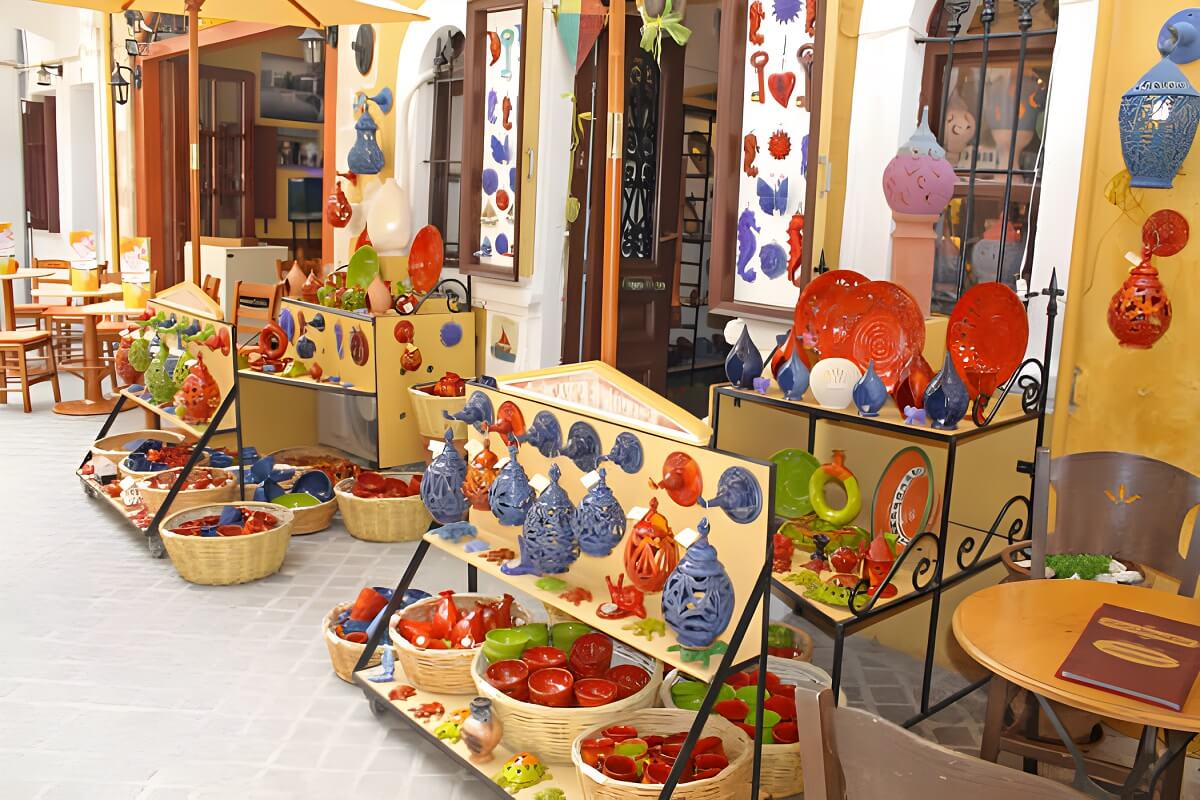
Tourists usually buy local products here – olives, olive oil, cheese, spices, dried fruits, wine, as well as handmade items: home-woven tablecloths, embroidered napkins, ceramics, carved wooden items, engraved knives, woven baskets.
In Chania shops you can buy olive oil and wine as souvenirs
In Heraklion, 1886 Street is considered the best shopping street, abundant with both food and non-food stores. This is where they sell the best Cretan cheese, spices, sweets, etc.
Traditional souvenirs are bought by tourists at Mayaba Store – the island’s largest souvenir supermarket. In addition, on Crete, as in other regions of Greece, you can choose and purchase excellent quality leather and fur products.
In Chania you can do exquisite shopping – buy beautiful jewelry and elite clothing and accessories. Among jewelry stores, Katerina Garofalaki and Kreta Gold stand out; they’re popular not only in Greece but throughout Europe. The city has boutiques of famous international brands – Dior, Gucci, Seiko, etc.
For a new fur coat, fashionistas should head to Hersonissos, which has the most leather and fur salons on the island. You can also choose a fur coat in Rethymno, which, moreover, is famous for stores selling locally produced organic cosmetics at affordable prices.
Fresh farm products, seafood, vegetables, and fruits on Crete should be bought at local markets, which exist in every city and village. Moreover, the Cretan market is the best place to get closer to the life of ordinary islanders.
The most famous is the Central Market Heraklion, where you can buy food and wines, jewelry, souvenirs, etc.
Another interesting market is Agora Marketplace in Chania. Besides products, this market sells souvenirs, natural cosmetics, inexpensive clothing, shoes, and accessories.
On the streets of Chania you can see a huge number of souvenir shops
Remember that bargaining on Crete is not only appropriate but mandatory! You can and should haggle even in the most expensive stores: as a rule, after bargaining, you can “knock down” the price by 10-15%.