Things to do in Santorini: Exploring Blue-Domed Churches, Black Sand Beaches, Local Cuisine and Ancient Ruins on this Stunning Greek Island
Updated:
Santorini (or Thira) is a picturesque island in Greece, in the Cyclades archipelago, located in the Aegean Sea. It is one of the most stunning places in Europe and a true Greek paradise, attracting honeymooners and lovers as the most romantic vacation spot.
Santorini offers incredible sunsets and pearly white buildings climbing up steep slopes in tiers, blue-domed churches and charming windmills, great gastronomy and stunning beaches.
In this article, I want to share information about visiting this stunning island. How to get there, what you can do and see, how to get around the island—about all this, read below.
Santorini island: the most important in this article
1. How to get to Santorini. There are two ways to reach the island: by plane or by ferry.
- Santorini’s international airport is located near the village of Kamari, just 6 km from the capital Fira. From the airport you can get to town by bus, shuttle, or taxi.
- The sea route is also very popular. Regular ferries from neighbouring Crete run from Heraklion (where we personally sailed from) and from Rethymno — there is a detailed article on how to reach Santorini from Crete by sea. The ferry journey from Heraklion takes between 1 and 4.5 hours depending on the type of vessel. But the most connections are from Athens — you can get there by ferry (4 hours) or by plane (50 minutes).
2. How to get around the island. The island is quite large, so it’s worth thinking about transport. For the first couple of days we used KTEL buses — they run reliably and on time, connecting virtually all settlements. Ticket prices depend on the distance.
From the port to Fira, the cable car is a memorable experience — the ride is short but spectacular. It costs 7 euro and operates from 6:30 to 22:00. A traditional but exotic mode of transport is the donkeys that carry passengers through the narrow streets of the towns.
But the most convenient option is to rent a car. That’s exactly what we did on the third day. Although the roads on Santorini are narrow and winding, with descents and sharp bends, the freedom of movement and the ability to plan your own route make it worth it. Rental prices start from 70–110 euro per day depending on the vehicle class. Important: drink-driving is strictly prohibited, and fines can reach 2,000 euro. For all the details on renting a car in Santorini, read this article.
3. The most beautiful towns and villages:
- Oia – is the Santorini from postcards. Snow-white houses, blue church domes, narrow streets, and the most beautiful sunsets in the world. We made a point of arriving here an hour before sunset to find a good spot.
- Fira – is the island’s capital, perched on the edge of the caldera. From here you get breathtaking views of the volcano and the sea. The town is full of life, with plenty of shops, restaurants, and tavernas. Its signature landmark is the Church of Agios Minas with its blue domes, featured in many promotional brochures.
- Firostefani – is a quiet village between Fira and Imerovigli, an ideal place for a peaceful stay with panoramic views. Imerovigli is the highest point of the caldera, offering a sweeping panorama of the entire caldera and the sea.
- Pyrgos – is a traditional Cycladic village set on a hill. Here you can experience the genuine atmosphere of Greece without the tourist crowds.
4. Akrotiri is the Greek Pompeii — an ancient city of the Minoan civilisation buried under volcanic ash around 3,600 years ago. Dozens of buildings have been preserved under the roof of the archaeological reserve in near-original condition. Walking these ancient streets where people once lived is an extraordinary feeling. The frescoes and ceramics found here can be seen at the Archaeological Museum in Fira.
5. Some island tours. To cover as much as possible, we took a private tour of Santorini with a local guide for 175 euro for 6 hours. The guide showed us not only the island’s main sights but also shared its history and local legends. Not cheap, but good service and quite an interesting programme.
- If you prefer flexibility in both price and timing, there’s the option of a private tour with a choice of duration — from 3 to 8 hours. For 120 euro per person (when booked for two) you can visit the famous blue domes and climb to the island’s highest point, Prophet Elias.
- A more budget-friendly option is a group bus tour of Santorini for 59 euro (29.50 euro for a child aged 4–9) lasting 10 hours. The route includes the Akrotiri excavations (March to November only) and a local wine tasting.
- Wine lovers will enjoy a day trip with tasting for 69 euro per person (group option) or 800 euro for a private tour for groups of up to 25 people. Over 9 hours you’ll visit the black sand beach, the island’s main sights, and of course taste the unique wines of Santorini.
6. If you’re staying in Crete, Santorini makes an ideal destination for a day trip. Comparing prices, guided excursions are not much more expensive than travelling independently — and when you factor in food and transport on the island, the costs come out nearly the same:
- A 1-day trip from Chania to Santorini costs 225 euro per person (120 euro for a child under 17). Over 10 hours you’ll visit the charming village of Oia with its churches and blue domes, and the island’s capital, Fira. Transfer, guide services, and island transport are included in the price.
- A trip to Santorini by boat from Rethymno costs 207 euro per adult (125 euro for a child aged 3–10) for 13 hours. For an extra 20 euro you can add a boat tour to the volcano.
- From Heraklion there’s also a 1-day excursion to Santorini for 169 euro per adult (84.50 euro for a child aged 4–10) lasting 12 hours. There’s also an option with transfer from a specific hotel in Crete.
7. How to visit the volcanic islands. The volcanic islands of Palea Kameni and Nea Kameni are unique geological landmarks of Santorini, formed as a result of volcanic activity. Near Palea Kameni are the famous thermal springs with water temperatures of 30–35°C, rich in hydrogen sulphide. Swimming in these warm waters is a special pleasure.
Thirasia, the second largest island in the archipelago, is the most authentic — with cave houses and ancient vineyards. Group mini-cruises to the volcanic islands are quite affordable:
- A cruise to Thirasia and the hot springs costs 30 euro per adult (15 euro for a child aged 4–10) for 6 hours. You’ll have the option to visit the volcano with a hike to the crater (for an additional fee) or the hot springs.
- A cruise to the volcanic islands for 50 euro per person (25 euro for a child aged 4–9) lasts 6–10 hours depending on the option chosen. You can opt for the extended version including a visit to Oia to watch the sunset.
- A trip to the volcano, hot springs, and sunset in Oia costs 30 euro per person (15 euro for a child under 10) for 6 hours. The route is shorter but includes all the key highlights.
- The Thirasia islands and volcano tour with a guide costs 56 euro per person (28 euro for a child aged 3–12) for 8 hours. You’ll visit the lava island of Nea Kameni and have the chance to swim in the green sulphurous waters of the Palea Kameni hot springs.
8. Santorini wines. Thanks to the island’s volcanic origins and the rich mineral content of its soils, Santorini wines have a unique flavour. Local grape varieties grow in volcanic soil, which gives the wine a distinctively high acidity and minerality.
The most famous Santorini wine is the sweet Vinsanto, made from dried grapes. Also worth trying are the light dry Assyrtiko and the fortified Nykteri. Almost every café and restaurant offers several types of local wine. Tastings are organised at many of the island’s wineries.
9. Beaches and swimming spots. That same volcanic origin has given the island its unique beaches: the red beach with its extraordinary cliffs, the black beach of Perissa, and the white beach of Kamari. The sand here has taken on various shades thanks to volcanic rock — from soft white to pink, red, and even black.
Perissa also has a small water park with several pools and slides. The water is clean and there are plenty of sun loungers and parasols. Opening hours: 10:00–00:00, with rides operating until 19:00. Entry is 8 euro for adults and 5 euro for children.
Santorini Island - why does a huge number of tourists come here every year?
Santorini is a picturesque, archipelago in the Aegean Sea, actually a ring of 5 islands: Thirasia, Nea Kameni, Palea Kameni, Aspronisi, and, of course, Santorini itself, or, as it is also called, Tira.
Officially, these islands are part of the Greek Cyclades, but this it is a little different Greece: lavish, fabulously beautiful, aristocratic, although at the same time and at home cozy. Everything here is superb: the scenery is marvelous, the architecture is incredible, and the service is impeccable.
The history of Santorini dates back more than 3500 years, and traces of ancient civilizations remind us of the rich past of this archipelago. But the last thing you want to think about here is time: a holiday surrounded by volcanic landscapes, amazing blue sea, well-maintained beaches with colorful sand and postcard houses with snow-white facades is truly serene.
People come here to admire the sunsets, to enjoy the moment, to regain the inner harmony lost in the eternal rush and bustle. And hardly anyone will dispute the conjectures of scientists: perhaps Santorini was once part of the lost Atlantis.
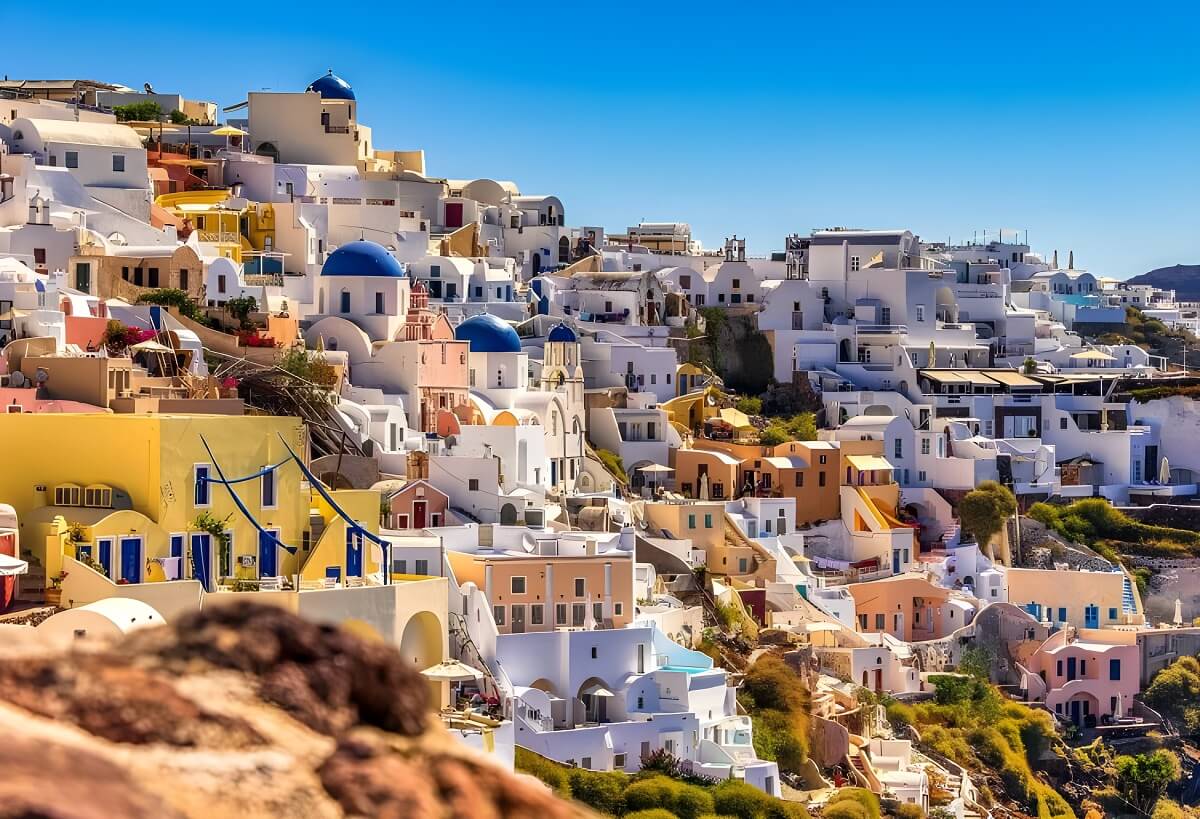
A beautiful view of the white-washed houses of Santorini island
The legend of the island of Santorini
Island vacations always have a touch of romance, and what romance without legends?So, the legend says that Santorini is a part of Atlantis, a continent that went under water in ancient times.
Perhaps, historians and archaeologists are puzzling over how this legend corresponds to reality, especially since in 1967 during excavations near the village of Akrotiri were found not just ancient – and precious in its antiquity – shards, and the ruins of the entire city of Minoan civilization: under the ashes of the volcano remained almost undestroyed dozens of houses.
It is in Akrotiri that you can visit the archaeological reserve and discover a new, or on the contrary, ancient world with its life, architecture and other features. The Archaeological Museum of Fira is the perfect place to complete the experience of visiting the reserve.
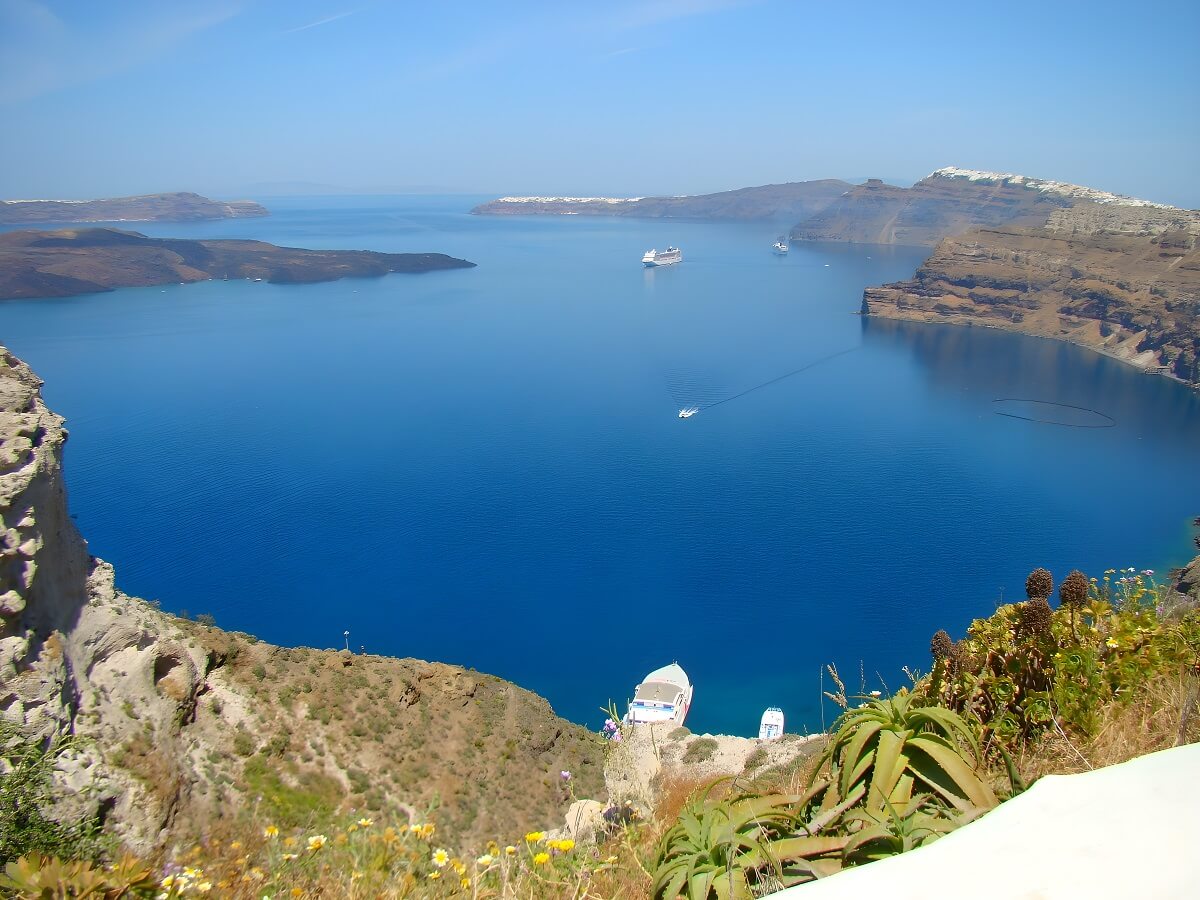

Often walking around the island, one just wants to stop and admire the views, yet they are magnificent here.
Geography, features and climate of the Island of Santorini
Santorini is located in the southern part of the Aegean Sea, 200 km from mainland Greece. It is a semicircular archipelago of volcanic islands located between the islands of Ios and Anafi. The island has an area of 96 km2 and the coastline is 69 km long.
The most impressive part of the topography is the famous caldera (volcanic vent), which is closely linked to the island’s history. This volcanic depression is circular in shape and is completely filled with water.
In fact, it is the only sunken caldera in the world. It resembles a lagoon, with a depth of up to 400 meters. The caldera is surrounded by steep cliffs, on top of which are built beautiful villages.
The eruption that formed the caldera caused giantic tsunamis that hit the northern coast of Crete and destroyed the Minoan civilization that was flourishing at that time.
Santorini has an arid Mediterranean climate characterized by hot, dry summers and warm, slightly rainy winters. Santorini is subject to strong northerly winds in July and August, which can interfere with calm boat trips.
Location of Santorini Island on the map
A few words about the history of the island of Santorini
Recent archaeological findings indicate that Santorini was inhabited as early as the Neolithic era, around 3600 BC. A large city of the Minoan civilization was built on the island, which was destroyed by a major earthquake in 1650 BC.
In 1500 BC, Phoenicians settled here, founded the city of Fira. In 1100 BC, Santorini was conquered by the Lacedaemonians (Spartans).
During the Hellenistic period, Fira, the largest island of Santorini,due to its central position in the Aegean Sea, became an important trading center and naval base for the Greeks.
Interesting fact: the modern name of the island was formed in the 13th century by the Crusaders (or Venetians) from the name of a small church of Saint Irene (Santa Irini) in Perissa.
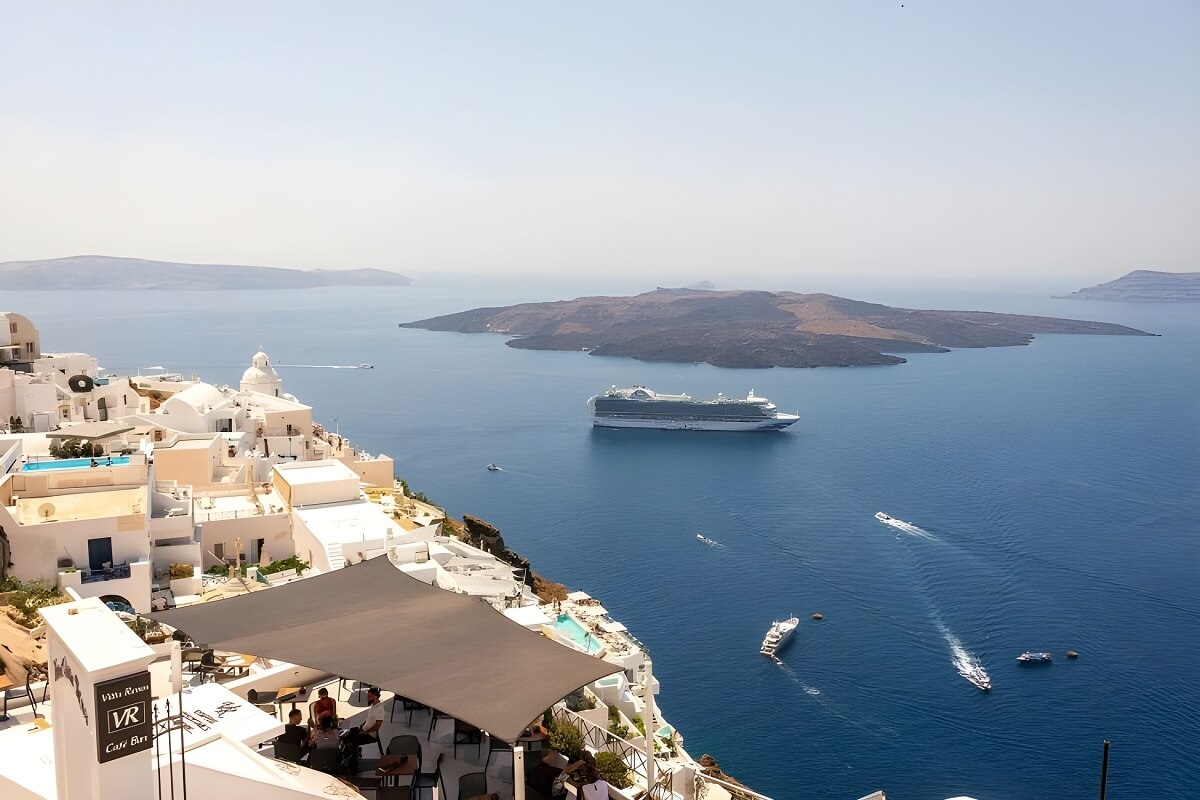
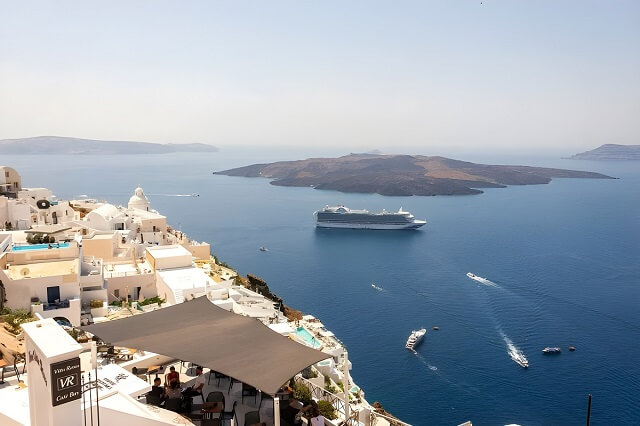
View of Firostefani and the Aegean Sea from the town hill
After the collapse of the Roman Empire and for most of the Middle Ages, Santorini was part of Byzantium. In the 13th century, the islands were handed over to Venice. The Venetians ruled Santorini until the 16th century, when the Turks came here and turned the local port into one of the most important ports of the Eastern Mediterranean.
In the early 20th century, after a series of wars, Santorini fell into decline. In 1956 there is another catastrophic earthquake, forcing the inhabitants to leave the islands. Santorini begins to “revive” only in the 1970s. And nowadays, it is one of the most popular resorts in Greece and all of Europe.
How to get to Santorini
There are two ways to get to Santorini: by air and by sea.
By airplane
Santorini National Airport is located on the island of the same name, near the village of Kamari, and is 6 km away from the capital of the archipelago.
From the airport to the city
You can get from Santorini Airport to Fira by bus, shuttle, or taxi:
- A bus ticket costs 3 euros,and the interval is 15 minutes, but sometimes the transportation is very out of schedule.
- Small shuttle buses drop off passengers at any address on the island for 25 euros.
- A cab ride will take about 20 minutes and cost 20-30 Euros (don’t be afraid to haggle with the drivers).
An alternative for the pickiest of the picky is a personal transfer, which can be booked on this site at a price from 35 Euros (for 1-4 people).
On the Water
Getting to Santorini is also convenient by water: regular ferries and speedboats run from Heraklion, Rethymno and other Greek cities. A boat trip from Heraklion takes from 1 to 4.5 hours, tickets from 68 Euros (early morning or late evening – twice as cheap).
The distance between Rethymno and Santorini can be covered in 3 hours, with the cost of the trip starting at 85 Euros.
The most ferries (4 hours) and airplanes (50 minutes) depart for Santorini from Athens, so it is not unreasonable to consider taking the route via the Greek capital. The trip costs between 48 and 100 euros, depending on the ferry company and class.
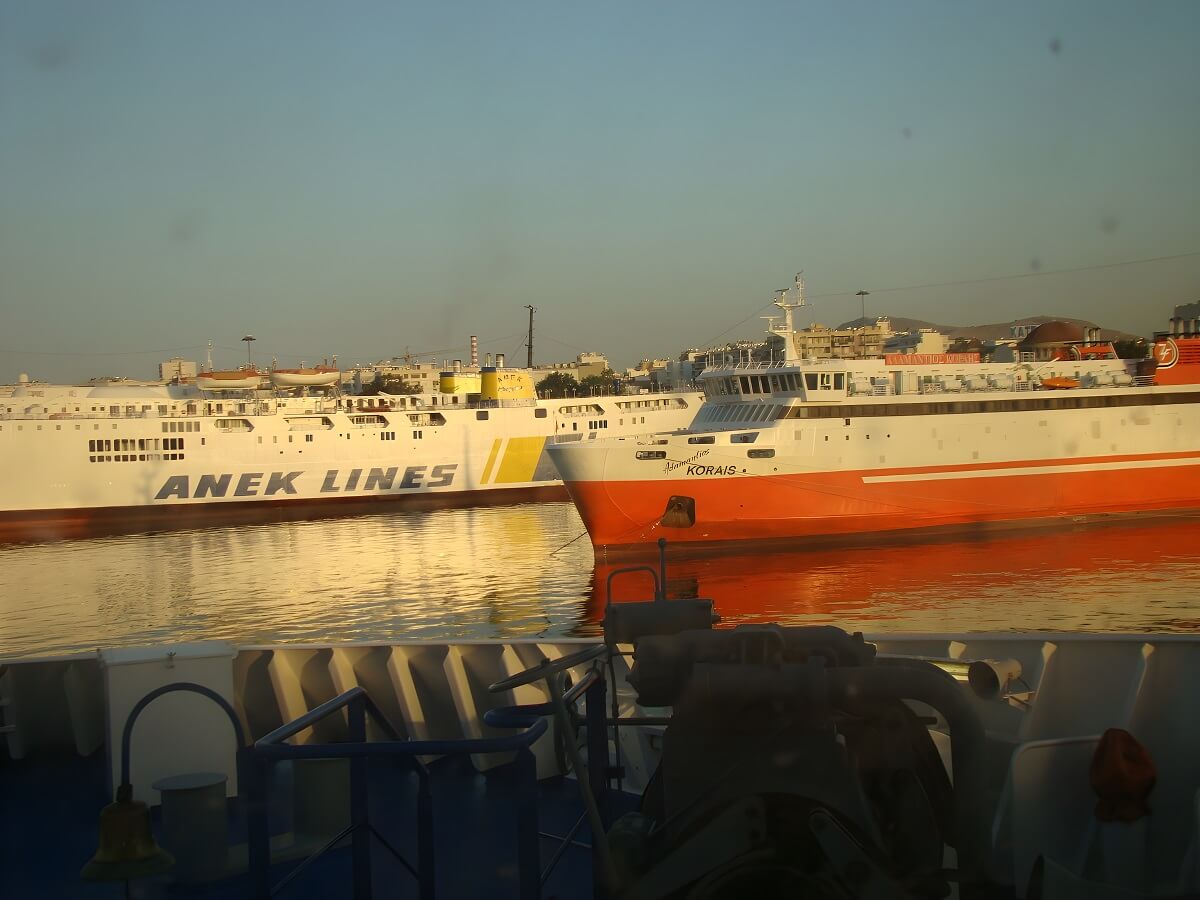
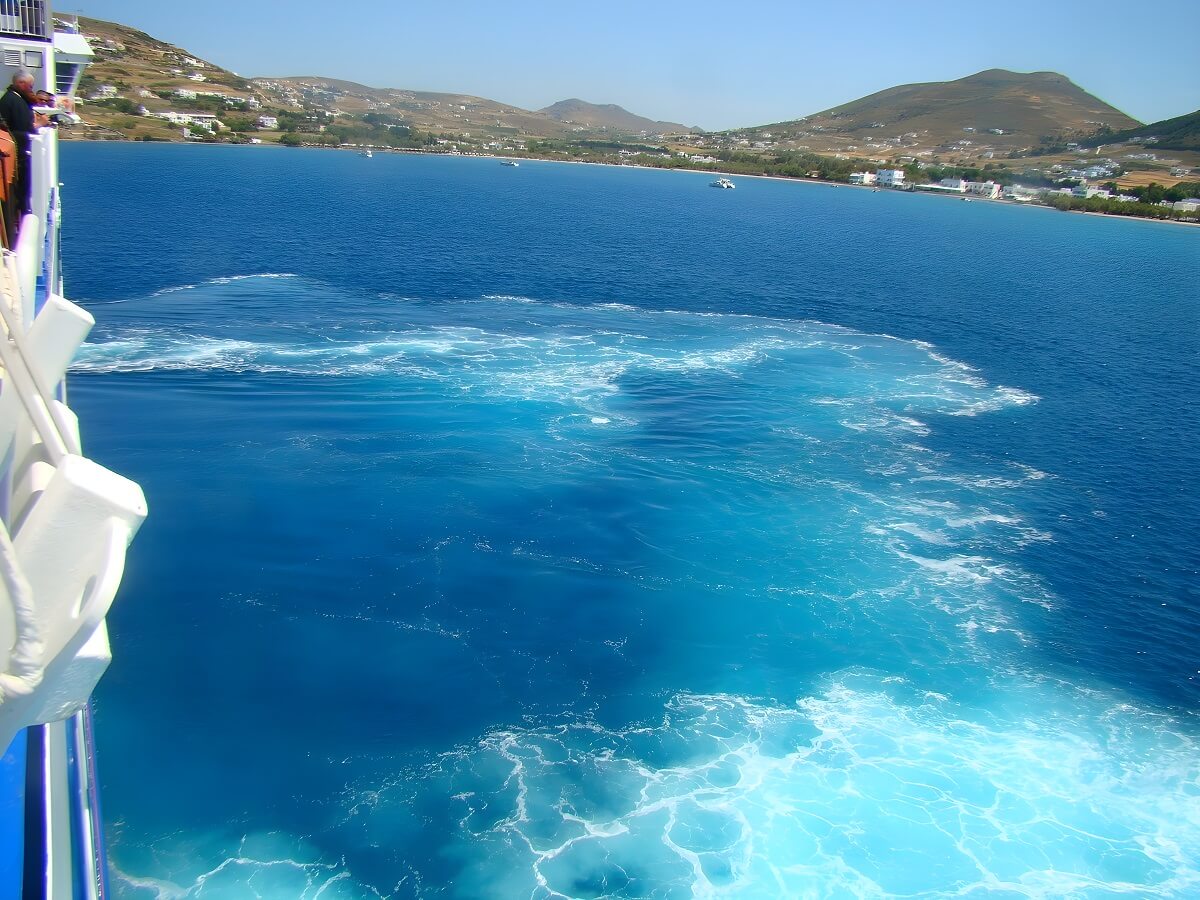
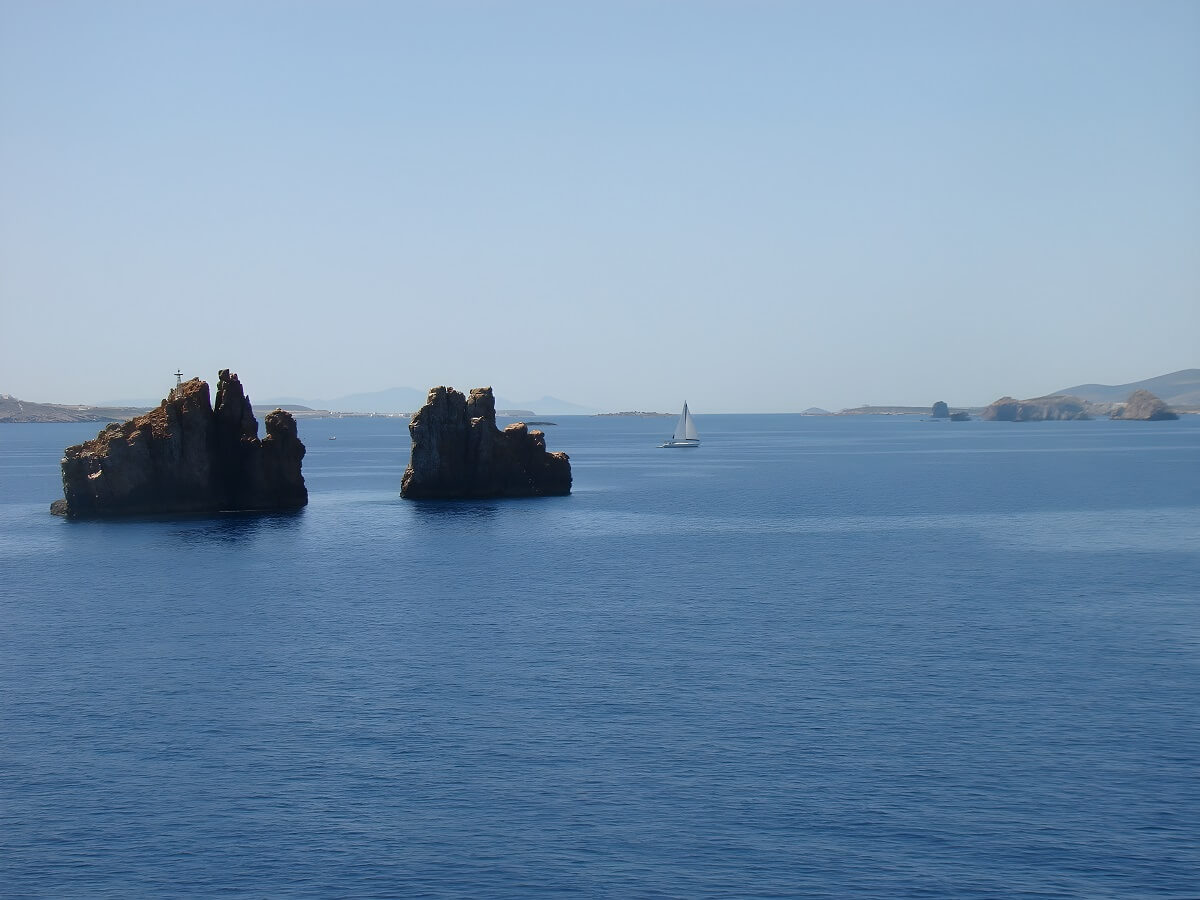
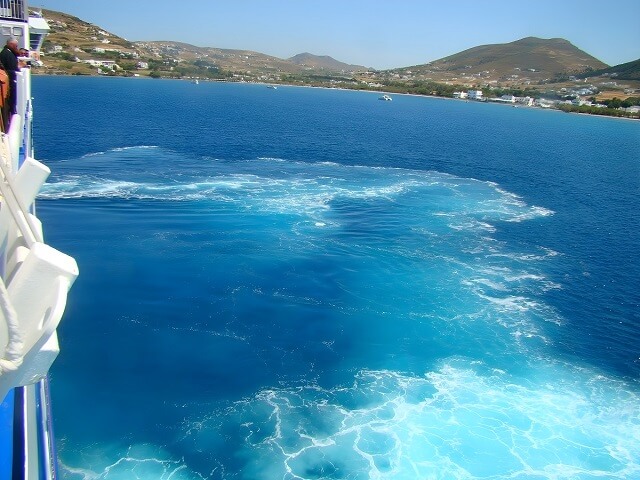
Ferry and views from it during the trip to Santorini
Tours from Crete to Santorini — a popular tourist route for day ferry trips
If you’re staying on one of our favourite Greek islands — Crete — then Santorini is one of the most popular day-trip destinations from there. I strongly recommend taking this opportunity to visit; the impressions will stay with you for life, and the island deserves everyone’s attention.
From Crete, you can reach Santorini by ferry from the ports of Heraklion and Rethymno. The fastest option is SeaJets (1 hour 45 minutes, from 65 euro one way per person); the most popular is Minoan Lines (2 hours, from 59 euro per person one way).
However, organised tours offer significantly more advantages: hotel transfer, a professional guide, an optimised itinerary, and a guaranteed return to your hotel. And when it comes to cost comparison, tours are not much more expensive than travelling independently — and if you factor in food and transport on the island, the prices are virtually the same. Below I’ll share the tours that Vladyslav and I liked most, so you can see the prices and choose the best option for yourself:
- 1-day tour from Chania to Santorini with a professional guide: 225 euro per person (120 euro for a child aged 17 and under). Duration — 10 hours, during which you’ll visit the charming village of Oia, known for its blue-domed churches, and the island’s capital, Fira. The price includes transfer from Chania and back, guide services, and transport on Santorini (for getting between towns).
- Trip to Santorini by boat from Rethymno: 207 euro per adult (125 euro for a child aged 3–10). Duration — 13 hours. The itinerary is essentially the same as the previous option, with the possibility of adding a 20 euro boat tour to the volcano.
- 1-day tour to Santorini from Heraklion: 169 euro per adult (84.50 euro for a child aged 4–10); there is also the option of a tour with transfer from a selected hotel on Crete (this option is more expensive and the price depends on your hotel’s location). Duration — 12 hours. As with the previous option, a boat trip to the volcano can be added for an extra 20 euro.
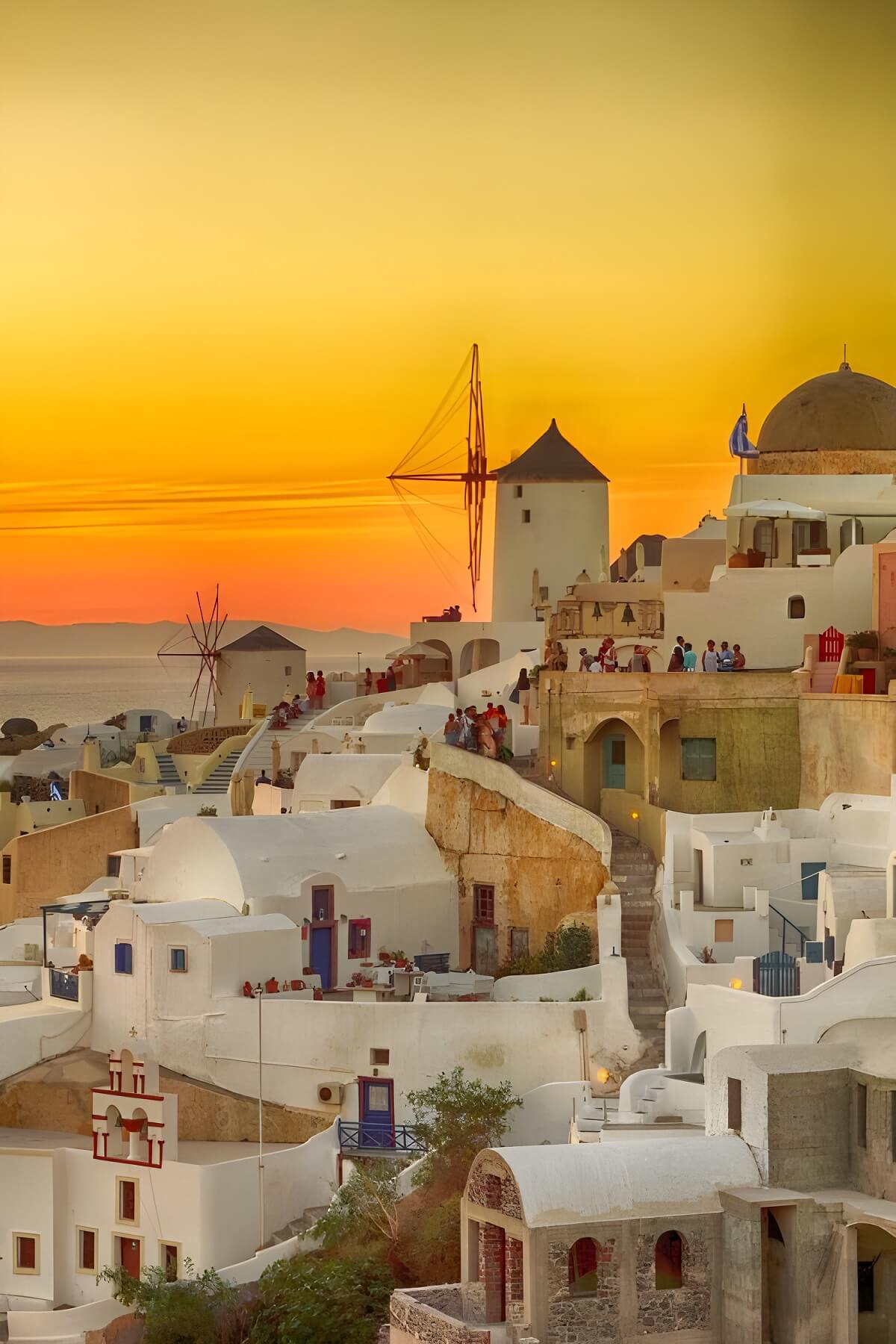

Sunset in Oia
Transport on the island of Santorini
The island is quite large, and it’s worth thinking about ways of travelling around it. I have highlighted the main ones (apart from walking). The best and most convenient way I consider renting a car, after all, freedom of movement and independence from the schedule is the best thing that can be on holiday.
Buses on the island of Santorini
Santorini’s bus services are excellent, with KTEL operating a clear and punctual service. The small, picturesque resorts can be reached on foot, but for travelling between towns, the bus is the ideal transport. KTEL routes connect almost all towns and cities, with ticket prices depending on distance and direction.
The best way to get from the port to Fira is to take the funicular: it is a short but impressive ride. It costs 7 Euros and the cable car’s opening hours are 6:30-22:00. Donkeys, traditional for Greece but unfamiliar to travellers, ride passengers around the narrow streets of the city.
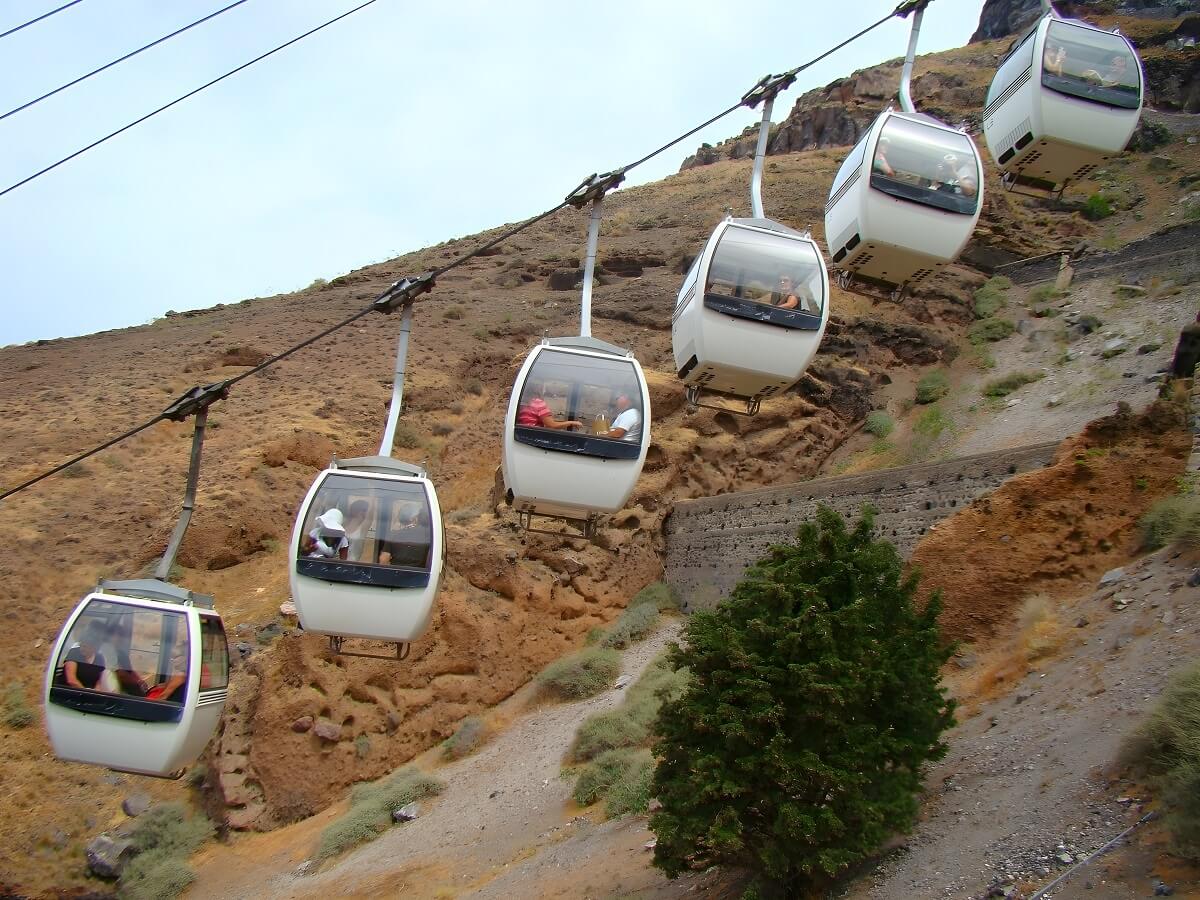
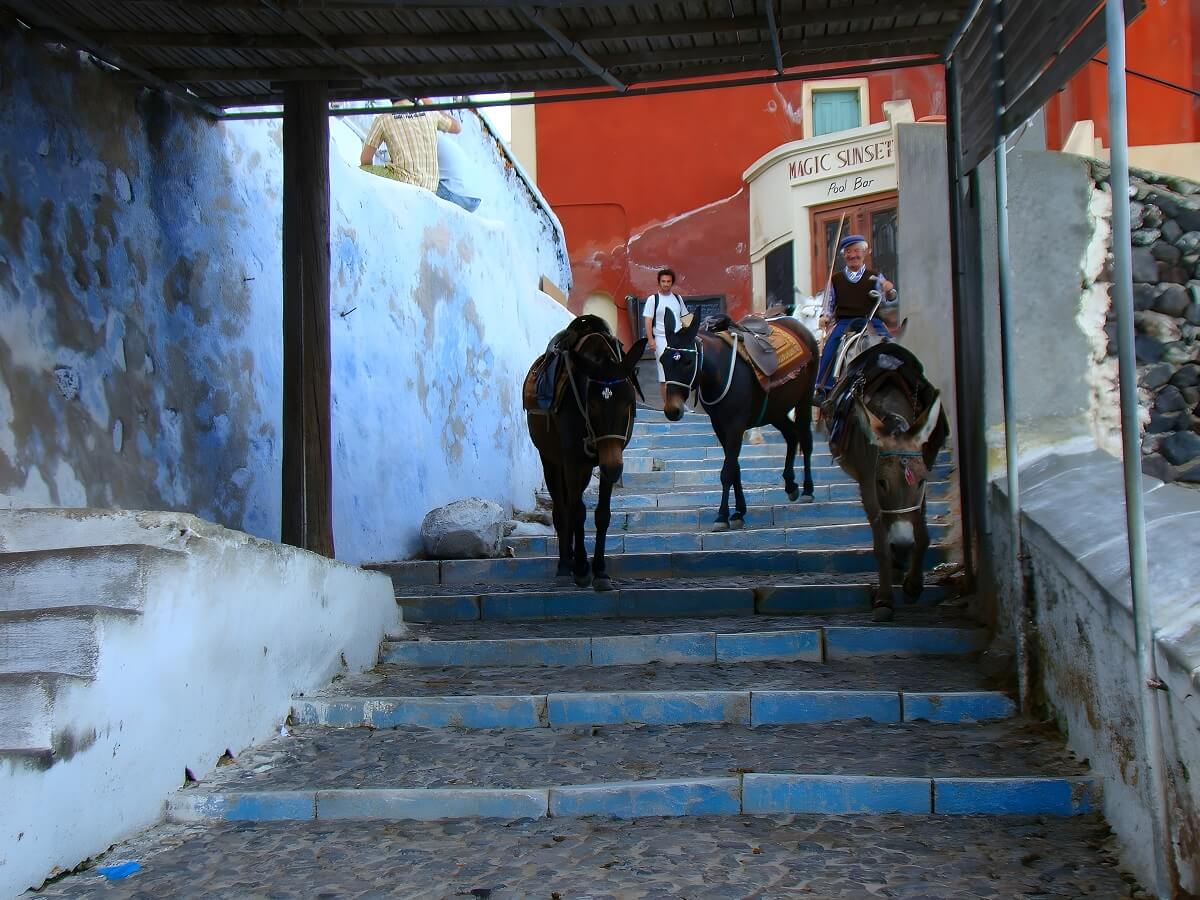

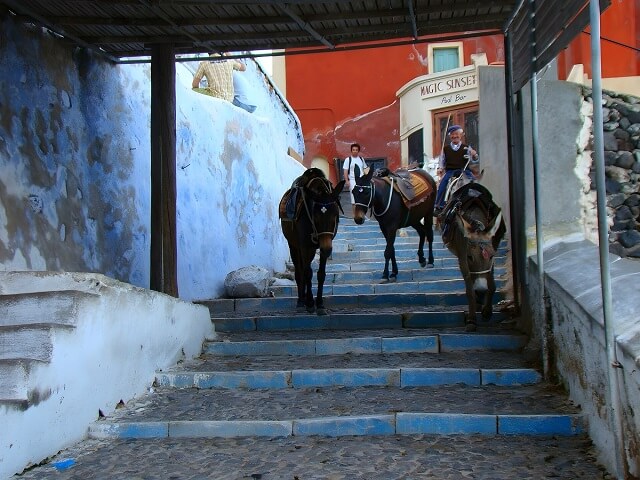
Funicular and donkeys to get around the city in Santorini
If you wish, you can also use taxi services. It is most convenient to call for a car by phone or via the Internet, but it is also possible to arrange a transfer at the port of Fira.
Numerous ferries take tourists to remote beaches of Santorini and other islands of the archipelago. For example, you can reach the neighboring in Thirasia in 25 minutes, while and a 5-hour sightseeing tour to Nea Kameni with a visit to the dormant volcano will cost 50-60 Euros per person.

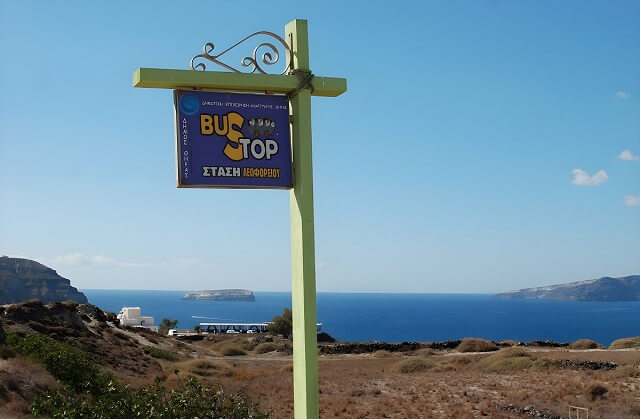
Bus stop sign in Santorini
Bicycle rental on the island of Santorini
An option for the hardiest of riders is to rent a bicycle. The streets are tight and winding and the terrain is hilly, but the pleasure of freedom of movement in the midst of magnificent scenery is definitely worth the inconvenience.
Car rental on the island of Santorini
Driving in Santorini is a mix of risk and pleasure. Driving a car on narrow, winding mountain streets with tight turns is a challenge. But driving along scenic roads overlooking the azure waters of the Aegean Sea is an unforgettable experience.
There are offices of well-known rental companies at the airport and in the centre of Fira: Sixt, Budget, Avis, and Enterprise.
Rental costs from 110 Euros per day for an economy-class car to 550 Euros per day for a 7-seater minivan. For the luxury to drive around the island in a convertible, you will have to pay from 250 Euros. Local hire companies have lower rates: a small car can be rented for 70 Euros per day.
Drinking at the wheel is strongly discouraged: the fine for driving under the influence of alcohol can reach 2000 Euros. You will have to pay the same amount for the use of anti-radar devices.
Traffic jams in Santorini are rare. There are toll sections roads; for example,travelling through a tunnel or a bridge will cost 5 Euros.There are many free car parks in the centre of Fira and on the streets of popular resorts, but in high season almost all of them are occupied. Paid car parks are also available, you can leave your car here for 2-5 Euro per day.
It may be useful:I have already told you more about the subtleties of renting a car in Greece earlier in this article.
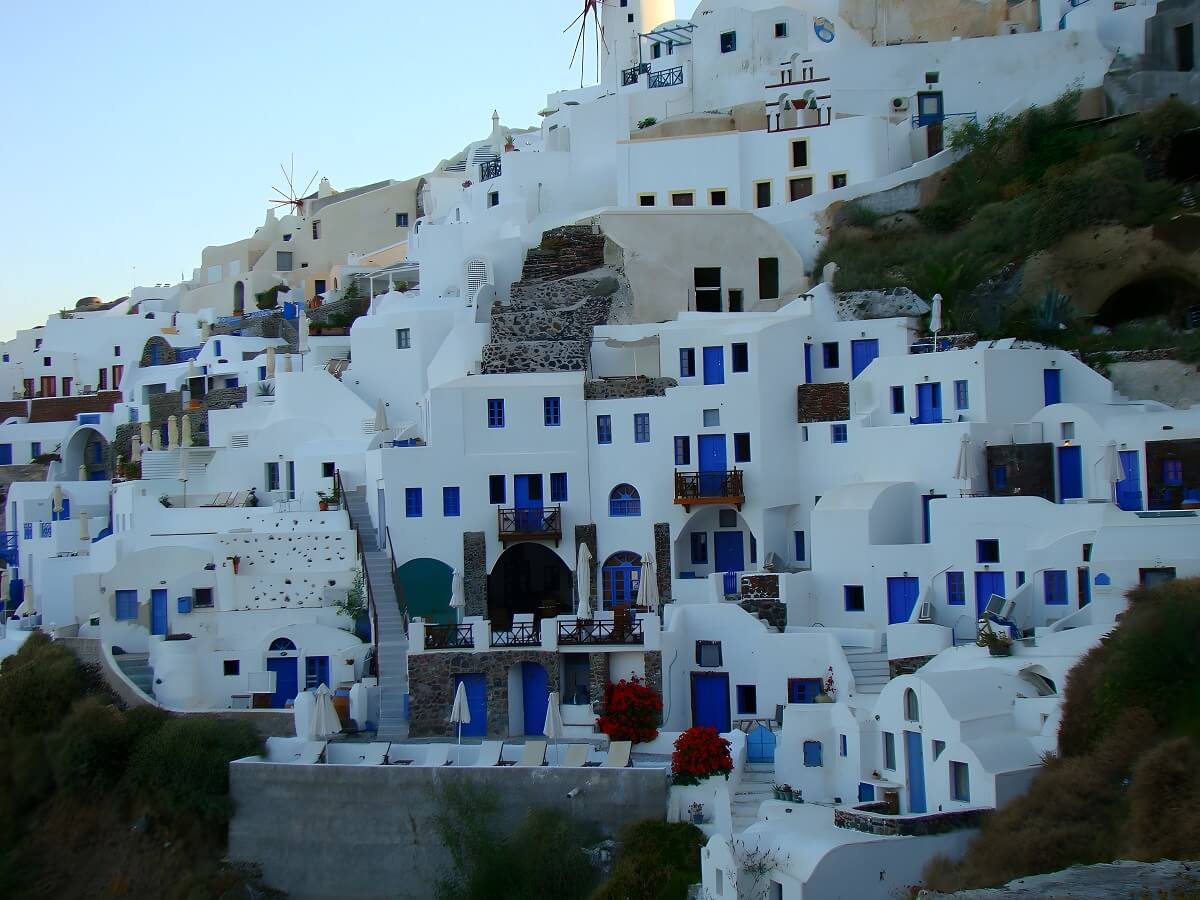
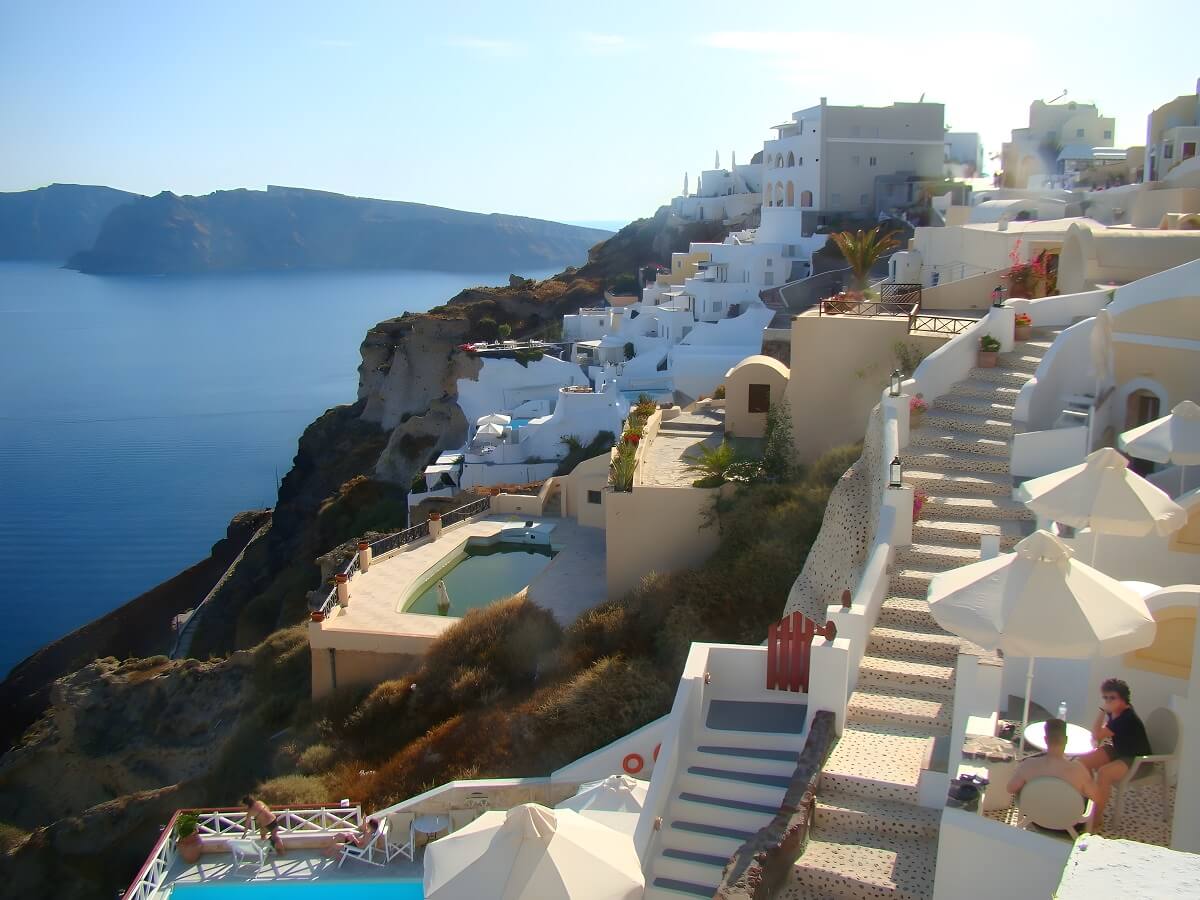

Views and architecture of the city of Iya on Santorini
What to see and do on the island of Santorini
Santorini is considered the true jewel of Greece, enchanting with its fantastic volcanic landscapes, steep cliffs, and crystal-clear sea.
But the most amazing thing here is the architecture of the coastal villages, built right on the edge of a volcanic depression with breathtaking views of the Aegean Sea.
These picturesque settlements are characterized by fabulous white houses resembling sugar cubes,punctuated by charming cobbled streets and adorned with beautiful churches with brightly coloured domes.
Popular towns and places on the island of Santorini:
- Fira is the capital of Santorini and the busiest town on the island. From here you can get a bus to almost anywhere in Thira.
- Oia is the jewel of Santorini, a colorful village on the cliffs of a volcanic caldera, located on the northern tip of Thira. It’s a place with charming architecture and stunning sunsets.
- Imerovigli is a small village located at the highest point of the caldera, offering the best views of Nea Kameni, a black volcanic island in the center of the lagoon. It is said that the sunset views here are just as good as those from Oia.
- Firostefani is a small, quiet settlement between Imerovigli and Fira. It is located on one of the steepest cliffs of the caldera.
- Perissa is a coastal village on the southeast coast of Santorini,famous for its black sand beach stretches for several kilometers and excellent Greek tavernas.
- Vothonas is a small stone village, one of the oldest settlements on Santorini.
- Megalochori is a traditional village with many old white Cycladic churches.
- Emporio is one of the largest settlements on Santorini, located at the foot of Mount Profitis Ilias. Once, Emporio was one of the main strongholds of the island and still retains a distinctly medieval character.
- Akrotiri is a small village located near the famous Red Beach in the south–eastern part of the island. It is best known for the ruins of the ancient Minoan city, destroyed by a volcanic eruption, which are considered the most important archaeological site in Santorini.
- Pyrgos is the former capital of the island, consisting of traditional houses built around a Venetian castle and winding streets that follow the natural contours of the land.
- Kamari is a cosmopolitan beach resort that boasts all the trappings of modern infrastructure.
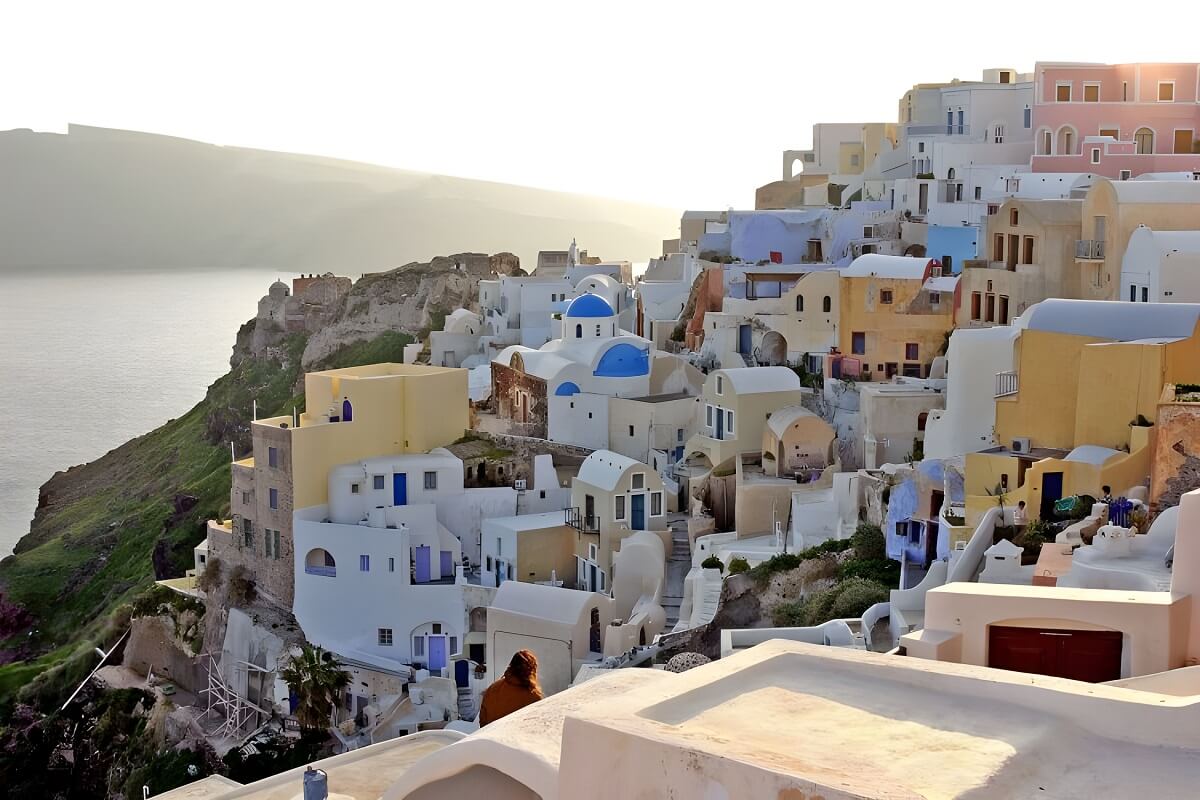

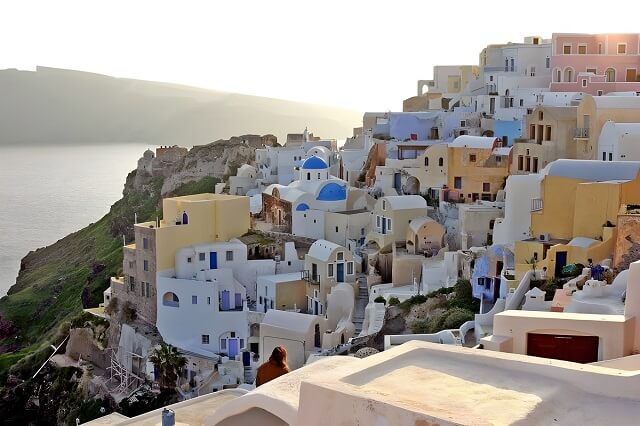
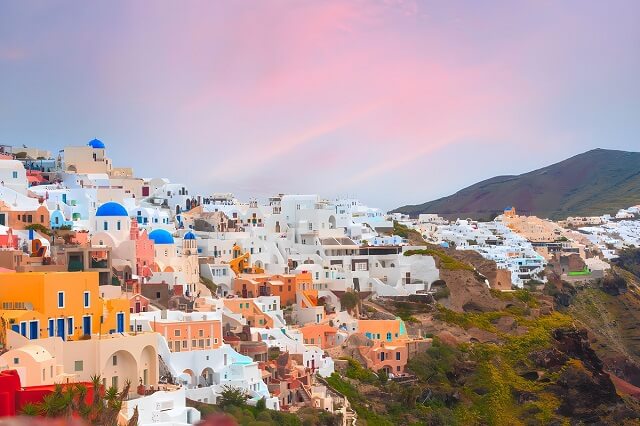
Cities of Oia (1 photo) and Fira (2 photos)
Tours around Santorini island: history, villages, beaches, and sunset in Oia
Santorini offers countless breathtaking places. In Oia, visitors admire the famous sunsets and snow-white houses. The capital Fira impresses with its views of the volcano and caldera. The Red Beach with its extraordinary cliffs, ancient Akrotiri, and the black beach of Perissa reveal the island’s unique natural and historical sides. Wine lovers shouldn’t miss a tasting at local wineries, and active travellers will enjoy a walk in Imerovigli, the highest point of the caldera. To round off the trip, Ammoudi Bay and the hot springs add some very special experiences.
Among all the various activities and tours available in Santorini, the following stood out most to me:
- Private tour of Santorini with a local guide: 175 euro per person, duration 6 hours. One of the best ways to discover Santorini, learn about local history, and explore beaches, villages, and landmarks.
- Santorini with a private guide and flexible duration: the special feature here is that you can choose a tour lasting 3 hours (220 euro per adult; 120 euro per person when booking for two), 5 hours (340 euro per adult; 170 euro per person when booking for two), or a full day (480 euro per adult; 260 euro per person when booking for two).
- Bus tour of Santorini: 59 euro (29.50 euro for a child aged 4–9; children aged 3 and under are not admitted) for 10 hours exploring the island’s most interesting places.
- Full-day tour of the island’s main landmarks with a wine tasting: 69 euro per person (group tour option); a private tour is also available for 800 euro (maximum group size of up to 25 people). Duration — 9 hours.
Santorini Beaches
Thanks to Santorini’s volcanic past and the rich mineralisation of the local soils, the sand on the coast has acquired a whole range of shades, from soft milky to pink, red and even black.
- The coast of the former is a mixture of fine dark pebbles and black volcanic sand.
The beach in Kamari is equipped with everything you need, from toilets to changing cabins. For children there is a separate zone with attractions and animators. The cleanliness and safety of the coastline is evidenced by the Blue Flag. Along the beach there is a wide pedestrian zone with shops, cafes and bars where you can hide from the scorching sun.
2. Perissa’s beaches are less crowded, with 8 kilometres of coastline protected from the wind by high cliffs. The water here is very clean, but the bottom is stony, so you should enter the sea with caution. For holidaymakers there are all kinds of attractions, beach equipment rentals, cafes and restaurants.
3. For families with children the beach ‘Monolitos’ with fine soft sand and smooth, gentle entrance to the sea is suitable. There is a playground and several cafes.
On the beach ‘Monolitos’ there are strong winds, raising clouds of sand. It is comfortable to have a rest here only in calm weather.
- In 10 km from Fira, in the bay at Cape Colombo, hid the beach of the same name: a strip of dark grey sand, smoothly passing into the cliff. The only facilities here are sunbeds and umbrellas, but the sea is clean and there are few people: an excellent option for connoisseurs of privacy.
- The complete opposite is south-eastern Perivolos, ideal for youth holidays. Here you will find not only equipped beaches, but also many nightclubs, trendy bars and restaurants, where life boils round the clock
- Fans of exoticism should go to the coast around Akrotiri. The scenery here is literally alien: emerald sea washes the black sand surrounded by steep cliffs of red color.
Nearby there is also a ‘White Beach’ with a covering of light-coloured pumice stones, which can be reached only by boat.
The infrastructure of the Red Beach is well developed, while on the White Beach there is only a tent with food and sunbed hire.
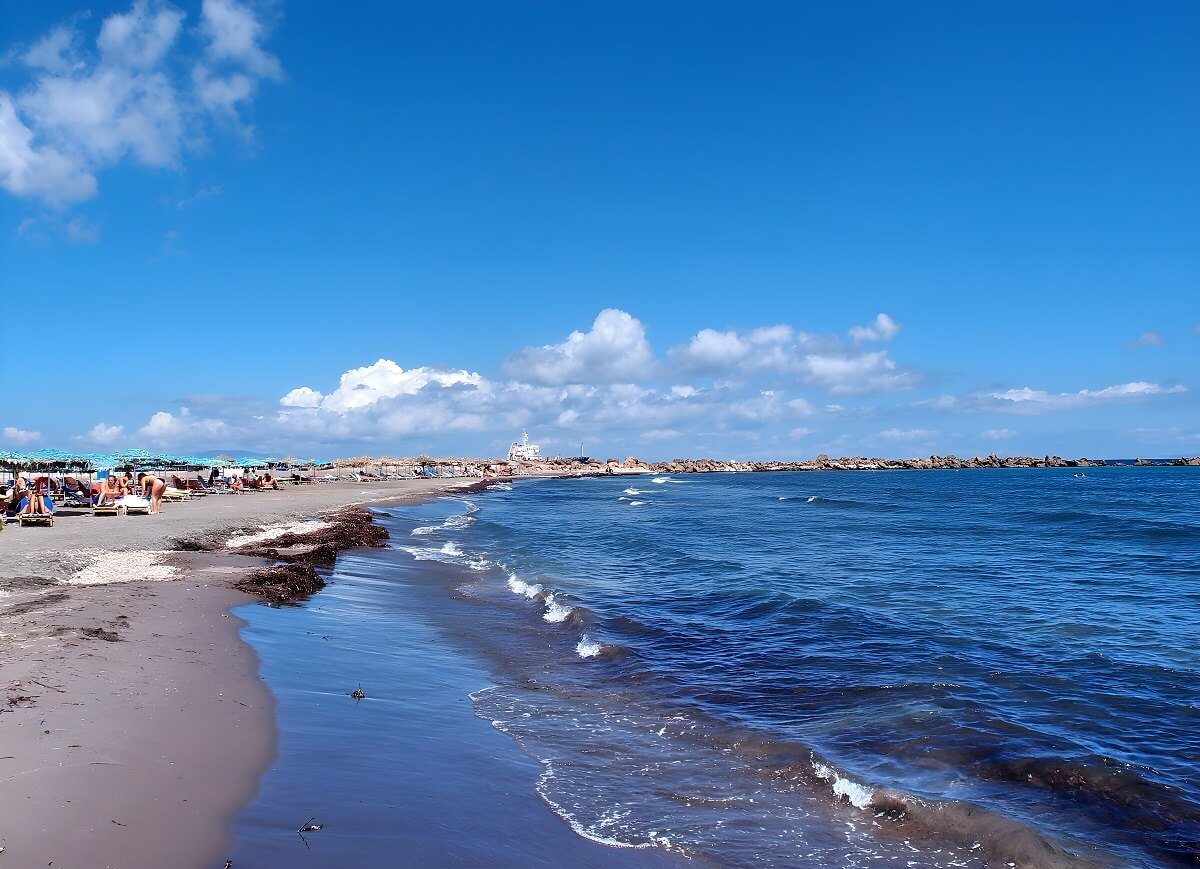
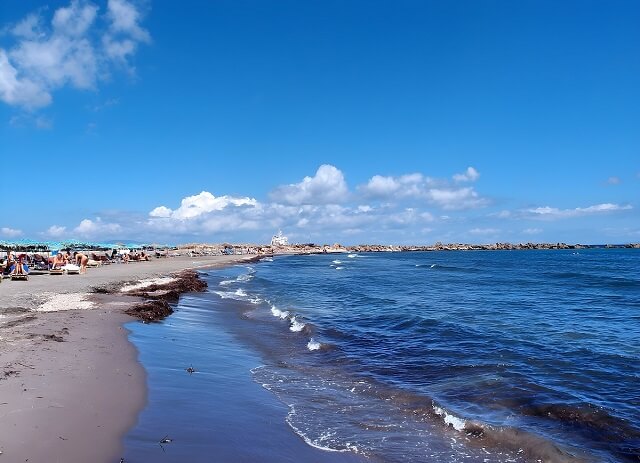
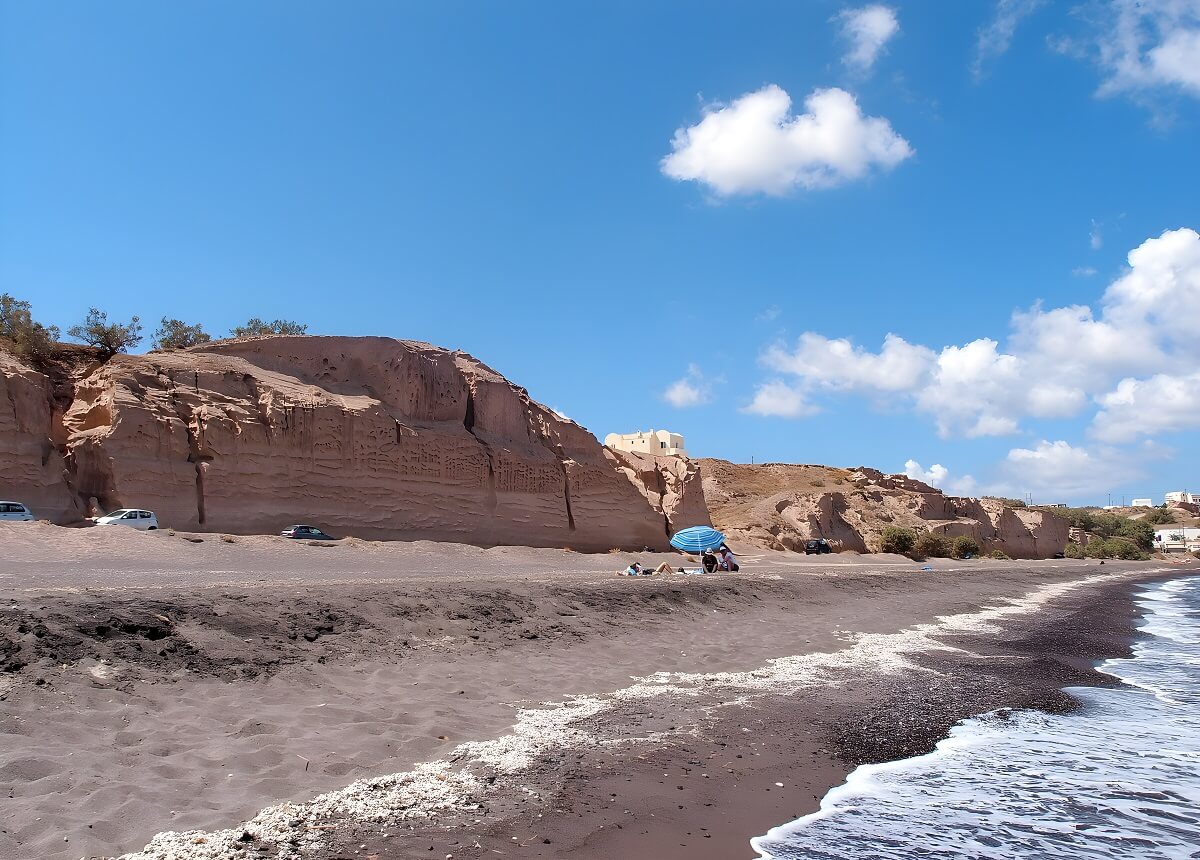
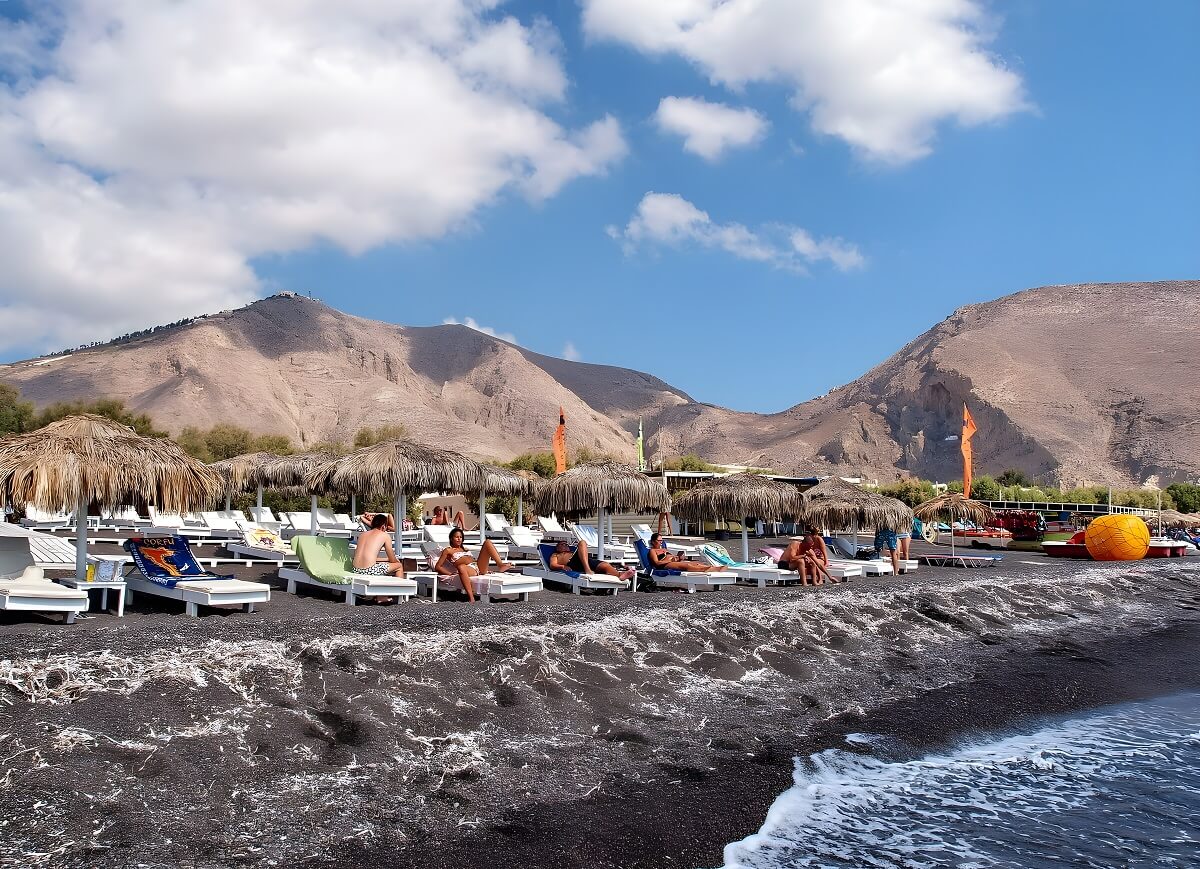
Beaches of Santorini Island
The best beaches of Santorini
- Red Beach is one of the most beautiful and famous beaches in Santorini, located 12 km from Fira. It is covered with red volcanic pebbles, creating an interesting contrast with the blue sea.
- White Beach is a cove surrounded by white cliffs, located near Red Beach.
- Kambia is an isolated beach situated between Red Beach and White Beach.
- Yalos is a small secluded beach with a beautiful view of the volcano.
- Monolithos is a quiet pebble beach 6 km east of Fira, which is perfect for families.
- Perivolos is one of the largest sandy beaches in Santorini, surrounded by numerous hotels and tavernas.
- Perissa is a well-known beach with black sand, located 12 km from Fira.
- Kamari is a popular resort and beach in the southern part of the island, located near Perissa.
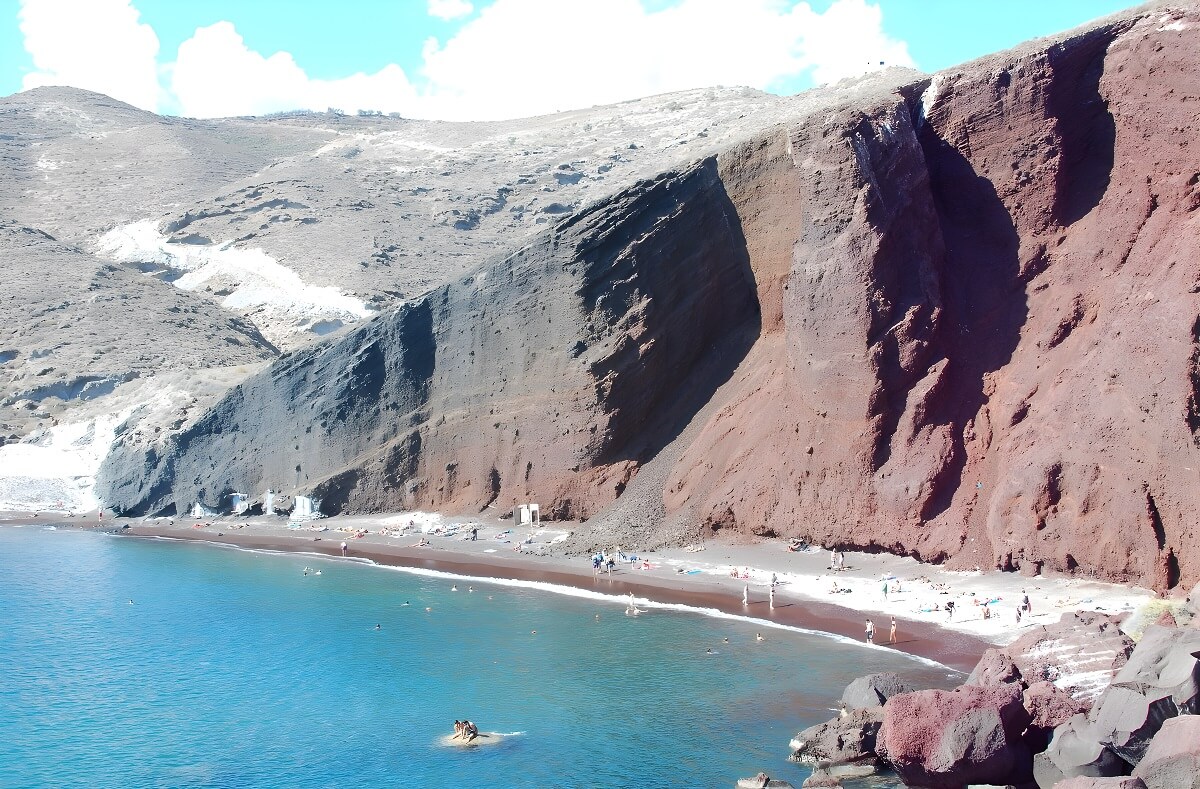


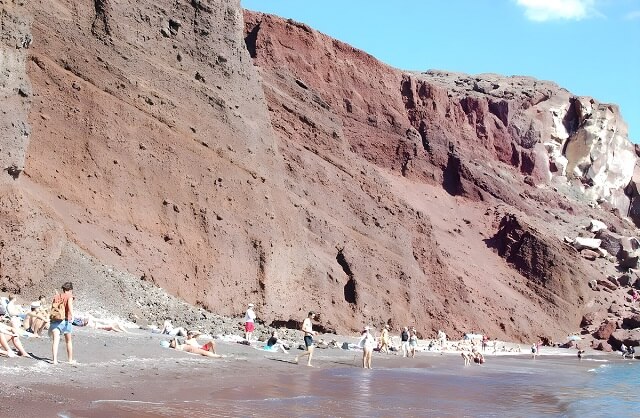
The most amazing and one of the most beautiful beaches in Santorini is “Red Beach.”
Diving in Santorini
Diving is one of the most popular activities on the beaches of Santorini. No wonder: the waters of the Aegean Sea are clean and clear, and it is a pleasure to observe the beauty of the underwater world and the life of its inhabitants. Diving centres are open in many resorts including Perissa, Perivolos and Kamari.
Diving off the other islands of the archipelago, Cape Tripiti in Firasia and the shipwreck area off Palea Kameni, is an unforgettable experience.
The caves of Mesa Pigadia and the grottoes at Indian Rock also hold many mysteries. For wall diving, the coast of Armeni near Ia is suitable, for watching the spectacular shimmers of multi-coloured sand – ‘Red Beach’ near Akrotiri.
Diving centers in Santorini offer all kinds of training programmes for clients with different levels of training, as well as rental of professional equipment and transfer to dive sites by speedboats.
You might find it useful: See all diving tours in Santorini.
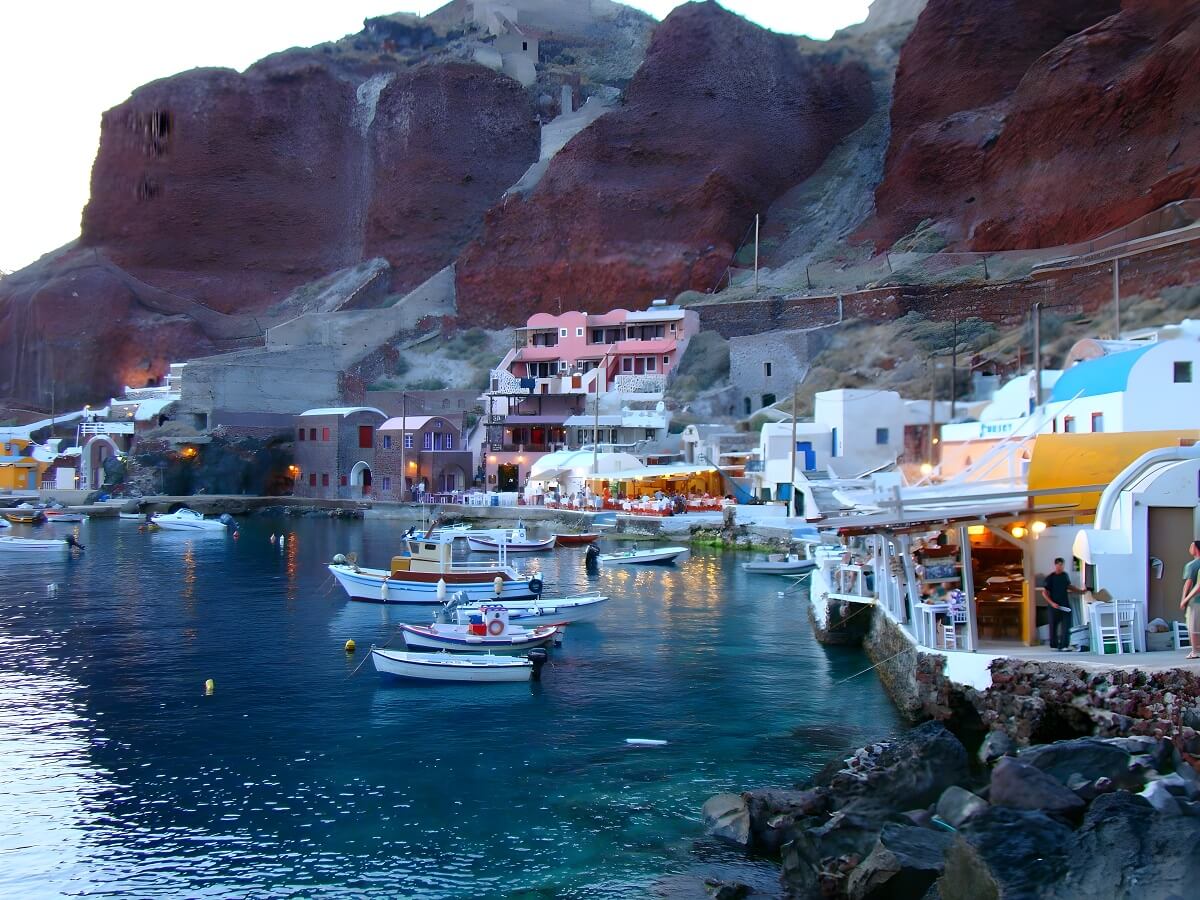
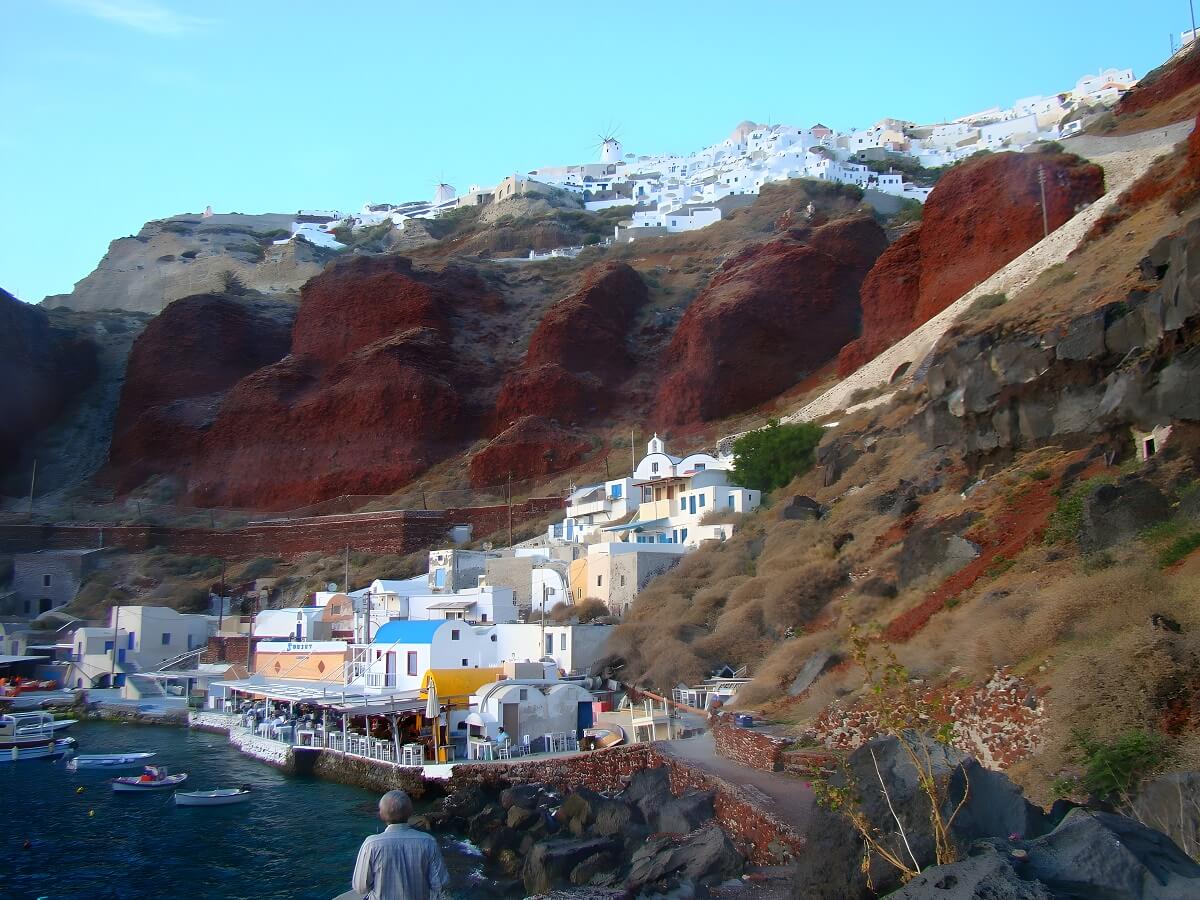

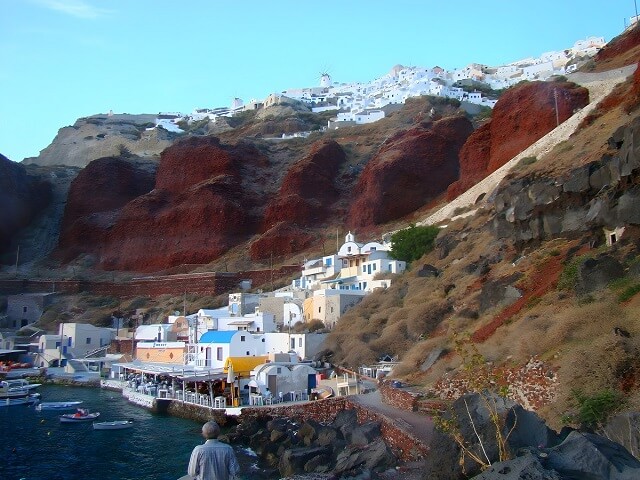
Mały port Amoudi
Active holidays in Santorini: kayaking, quad bikes, snorkelling, mountain biking, and fishing
Santorini offers a wealth of options for active holiday lovers: kayaking along the picturesque coastline, quad bikes for exploring the island, snorkelling for those who love swimming in crystal-clear waters, and mountain biking for the more adventurous travellers.
Since our personal favourites are kayaking and quad bike rides, we especially recommend looking at tours of this kind — they include all the necessary equipment, instruction, and a guide, making for a comfortable and unforgettable experience.
For some specific examples, here are several activities we’ve set aside for our next trip (and we’re sure there will be one):
- Electric mountain bike adventure — 120 euro per person (minimum booking for 2). Duration — 3.5 hours. During the ride you’ll also have the chance to sample local wine and food.
- Sea kayaking tour — the one that caught our eye is a 5-hour tour visiting the white, black, and red beaches as well as a sea cave where you can swim. A traditional lunch at a local taverna is promised at the end. This option costs 120 euro per person.
- Traditional fishing — this one appealed to Vladyslav (and I’ll tag along to enjoy the sunshine): 145 euro for 4 hours, during which you’ll learn traditional fishing techniques and enjoy a meal.
- Quad bike tour of Santorini: 150 euro for 3.5 hours — a perfect way to combine adrenaline with stunning scenery. Or you can choose another quad bike tour that includes a delicious lunch.
- Diving tour suitable for beginners: 99 euro per person for 3 hours (including travel time), with a brief instruction session followed by a dive into the underwater world under professional supervision.
Shopping in Santorini
Shopping in Santorini is a very enjoyable activity. The resort towns are full of small shops, traditional souvenirs, clothing, shoes, and accessories. I recommend paying attention to leather goods: bags, belts, wallets, and gloves are notable for their decent quality and quite affordable price.
Jewelry is a separate story. In Fira, Oia, and other towns, there are many expensive salons and democratic shops, offering rings, earrings, necklaces and bracelets handmade of gold and precious stones.
Great gift ideas include ceramics in traditional Greek style, textiles with national patterns, and crafts made from volcanic lava or olive wood.
But the best souvenir from Santorini is a bottle or two of wine with a unique taste. Local grape varieties are grown in volcanic soil, which gives the wine increased acidity and mineralization.
In addition, you can buy Greek delicacies: goat cheese “chloro,” peeled split peas “fava,” or wild capers.
The most famous of Santorini’s wines is the sweet ‘Vinsanto’ made from dried grapes.
There are colourful markets in every village, not to mention the famous resorts. Jimmy’s in Imerovigli deserves a special mention, selling local wine on draught in addition to the standard range of goods.
Most of the large shops and shopping centres are concentrated in Fira. The most popular are Hondos Centre, Drakkar, Ammos and Milo. The best shopping mall in Ia is Kalderimi with products of famous luxury and budget brands.
Cuisine i restauracje na Santorini
Santorini knows how to provide delicious food: there are fashionable restaurants with sea delicacies, typical Greek taverns, cozy cafes, and fast-food eateries with local flavor.
Many places are famous not only for their menus and interiors, but also for their amazing views of the Aegean Sea and the caldera. The best restaurants with authentic cuisine are not in the big resorts, but in small villages like Imerovigli.
Almost every cafe and restaurant offers several varieties of delicious local wine. The most popular is the thick and velvety “Vinsanto,” with aromas of citrus, figs, and coffee. Light dry “Asirtiko” and fortified “Nichteri” are also good.
The main ingredients of traditional dishes come from local agriculture. Thanks to the volcanic soils, sea breeze, and constant sunshine, their flavors are extraordinary.
- One of the best treats in Santorini is white eggplant, baked on charcoal and generously sprinkled with grated cheese.
- You should also try fava peas, vegetable stew “sfungato” and stewed cutlets of spicy-sweet cherries “domatokeftedes”.
- The best meat dishes include beef “stifado,” cured ham “apoksti,” homemade sausages, and wild rabbit with egg sauce.
- An interesting fish dish is the “brandade,” borrowed from Spanish chefs.
- For dessert, you can taste original tomato jam and delicate cookies with cottage cheese “melitinha”.
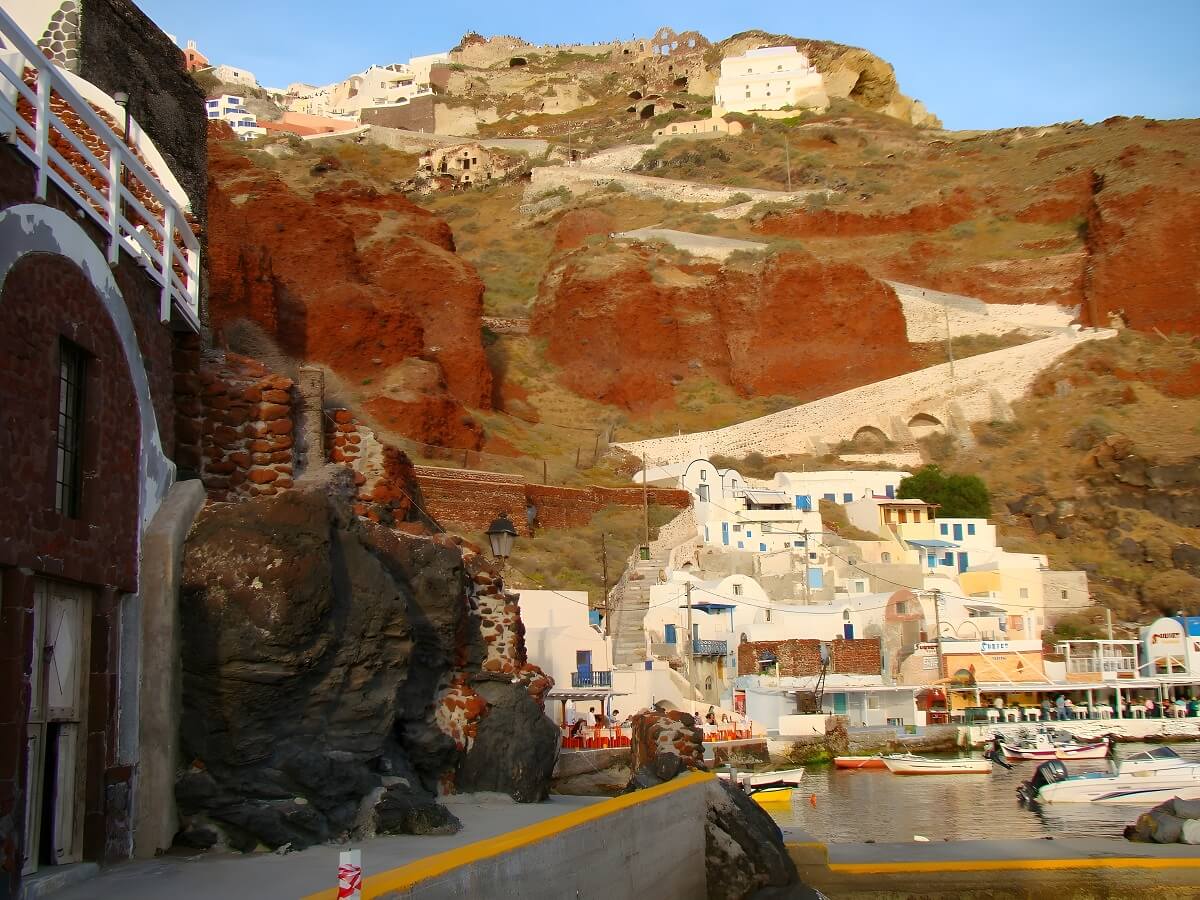

If you wish, you can go down the steep steps to a cozy restaurant where you can enjoy the sunset with a glass of wine, which is produced only in Santorini
Attractions of Santorini Island
The first settlements on Santorini date back to 3000 BC. Who knows how many ancient monuments might have survived to this day if it hadn’t been for the massive volcanic eruption that submerged much of the archipelago. Still, there’s no shortage of things to see on the island, and Fira is the best place to start.
Santorini’s architecture shines with traditional Cycladic houses and churches, the most famous being Ayia Mina, with its sky-blue dome—a hallmark of travel brochures.
- In the Museum of Prehistoric Thera, you’ll find priceless artifacts, with the oldest dating back to 3300 BC. Near the capital lies one of Santorini’s main churches, Panagia Episkopi, built in the 11th century.
- On the Akrotiri headland, you can explore the ruins of one of the oldest settlements along the Aegean Sea. This area was inhabited as early as the 4th millennium BC, and visitors can see well-preserved remnants of daily life, including multi-story houses, sophisticated drainage systems, furniture, and household items.
- The village of Imerovigli has many impressive churches, such as the cliffside Theoskepasti Church, Panagia Malteza with its carved altar, and the Monastery of St. Nicholas for women.
- In Perissa, there’s more to discover: the Church of the Holy Cross in the center, the 5th-century ruins of the Basilica of St. Irene at the mountain’s base, and the white chapel of Panagia Katefiani on the summit. Another well-known religious site on Santorini is the Monastery of Prophet Elias, located near Pyrgos.
- From the viewing platform by the Monastery of Prophet Elias, you can enjoy spectacular views over the Aegean Sea; on clear days, you might even catch a glimpse of Crete.
- Kamari also boasts a unique attraction, the Wine Museum, with galleries 8 meters underground that cover the history of winemaking on the island since 1600. The highlight of the tour is a tasting of Santorini’s finest wines.
Once you’ve explored Santorini, it’s worth heading to the nearby islands of Nea Kameni and Palea Kameni. Nea Kameni is home to a dormant volcano, quiet since 1950, while Palea Kameni offers hot sulfur springs, known for their health benefits.
Useful tip: You can find tours of all the aforementioned attractions through this link — it will be helpful for those who decide to stay on the island for more than one day.
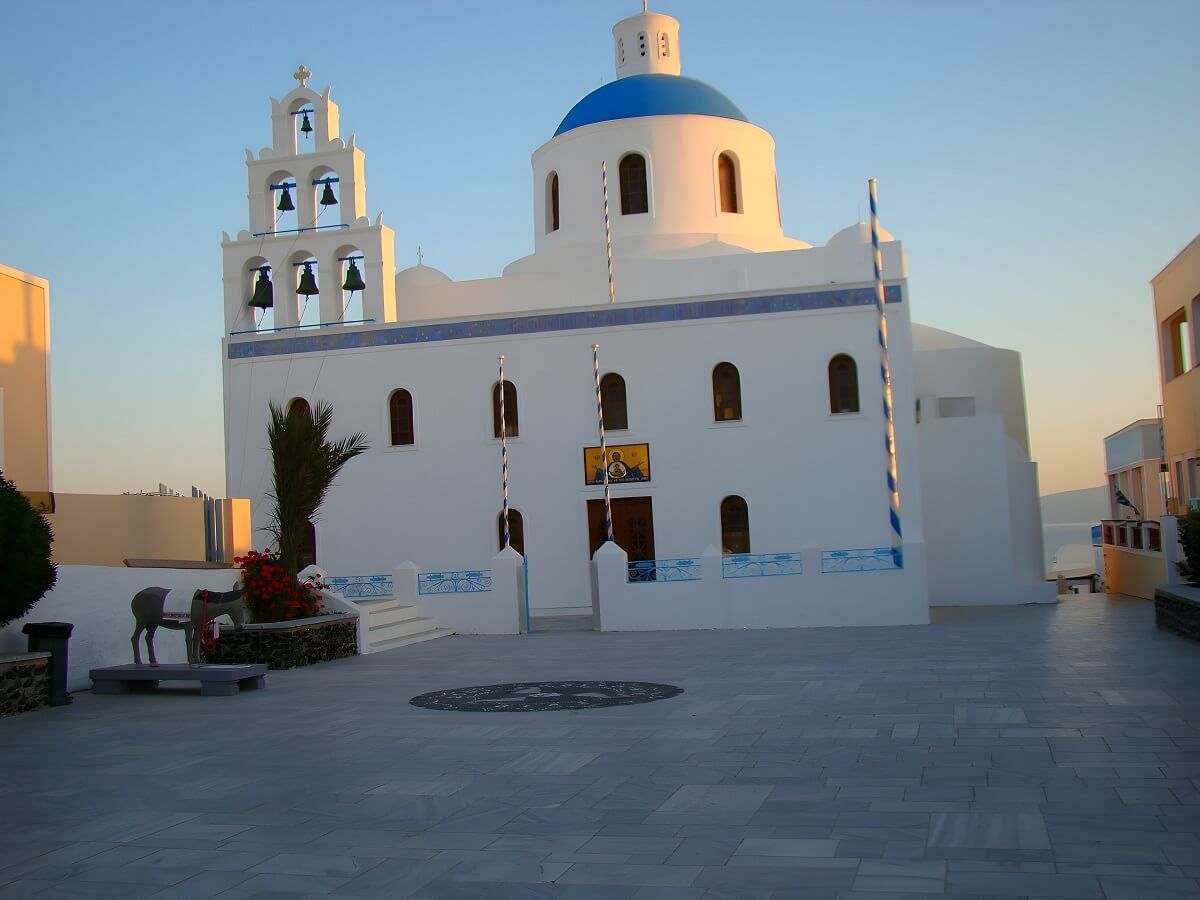
Church in the town of Oia
The volcanic islands on the opposite side of the caldera — Palea Kameni, Nea Kameni, and Thirasia island: bathing in the hot springs near an ancient volcano
The volcanic islands of Palea Kameni and Nea Kameni are unique geological landmarks of Santorini, formed as a result of volcanic activity. Near Palea Kameni are the famous thermal springs with water temperatures of 30–35°C, rich in hydrogen sulphide and known for their healing properties for skin and muscles.
Thirasia, the second largest island in the archipelago, has preserved an authentic Greek atmosphere with cave houses and ancient vineyards. Unfortunately we never managed to get there, despite having planned to do so. So I’d like to share a few tours to Thirasia that we had saved for ourselves:
- Cruise to Thirasia and the hot springs near the volcano: 30 euro per adult (15 euro for a child aged 4–10). Duration — 6 hours. On this trip, visitors will see the volcano, with the option of an exciting hike to the crater (for an additional fee), or a visit to the hot springs.
- Cruise to the volcanic islands: 50 euro per person (25 euro for a child aged 4–9); duration — 6–10 hours depending on the option chosen. You can opt for the extended version, where after the volcanic islands the group is taken to picturesque Oia to watch the sunset (this version is priced accordingly higher).
- Trip to the Santorini volcano, hot springs, and sunset in Oia: 30 euro per person (15 euro for a child aged 10 and under). Duration — 6 hours. Compared to the previous option, this itinerary is considerably shorter but includes all the key highlights.
- Thirasia islands and volcano tour with a guide: 56 euro per person (28 euro for a child aged 3–12). Duration — 8 hours. On this trip, travellers will visit the lava island of Nea Kameni and have the chance to swim in the green sulphurous waters of the Palea Kameni hot springs.
Santorini for Kids
Santorini doesn’t offer a wide range of specialized activities for children, so family fun on the island generally revolves around strolling through the scenic streets of towns and villages, combined with time at its many beaches.
In Kamari, there’s a play area with rides along the coast, while Monolithos Beach has a small playground with safe surfaces and a gentle, shallow seabed. Older kids might enjoy the island’s archaeological museums, particularly the Akrotiri excavations, where they can walk among ancient homes.
Another spot that both kids and adults are sure to love is the small water park in Perissa. While it has only a few pools and slides, the water is crystal clear, and there are plenty of sun loungers and umbrellas for everyone. The local restaurant serves delicious food as well. The water park is open from 10:00 a.m. to midnight, with the rides operating until 7:00 p.m. Entry is 8 euros for adults and 5 euros for children.
Useful information: Tickets and excursions for the water park in Perissa.
10 things to do on Santorini
- Take in the stunning blend of white and blue – the signature colors of Fira.
- See Ayia Mina Church in real life and discover it’s even more beautiful than in brochures.
- Watch the sunset in Oia and realize you never truly understood sunsets until now.
- Explore the daily life of ancient people at the Museum of Prehistoric Thera and the Akrotiri excavations.
- Count all the colors of Santorini’s beaches – each one unique.
- Spot the outline of Crete from the viewpoint by the Monastery of Prophet Elias.
- Walk among the ruins of the Venetian castle on the Skaros Rock in the village of Imerovigli.
- Sample local wines paired with tomato fritters (domatokeftedes), or try tomato jam if you’re feeling adventurous.
- Visit the sleeping volcano on Nea Kameni for a close-up look.
- Take a dip in the sulfur springs of Palea Kameni – a unique and refreshing experience.
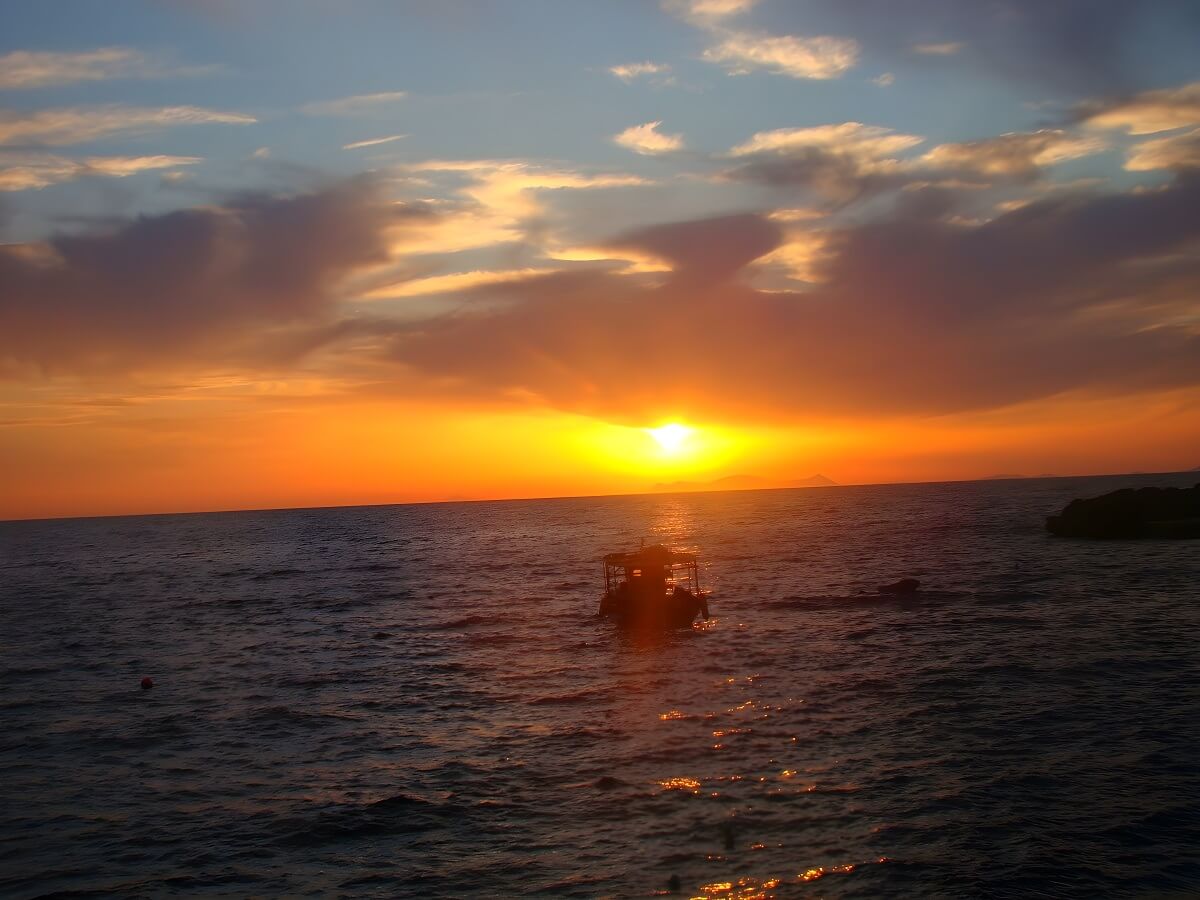
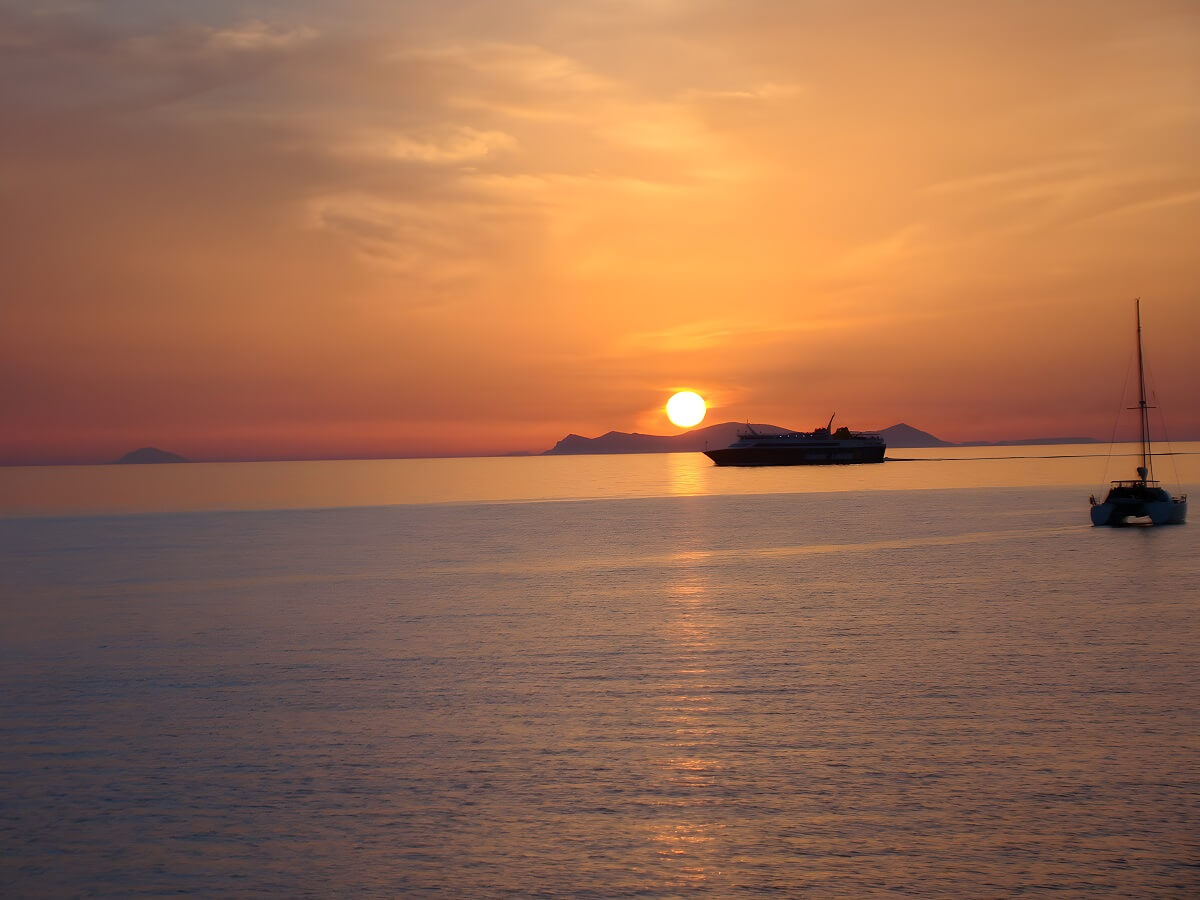
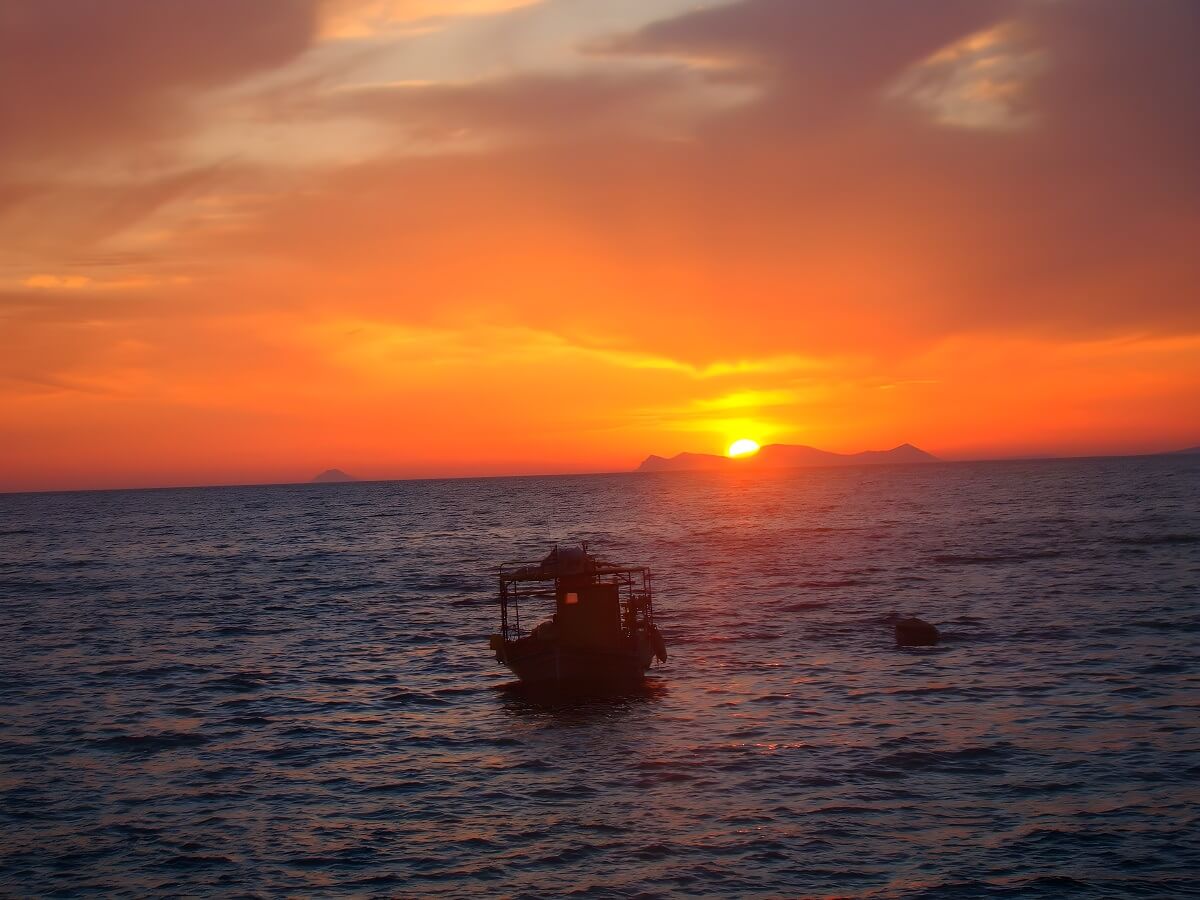
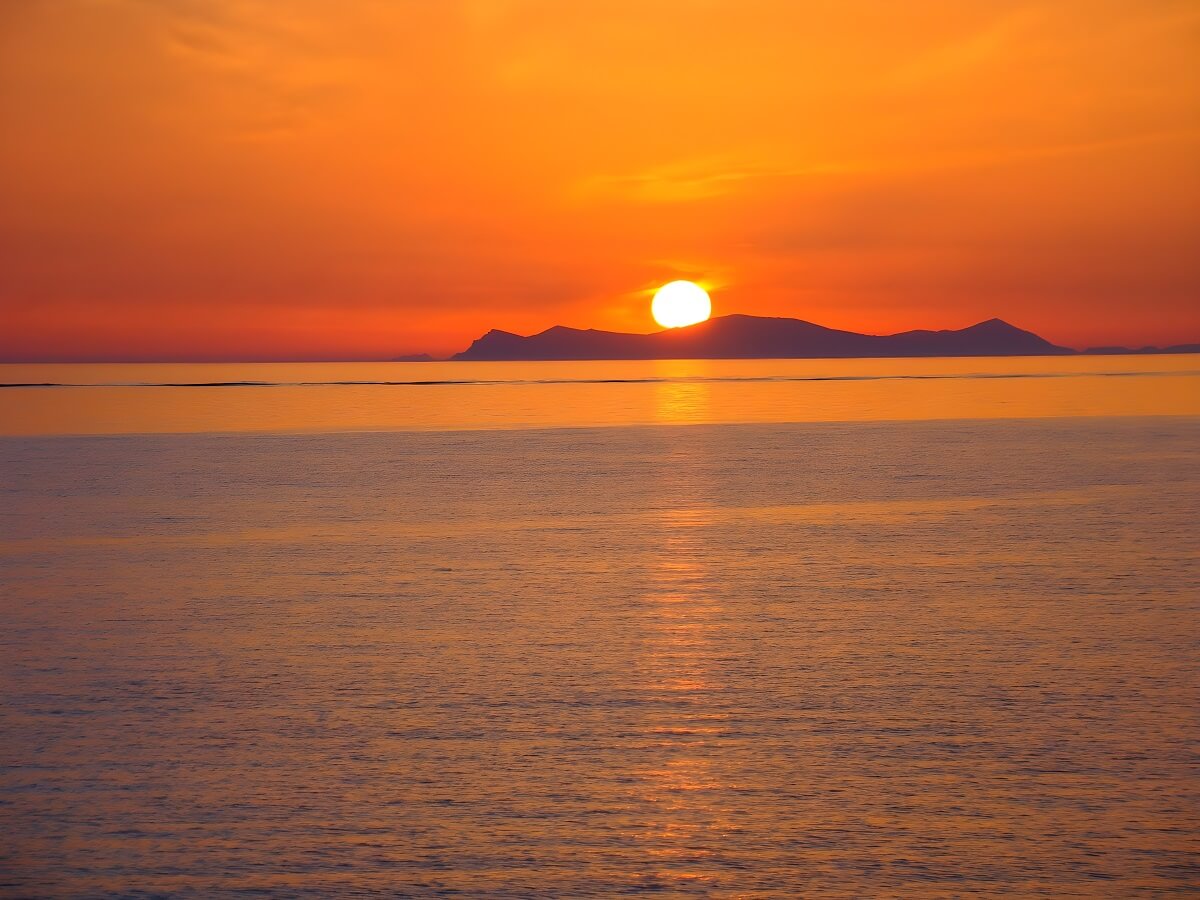

A few more photos of the sunset in Ia, really beautiful